Paul Wertico - "Last Train Home" - Pat Metheny Group
Paul Wertico joins Stevie Taylor and Jonnie Adams on Who’s On Drums? to discuss the Pat Metheny Group’s “Last Train Home” from the 1987 album Still Life (Talking).
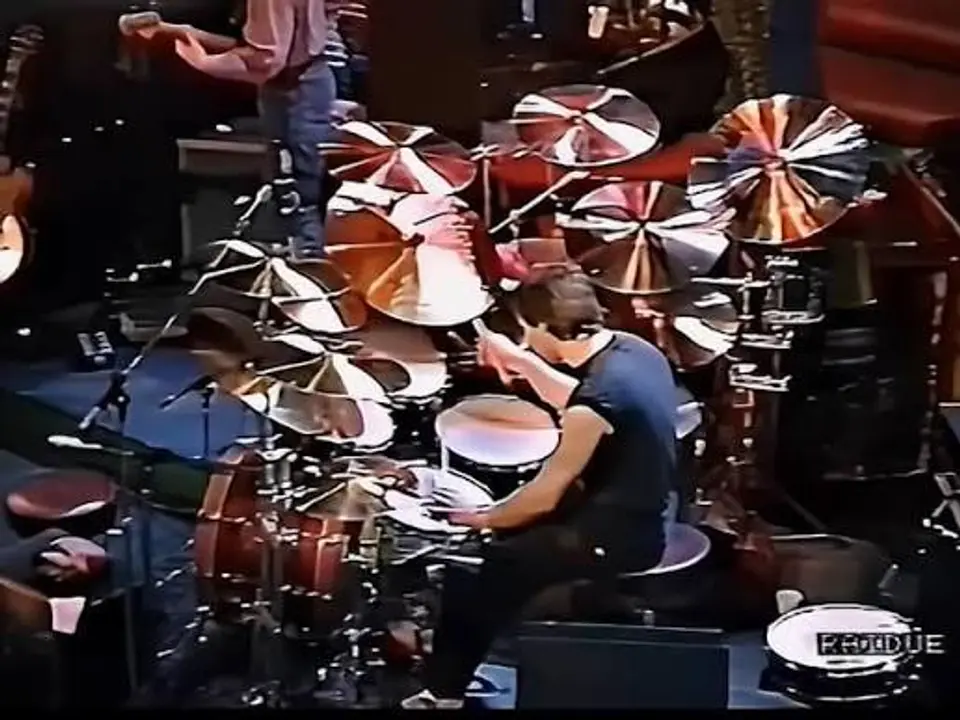
Paul breaks down the track’s unmistakable train groove — single strokes, hi-hat on two and four, a light four on the floor, and subtle movement around the snare that helps bring the sound of a steam locomotive to life. He also explains the challenge of driving sequenced parts without a click while Pat Metheny plays behind the beat.
He recalls recording at New York’s Power Station, where Pat wanted complete drum takes. When Paul broke a stick near the end of “Minuano (Six Eight),” there was no punching in — they started the whole track again.
Along the way, Paul shares stories of subbing for Barrett Deems at just 16, flying aerobatic aircraft, riding in locomotive cabs, and why listening, reacting and developing your own sound matter more than relying on stock beats and licks.


Paul Wertico joins Stevie & Jonnie on this episode of Who’s On Drums to discuss the Pat Metheny Group’s “Last Train Home” from the 1987 album Still Life (Talking).
Paul breaks down that unmistakable train groove: single strokes, hi-hat on two and four, and a light four on the floor. He explains how moving around the snare brings the steam locomotive to life, and the challenge of driving sequenced parts without a click while Pat plays behind the beat.
He recalls recording at the Power Station, where Pat wanted complete drum takes. A broken stick near the end of “Minuano” meant starting the whole track again. No punching in!
Along the way, Paul shares stories of subbing for Barrett Deems at 16, flying aerobatic aircraft and riding in locomotive cabs, while explaining why listening, reacting and finding your own sound matter more than stock beats and licks.
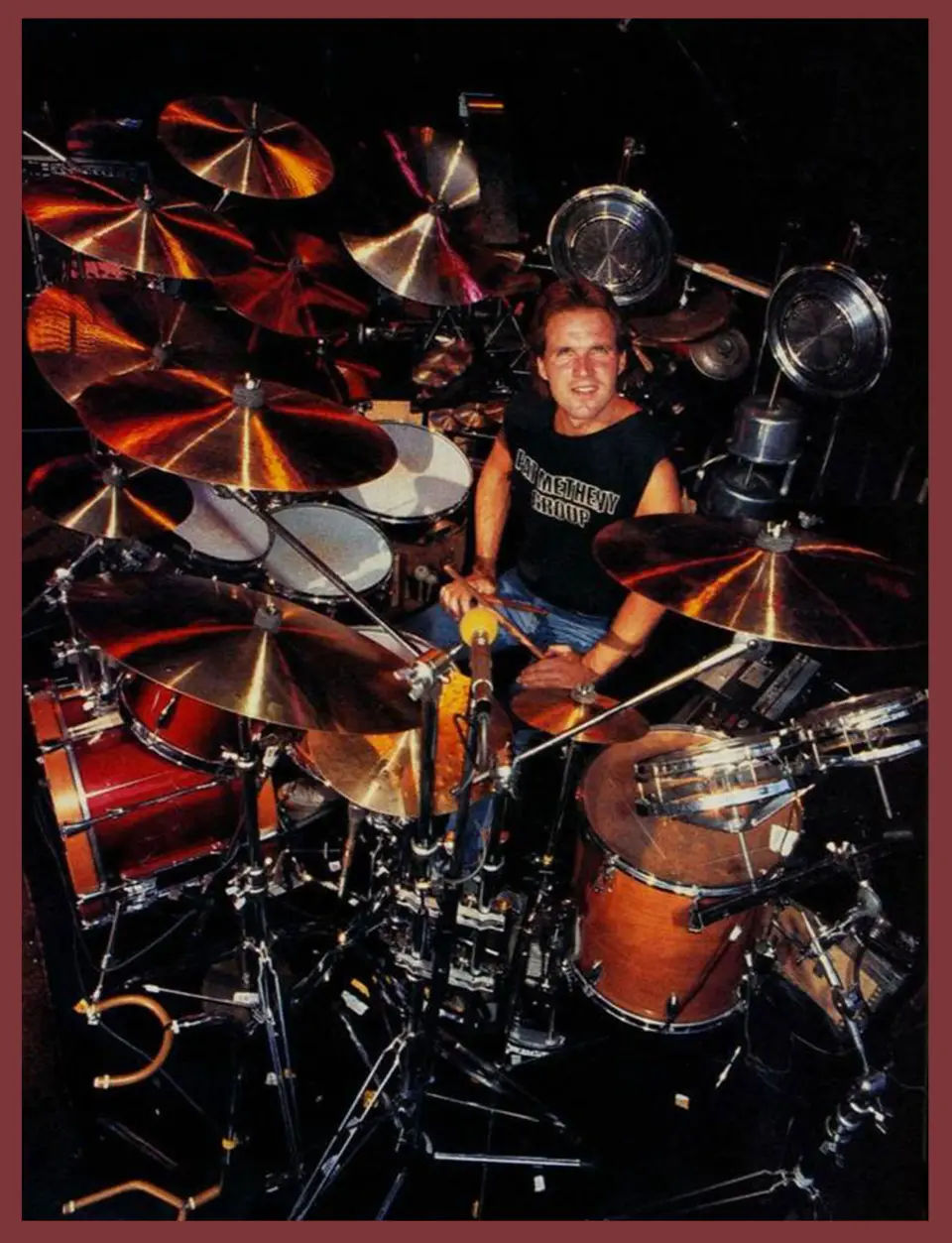
Paul also talks about his signature model flat ride, made by Dream Cymbals. Check it out here.
For more on Paul Wertico, check out his facebook, instagram & website.
For all thing Who's on Drums?, go to whosondrums.com
00:00 - Introduction
00:15 - Introduction - Stevie & Jonnie
02:31 - Paul Wertico interview
08:06 - Trains
09:28 - Don't be afraid to ask
09:54 - SBB - Polish rock band
14:23 - Balancing teaching, touring, and family life
16:04 - Building a lifelong community around drums
17:56 - Pat Metheny Group - dynamic precision
20:25 - Roy Haynes and the importance of articulation
24:34 - Using AI to revisit and restore recordings
27:57 - Last Train Home
29:48 - The Train beat
31:32 - Creating motion with single strokes
34:22 - Learning to play through listening and experimentation
40:37 - Barrett Deems and Chicago jazz
42:51 - Driving sequencers without a click
48:06 - Finding a balance between monitors and in-ears
01:05:42 - Last Train Home - the recording session
01:08:30 - Capturing complete drum performances
01:10:44 - Building "Minuano" with cymbal swells
01:17:50 - How equipment shaped Paul’s sound
01:19:36 - Finding your own sound on any drum kit
01:22:34 - Stevie & Jonnie interview reflection
Paul:
Hey, this is Paul Wertico, and I wanna know who's on drums
Stevie:
"Last Train Home" is the third track from the Pat Metheny Group's
Stevie:
1987 album, Still Life Talking.
Stevie:
Written by Pat Metheny, the track features Pat Metheny on acoustic and
Stevie:
electric guitars and guitar synthesizer, Lyle Mays on piano and keyboards,
Stevie:
Steve Rodby on bass, Armando Michal on percussion and backing vocals, and Mark
Stevie:
Ledford and David Ramirez on vocals.
Paul:
Who's on drums?
Jonnie:
G'day, Stevie.
Jonnie:
What's cracking, mate?
Stevie:
Chur, bro.
Stevie:
What's going on?
Jonnie:
Oh, chur.
Jonnie:
Yeah, Kiwi styles.
Jonnie:
Okay.
Stevie:
Here we go.
Jonnie:
Well, we've been blessed with another great interview, uh,
Jonnie:
with Paul Wertico, generous enough to give us his time and a lot of
Jonnie:
wonderful stories, uh, from all different sorts of subjects and topics.
Jonnie:
We're talking aviation, trains, many things to do about music.
Jonnie:
Uh, discovered a new great big band drummer hadn't heard of, Barrett Deems.
Jonnie:
And we've been checking him out on YouTube and, um, what, what
Jonnie:
did you think of Barrett Deems?
Stevie:
I thought he was… At first, I thought that video was
Stevie:
sped up that I saw on YouTube.
Jonnie:
Right.
Jonnie:
Okay.
Stevie:
Yeah, yeah.
Stevie:
Yeah.
Stevie:
Yes.
Jonnie:
Yeah, he's,
Stevie:
he's quick.
Stevie:
And I had to- And, and honestly, I'd never heard of him, so.
Jonnie:
No.
Jonnie:
Yeah, neither had I. Yeah.
Jonnie:
Yeah, so.
Stevie:
Um, so what we've done with this, we've let this interview go.
Stevie:
The previous interviews or the previous episodes have been more specific
Stevie:
about, about the songs, and we've let them sort of run a little bit.
Stevie:
But this conversation with Paul, like, like Johnny just mentioned
Stevie:
there is it, um, covers lots of stuff.
Stevie:
Planes, literally planes, literally trains, but no automobiles.
Stevie:
It links up to the, the song that we're gonna be talking about too,
Stevie:
"The Last Train Home", right?
Jonnie:
Mm.
Stevie:
Yeah, we also talk about another, another, uh, Pat Metheny song, "Minuano",
Stevie:
and we play a little bit of that song, so.
Jonnie:
Mm.
Stevie:
So this is in chapters, so you can go into your app and
Stevie:
skip through any of that stuff.
Stevie:
If you wanna just hear about The Last Train Home track, find that, those, those
Stevie:
parts in the chapters and listen to them, but we really think you'll get a lot out
Stevie:
of listening to this whole conversation.
Stevie:
So-
Jonnie:
Mm
Jonnie:
… Stevie: sit back and enjoy our conversation with the great Paul Wertico.
Jonnie:
All right, Johnny, you wanna kick that- … kick that question off
Jonnie:
then?
Jonnie:
The aerobatic story.
Jonnie:
Oh, well, yeah, the, uh, Piesty catalog with the aero- aerobatic
Jonnie:
story, I think probably talking about the Piesty Signature Series
Jonnie:
little quote you had there.
Paul:
Well, you know, it's, it's kind of amazing what happens when
Paul:
you're, um I guess well-known or in a well-known band, let me put it that way.
Paul:
Because, you know, you get perks that you never would think are possible, you know?
Paul:
I mean, like, I have doctors who are like, you know, I've got their
Paul:
cell phones and stuff, you know?
Paul:
They're fans and Yeah.
Paul:
So, you know, and I've been lucky enough to, like, ride up front
Paul:
in, in railroad trains, like steam locomotive trains and everything.
Paul:
But the- Yeah … the, uh, story you're referring to was an interesting story.
Paul:
Um, when I was with Pat Metheny, we were playing in LA.
Paul:
And, you know, I checked into the hotel, and I got this phone call to my
Paul:
room, and this guy Like, it's like I'm going like, "What, what, what is this?"
Paul:
It's like, it's like a drum groupie kind of guy who I didn't know, right?
Paul:
Mm-hmm.
Paul:
And it was, it was a little strange and, and he was going like, "Yeah, I know all
Paul:
the drummers. I know like Greg Bissonette and everything." So after we got done,
Paul:
you know, talk with him, obviously, you know, you want to be nice to everybody.
Paul:
Yeah.
Paul:
So I, I called Greg and Greg was like, "Well, oh, no, no,
Paul:
uh, stay away from this cat.
Paul:
He's like, you know-"
Jonnie:
Okay.
Jonnie:
" Paul: He's, he's a little different, okay?
Jonnie:
Put it that way." So I was like, "Okay, fine." So, you know,
Jonnie:
I invited Greg to the show.
Jonnie:
I think we played one or two nights, but anyway, that same night, uh,
Jonnie:
before the show, I think it was at the Wiltern or the Pantages, I
Jonnie:
don't remember, it's one of those.
Jonnie:
But anyway, so, um, I'm just hanging out backstage by the crew bus just
Jonnie:
kind of waiting to go on and this guy approaches me and I go, "Oh, uh-oh, I
Jonnie:
hope it… Who is this guy?" You know?
Jonnie:
And so I start talking to him.
Jonnie:
You know, I, I try to be nice to everybody because, you know, people, you know,
Jonnie:
we're all have to share this planet.
Jonnie:
But anyway, after talking to him for a few minutes, I realized it's not him.
Jonnie:
It's this so- somebody else.
Jonnie:
So the guy starts talking and we're talking and he goes, he goes, "Man,
Jonnie:
you know, the show's sold out. Is there any way I can get like, you
Jonnie:
know, a ticket or so?" And I said, "Well, yeah. I mean, I, you know, I
Jonnie:
don't have any guests this evening, so I can g- I can give you a ticket."
Jonnie:
And he goes, "Well, great." He said, "What are you doing tomorrow?" And
Jonnie:
I said, "Well, you know, we have a day off." And he goes, "Well, I'm an
Jonnie:
emergency flight instructor." Okay.
Jonnie:
"So if you come out to Long Beach Airport, I'll take you up." Okay?
Jonnie:
So but, you know, now the… You know, I've since then have bungee jumped
Jonnie:
and skydived and everything, you know?
Jonnie:
But I was also never afraid of flying.
Jonnie:
So I was like, "Okay." So the next morning, you know, I took a taxi out
Jonnie:
to Long Beach Airport and met him.
Jonnie:
And so the first thing he goes, "Okay, I have to show you, I have-- you
Jonnie:
have to learn how to use a parachute because-" "… in case the, in case the
Jonnie:
plane bends or he passes out, you'll need to like jump out of the plane."
Jonnie:
So I was like, "Oh, okay, this is an interesting way to start this," you know?
Jonnie:
And even before I got there, he was saying, "Well, you know, make sure you
Jonnie:
eat a little bit because, you know, we're gonna be hitting G's and stuff.
Jonnie:
You don't want to do this on an empty stomach necessarily." 'Cause he t- he
Jonnie:
taught, I haven't, I haven't been in contact with him for years, but you
Jonnie:
know, he used to teach like real pilots what to do in emergency situations.
Jonnie:
Mm-hmm.
Jonnie:
You know, we go through the thing of learning how to, uh, you know, use
Jonnie:
a parachute, and we start walking to the, the plane, and as we're walking,
Jonnie:
we see this other, like, two-seater taking off, and it's gonna… It looks
Jonnie:
like it's gonna drop out of the sky.
Jonnie:
And he, he, he said, "Turn around, don't look," you know?
Jonnie:
But luckily, whoever it was, you know, recovered.
Jonnie:
So that interesting way to even before you even get to the plane.
Jonnie:
So we finally get there, and it's a propeller.
Jonnie:
It's a two-seater Robin.
Jonnie:
Now I don't, I don't know anything about planes, you know?
Jonnie:
Yeah.
Paul:
Robin.
Paul:
Yep.
Paul:
But we, we get in there, and we take off, and then the next thing I know,
Paul:
he's, he gives me the controls.
Paul:
And so we're gonna, we're gonna fly over Long Beach, you know?
Paul:
And so he starts going, "Okay.
Paul:
Well, look Straight ahead and, and kick the rudder and everything
Paul:
as, as hard as you can one way.
Paul:
So I, you know, all of a sudden I did the, the, you know, the flip, you know.
Paul:
Yeah, yeah,
Jonnie:
yeah.
Jonnie:
Yeah.
Paul:
And we, and we start going out.
Paul:
We're starting to do ailerons.
Paul:
We're, we're doing stalls.
Paul:
We're doing all kind of crazy stuff, you know?
Paul:
And it, and, and we're not on radar either, you know?
Paul:
So the thing is, you know, we have to look above and below- Visual … and
Paul:
around- Yeah … you know, 'cause there's helicopters and stuff like that.
Paul:
So we did that, and then on the way back, you know, I'm flying.
Paul:
'Cause he, he mentioned like, "Oh yeah, kick, you know, kick the, the
Paul:
pedals like John Bonham," you know?
Paul:
It was just so funny what, what he wa- … how he was saying it.
Paul:
Yeah.
Paul:
To really get the plane to do all this stuff.
Paul:
Yeah, yeah.
Paul:
So I think on the way back, we kind of buzzed the tower
Paul:
of the airport coming back.
Paul:
Okay.
Paul:
So I've done this four times since then with him.
Paul:
That was, that was the interesting thing.
Paul:
But that day, you know, I got back and, and it was, it was, it was a blast.
Paul:
I mean, what, what can you say, you know?
Paul:
'Cause I, I'm not afraid of anything, and I wasn't afraid of this.
Paul:
It was just beautiful.
Paul:
But the next morning when I got to the airport, Pat was so relieved to
Paul:
see me because I think he thought-
Paul:
I might get killed, you know?
Paul:
Which would mess up the tour you know?
Paul:
Yeah.
Stevie:
Yeah.
Stevie:
But
Paul:
no,
Stevie:
I mean- It's not, it's not signed and it's not written into any contracts
Stevie:
that, "No, no, Scott, no flying planes."
Paul:
Right.
Paul:
Yeah.
Paul:
But, you know, like to give… I'm into trains.
Paul:
I love trains.
Paul:
I mean, um, you know, I've got model railroading Lionel set.
Paul:
And so that's happened a bunch of times where, uh, one time, uh,
Paul:
we were playing Bezos on France, and I was sick for some reason.
Paul:
So we got on the platform.
Paul:
We were going to I- Lyon, I think.
Paul:
And so I'm just there, and the TGV comes in.
Paul:
And so I'm just kinda standing there feeling kinda lame.
Paul:
And I look at the driver, and I kinda just said, you know, kind of,
Paul:
I don't speak French, but I'm kinda going like, "Bateur, love trains.
Paul:
Can I look?" So he g- he goes, "Sure." So I c- I go up into the
Paul:
engine, and he's showing me stuff.
Paul:
And then I said, "Can I get Pat and Lyle?" 'Cause I know Lyle was into trains too.
Paul:
So I got them, and they went in, and then they went back to the carriage.
Paul:
And I s- and I went like, "Can I go with you?" And he goes, "Yeah."
Paul:
So riding up front, man, you know.
Paul:
Wonderful.
Paul:
And like, you know, hundreds of miles per hour.
Paul:
It w- it was such a blast.
Paul:
And I've done that a lot, where now I have friends in the railroad industry
Paul:
where I've actually driven the trains.
Paul:
Oh, really?
Paul:
Not only just been up front, but actually, yeah, you know?
Paul:
So just a lot of things like that, that, that are perks that, you
Paul:
know, I mean- The one thing I tell everybody about everything really
Paul:
always, don't be afraid to ask.
Paul:
You know?
Paul:
In the music industry, don't be afraid to ask to sit in.
Paul:
Don't be afraid to ask what you want.
Paul:
With this, you know, so I've gotten a, a chance to ride up front i- you
Paul:
know, on trains in Poland and Hungary.
Paul:
You know, I, I tried it one time in Japan, and they said no.
Paul:
But all these other times, I just went, "Yeah," and they were like, "Sure."
Paul:
You know?
Jonnie:
Yeah.
Jonnie:
Right.
Paul:
Interesting.
Paul:
And, and some of this was actually be- before n- uh, and after 9/11.
Paul:
One is really crazy.
Paul:
I was in this great Polish rock band, SBB.
Paul:
So they were like the, the f- most famous Prague sort of progressive
Paul:
rock band, especially in the '70s.
Paul:
They had this great drummer, Jerzy Piotrowski.
Paul:
And so when I left Pat, I, I would start playing with them, you know, 'cause I
Paul:
didn't wanna be on tour much anymore.
Paul:
I could-- 'Cause my daughter was born and everything.
Paul:
Yeah.
Paul:
But going away for a week or two, it was fine.
Paul:
And this band was a blast.
Paul:
You know, everywhere we, we'd go, we'd get a key to, you know, a key to
Paul:
the city, you know, from the mayor.
Paul:
In fact, I've got a really-- If I ever put-- I've got a whole collection
Paul:
of drum solos I did with them.
Paul:
And one time we're playing, and all of a sudden these fireworks started.
Paul:
And so I've got this recording of me dueting with the fireworks.
Jonnie:
Wow.
Paul:
You know?
Paul:
Which was, whi- which was totally great.
Paul:
But to get back to the story I wanna say about this, you know, on
Paul:
a day off, we were-- I don't know if we were in Croatia or somewhere.
Paul:
Um, but anyway, we went to this really amazing natural
Paul:
rock formation p- kind of park.
Paul:
And so, you know, I also see railroad tracks there, too.
Paul:
But anyway, so we're looking at these formations, and we're gonna
Paul:
go back to the hotel, and the city is maybe an hour or two away.
Paul:
And I see the railroad tracks, and all of a sudden the train comes in.
Paul:
And so I had a drum tech who was, spoke Polish, and, um, so I said, "Man, can
Paul:
you ask the driver if I can look and maybe ride up front?" So, uh, he asked
Paul:
him, and at first the, the dr- you know, driver's like, "No." And then he told
Paul:
him who I was and who I was playing with, so then he says, "Okay, sure." So
Paul:
next- Yeah … thing I know, man, we're taking off, me, my tech, and, and the
Paul:
driver, and I'm talking through the tech.
Paul:
And after maybe, you know, 10 minutes or so, the driver realizes
Paul:
I, um, know a lot about trains.
Paul:
So he looks at me, and he just looks like, "Here you go. You wanna take
Paul:
control?" And it's a passenger train.
Jonnie:
Yeah,
Paul:
really?
Paul:
So I'm actually, yeah, I'm actually driving a passenger train through,
Paul:
like, the hills and mountains and making the stops and stuff.
Paul:
Really?
Paul:
You know?
Jonnie:
Yeah.
Paul:
Yeah.
Jonnie:
That's instant trust.
Jonnie:
Instant trust from the, from the driver there, you know?
Paul:
Well, he could tell, you know?
Paul:
I mean, you know, uh, you know, one thing I… You know, I wasn't drunk or messed
Paul:
up or anything like that, you know?
Paul:
Yeah.
Paul:
So, uh, yeah, it was weird.
Paul:
Plus, he's there next to me too, you know?
Paul:
That was the thing even with the pilot going up there, you know?
Paul:
If, if I would've done something really bad, you know, I'd have somebody- Right
Paul:
… right next to me to kind of fix it.
Paul:
So that, that was the thing, you know?
Paul:
It's not like the, the… It's not like the driver just got out, went and at the
Paul:
next station said, "Here, you take over for the rest of the trip," you know?
Paul:
I don't think I would've wanted to do that because, you know- Yeah, yeah … uh, it,
Paul:
running a train is crazy because you, you know, you've got a lot of, between the
Paul:
cars and stuff, you've got a lot of play.
Paul:
You really ha- you know, you can't just step on the accelerator, or you can't
Paul:
s- just step on the brakes 'cause, you know, have people fall over.
Paul:
So there's a real art form to being able to do that, you know?
Jonnie:
Mm.
Paul:
And it's, it's a touch thing, just like playing drums
Paul:
is a touch thing, you know?
Jonnie:
Mm, yeah, a lot of feel involved.
Jonnie:
So yeah, there'd be a lot of inertia on those, uh, trains
Jonnie:
once they get going, you know?
Paul:
Oh, yeah.
Paul:
I mean, that's why people, you know, I'm always amazed that people
Paul:
get hit by trains because, you know, the, whether it's going- Mm
Paul:
20 miles per hour or, you know, 100 miles per hour, I mean, it's really- Easy
Paul:
to misguess, you know, the side of the train, if you're gonna get hit by that.
Paul:
I mean, that's one of the, the rules of railroading is that when a train
Paul:
is stopped, if you walk around it, you've gotta s- leave at least 15 feet-
Jonnie:
Mm.
Paul:
Right
Paul:
you know, to the end of the next train.
Paul:
Because if that thing starts all of a sudden, you know, and you're just
Paul:
walking next to it, it could hit you.
Paul:
Yeah.
Paul:
So there, there's a lot of rules to be, be followed for safety.
Jonnie:
Mm-hmm.
Paul:
Yeah, yeah.
Paul:
And giving a drummer the trains isn't one of them, but, you know.
Paul:
Right.
Paul:
We're, we're still here.
Stevie:
Yeah.
Stevie:
Well done.
Jonnie:
Yeah.
Stevie:
Well
Jonnie:
done.
Jonnie:
Talk about asking just quickly, um, we've been very fortunate, uh, and to talk to
Jonnie:
yourself and, and a few others recently.
Jonnie:
Uh, uh, Stevie's been sending out emails and not knowing if we were
Jonnie:
gonna get a response from anybody, but many people like yourself have
Jonnie:
responded so that we can talk to you.
Jonnie:
It's, it's amazing.
Jonnie:
So like you say, if you don't ask, you're not gonna find out and, and
Jonnie:
you asked and, uh, you've let us talk to you, so thank you very much.
Paul:
Absolutely.
Paul:
And for me, I mean, you know, I'm a tenured professor at Roosevelt University.
Paul:
It's my 24th year.
Paul:
But I'm also playing all over the place.
Paul:
I mean, Saturday I leave for two weeks in Denmark, and then I've got three
Paul:
days off in that, and then I'm going to Italy those three days off to play.
Paul:
You know, in fact, right now, uh, I was in Denmark for four
Paul:
weeks in June and three days off.
Paul:
So the first one went to Italy, record and played.
Paul:
Second one went to England, record and played.
Paul:
Third three days back to Italy.
Paul:
And in fact, we did this amazing record when I was in England playing with people
Paul:
I didn't know, so they're mastering the record as we speak right now- Ah, right.
Paul:
Great … in England, you know?
Paul:
Yeah.
Paul:
So, I mean, you, you won't believe how much interesting stuff.
Paul:
At 73, I mean, I just feel so lucky.
Paul:
My wife and I, we just celebrated our 40th wedding anniversary on Saturday.
Paul:
Oh, wow.
Paul:
Congratulations.
Jonnie:
Oh,
Paul:
congratulations.
Paul:
You know?
Paul:
Yeah.
Paul:
Yeah.
Paul:
Yeah.
Paul:
Well, nothing to complain about really, you know?
Paul:
Yes.
Jonnie:
Um-
Paul:
Well, there is, but let's not go there.
Paul:
Yeah.
Jonnie:
Yeah.
Stevie:
Exactly.
Jonnie:
So you sound extremely busy, uh, musically.
Jonnie:
Uh- Oh, yeah … well, performance wise, not just with, uh, your, your work at the,
Jonnie:
um, college, but, um, obviously playing.
Jonnie:
I mean, that's, that's an extremely busy schedule just for the last
Jonnie:
couple of months, you know.
Paul:
Yeah.
Paul:
I'm going back to Poland going, uh, in October.
Paul:
There's a big Polish jazz fest- or a drum festival.
Paul:
So I'm one, I think me and Marco Minneman and maybe one or two
Paul:
other drummers are headlining that.
Paul:
Yeah.
Paul:
So-
Jonnie:
Oh,
Paul:
right.
Paul:
Fantastic … it'll, it'll be a blast.
Paul:
Yeah.
Paul:
'Cause I've got Polish ancestor, you know, um, so it's always nice- Oh, okay
Paul:
to go back there.
Jonnie:
Right.
Jonnie:
Okay.
Jonnie:
Wonderful.
Jonnie:
Yeah.
Jonnie:
Yeah.
Jonnie:
Excellent.
Stevie:
That's cool.
Jonnie:
So,
Stevie:
yeah.
Stevie:
So
Jonnie:
I-
Stevie:
I'm, like I might have explained in the, in the sort of
Stevie:
blog I originally sent you, Paul.
Stevie:
So the, the premise behind this is, like Johnny and I are both- Both drummers.
Stevie:
Mm-hmm.
Stevie:
We, we live in Sydney, and we used to follow each other around to gigs
Stevie:
and, you know, watch each other play, and then after the gig we'd
Stevie:
meet up in a car park or wherever and, and just talk about songs- Yeah
Stevie:
and music and drums and grooves and stuff, right?
Stevie:
So, and that was over, y- you know, we'd met, we've known each
Stevie:
other over, well, nearly 25 years now, I think, Johnny, isn't it?
Stevie:
Something like that.
Jonnie:
Oh, it'd be- What?
Jonnie:
… a bit more than
Stevie:
that,
Jonnie:
I think.
Jonnie:
Something like- Yeah, yeah.
Stevie:
Yeah.
Stevie:
Yeah.
Stevie:
So we just- Late
Stevie:
' Jonnie: 90s.
Stevie:
Yeah.
Stevie:
Mid
Stevie:
' Stevie: 90s.
Stevie:
Yeah … yeah, so we, um, we still have those conversations about, you
Stevie:
know, drummers and, and all that stuff.
Stevie:
And then-
Paul:
We
Stevie:
still
Paul:
do too, though.
Paul:
I
Stevie:
mean, seriously.
Stevie:
We… Exactly.
Stevie:
Exactly.
Stevie:
Yeah.
Stevie:
You know, that's never- And that, that's-
Paul:
It, it's never gonna end
Paul:
… Stevie: that'll never, never end.
Paul:
No.
Paul:
And we just- Good.
Paul:
Yeah.
Stevie:
We just thought, you know, hey, man, let's, um, let's try and
Stevie:
get in touch with the cats that played on these songs and just, you
Stevie:
know, and like you said, I've, I've never been afraid to ask anything.
Stevie:
I, I'm, I'm, can be pretty bold like that.
Stevie:
Like exactly what you said, Paul.
Stevie:
You just, you just gotta ask, and the worst thing that can happen
Stevie:
is they, well, two things, they don't respond, or they say no.
Stevie:
So what?
Paul:
Right.
Paul:
Oh, yeah.
Paul:
Exactly.
Paul:
So- Absolutely.
Paul:
And I mean- Yeah … even in Australia, I haven't been to Australia in years.
Paul:
I wanna go back.
Paul:
Mm. But two funny things, I mean, with the train, uh, where is it?
Paul:
In Wellington, I think.
Paul:
There was, there was a train- Oh,
Stevie:
that's, that's New Zealand.
Stevie:
That's
Paul:
New Zealand.
Paul:
Right.
Paul:
And a steam locomotive.
Paul:
Yep.
Paul:
And Lyle and I went on and, and stoked coal in, in the steam locomotive.
Paul:
That was great.
Paul:
But the Sydney thing is really funny, uh, 'cause we played the Sydney Opera
Paul:
House, and so when we were there, I didn't have my drums for some reason.
Paul:
I forgot what happened.
Paul:
But so we're playing the Sydney Opera House, and it's being
Paul:
recorded on radio, right?
Paul:
So, you know, Pat Metheny, you know, part of the way we sounded, the way
Paul:
we sound is very, uh, great attention to detail on dynamics and phrasing.
Paul:
You know?
Paul:
So everything, everything was always moving dynamically.
Paul:
It didn't stay s- you know, s- uh, steady as far as, like, you
Paul:
know, even a fill, you would go do, do, do, do, dow, et cetera.
Paul:
Da, da, da, da, da.
Paul:
Right?
Paul:
Okay.
Stevie:
Yeah.
Paul:
So anyway, so we're, we're playing, I think it was the first tune or so, you
Paul:
know, Pat's got his back to me, and all of a sudden the cymbal stands collapse.
Paul:
So all the cymbals fall on top of each other.
Paul:
So the crash- Oh … the crashes fell down on my flat rides, you know?
Paul:
So all of a sudden it goes from, you know, ding to ding, ding, to like . And
Paul:
I'll never forget, he looks at me just through a corner of his eye for a
Paul:
second, goes, "Dynamics!" He's yelling at, "Dynamics." And then, then I, then
Paul:
he looks and he, oh my God, you know?
Paul:
'Cause there was no d- Oh … it was just a cacophony until- … the
Paul:
end of the song when we can actually raise the cymbals again.
Paul:
'Cause all, I don't know whose drum set it was, but it was really hilarious, man.
Paul:
It went, it just sounded like, you know, like, just like
Paul:
noise at, you know, 100 DB.
Paul:
There was no articulation or anything.
Paul:
It was just, it was just… And that was, like, the first song or two.
Paul:
Really funny.
Jonnie:
Really?
Jonnie:
Okay.
Jonnie:
And, and you've got quite a big cymbal set up, so there
Jonnie:
would've been quite a few, uh-
Paul:
Yeah.
Paul:
… Jonnie: cymbals clashing in-
Paul:
Not all of them fell down.
Paul:
I mean- Okay.
Paul:
… if I remember, like, the first main crashes that were above the flat rides,
Paul:
both of those fell down on top- Really?
Paul:
of the flat rides.
Paul:
Okay.
Paul:
Yeah.
Paul:
So up
Jonnie:
on the right-hand side, was it?
Jonnie:
Or was it-
Paul:
On both.
Paul:
I used, I used double flat rides back then.
Paul:
I used one over on the left side and one on the right.
Paul:
So that's why a lot of stuff that I do, you know, with the two hand,
Paul:
the two-handed things were, um- You know, you're basically playing…
Paul:
I, I-- It was like the hands were talking to each other, you know?
Paul:
So it's, it's almost like if you were playing on a snare drum, you
Paul:
would be da, da, da, da, da, da, da.
Paul:
You know, that would be square.
Paul:
And the way I play, you know, I use different strokes.
Paul:
I use a lot of side strokes, swipes, and everything.
Paul:
But the hands, like one hand's completing the phrase between the other hand.
Paul:
So I did a lot of that kind of stuff with those two rides.
Paul:
And because, you know, now I'm with Dream Cymbals, so I actually
Paul:
have a signature, uh- Yes … the Dream, yeah, Vertico ride, which is
Paul:
amazing, 20 inch and, uh, 22 inch.
Paul:
Been doing a lot of recording with that.
Paul:
But, you know, I've been playing flat rides ever since I heard
Paul:
"Now He Sings, Now He Sobs", uh, with Roy Haynes back then.
Paul:
And the thing is, back then, you know, on a solid state recording that I still
Paul:
have, there was no personnel on that.
Paul:
It just said Chick Corea.
Paul:
And so I knew Roy's playing, and then Miroslav Vitus was the bass player.
Paul:
So I remember getting in an argument with, you know, someone in college c-
Paul:
'cause they said it was Roy Haynes.
Paul:
I mean, I said it was Roy Haynes, and they said, "No, it's Jack
Paul:
DeJohnette." And later on when I hung out with Weather Report, they said,
Paul:
"No, that it was Roy," you know?
Paul:
Right.
Jonnie:
Okay.
Jonnie:
Yeah.
Paul:
It was really funny.
Paul:
But Jack DeJohnette's, one of his main influences was Roy Haynes.
Paul:
I mean, that's why even on, um, you know, one of j- uh, Jack's first
Paul:
records, you know, he, he-- There's a tune called "Papa Daddy", and that
Paul:
was f- that was dedicated to Roy.
Paul:
And Roy's even on that record too, by the way.
Jonnie:
Mm. Yeah, yeah.
Jonnie:
Great, yeah.
Jonnie:
Yeah.
Jonnie:
Uh, uh, Roy, uh, was, what, 86 or something playing at a modern
Jonnie:
drama festival some years back.
Jonnie:
Oh,
Paul:
yeah.
Jonnie:
Yeah, he was- Yeah … yeah, kept going for a long time.
Jonnie:
Yeah, so.
Paul:
Yeah, I got a chance to interview him, and we played
Paul:
opposite each other and stuff a lot.
Paul:
He was great, man.
Paul:
You know, just- Just one of those guys that just had a
Paul:
thing that was his, you know?
Paul:
I mean, he really had that certain sound, just that crispness and just-- You know,
Paul:
he, he played a lot of the same licks if y- I don't even l- use the word licks,
Paul:
but he played a lot of the same kind of things, maybe I'll put it as things, that
Paul:
fit over, like, seven decades, you know?
Paul:
It fit big band, it fit bebop, it fit avant-garde.
Paul:
Yeah.
Paul:
It fit, you know, Afro-Cuban.
Paul:
Yeah.
Paul:
It fit j- uh, rock, jazz-rock fusion.
Paul:
Yeah, you know.
Jonnie:
Yeah, yeah.
Paul:
Yeah.
Paul:
It just-- That, that was-- It was amazing.
Paul:
But I always responded to that kind of, um, I guess just articulation.
Paul:
You know, it's, it's really nice.
Paul:
I mean, I like to play sloppy too, but there's something
Paul:
about, like, making everything really clean and clear, you know?
Paul:
So he would be really-- And when I saw him a couple times, uh, just sitting
Paul:
next to him, what I could see, I mean, he was constantly, like, tweaking the
Paul:
snare strainer just to make sure that, like, it, it, it didn't get too, you
Paul:
know, too loose and stuff, you know?
Jonnie:
So the sound was- Yeah.
Jonnie:
The, the type of sound he was going for was quite particular, so.
Paul:
Very.
Paul:
Very much so.
Paul:
Yeah.
Jonnie:
Mm. So, and he had, uh- Quite often a flat ride,
Jonnie:
I think, in, in your setup
Paul:
Yeah.
Paul:
And back then, you know, it was like, wasn't clear what
Paul:
kind of flat ride it was.
Paul:
So I remember hearing that it was with a Paiste, but then I went to the great
Paul:
drum shop, Frank's Drum Shop in Chicago, my girlfriend and I at the time, and I
Paul:
bought a flat ride, but it was a Zildjian.
Paul:
They didn't have the, uh, Paiste.
Paul:
And it was okay.
Paul:
It wasn't, it wasn't as good for my taste.
Paul:
But that's on a ton of records too, be- before I joined Pat.
Paul:
So Pat's, you know, was almost a logical extension of the way
Paul:
I was playing back in the '70s.
Paul:
I'm actually mixing and it's hard to mix 'cause it was a cassette,
Paul:
but there's a, a, a, um, a session I did with a great guitar player
Paul:
and Jaco Pastorius back in '77.
Paul:
All right.
Paul:
So we're talking 49 years ago.
Paul:
So I've been mastering that 'cause hopefully that'll be
Paul:
released maybe next year.
Paul:
You know- Right … we're gonna be dealing with that.
Paul:
Some of my best playing.
Paul:
I was like 23
Jonnie:
or
Paul:
24.
Paul:
Crazy.
Paul:
Ah, okay.
Jonnie:
Yes.
Paul:
Yeah.
Jonnie:
Yeah, yeah.
Jonnie:
Oh, it's great that a lot of this material, we've been speaking to a few
Jonnie:
people recently, and material, Bill Myers the other day, Stevie, um- Yeah
Jonnie:
40th anniversary of one of his, um, compositions, a direct to,
Jonnie:
direct to disc recording he did.
Jonnie:
And, uh, a lot of people, yeah, that we've been chatting with have been
Jonnie:
talking about going back decades and, uh, looking at material they've worked
Jonnie:
on and looking at re-releasing it or releasing it for the first time.
Jonnie:
Yeah.
Jonnie:
Mm-hmm.
Jonnie:
It's, that's, it's a consistent story we're hearing recently
Jonnie:
with a lot of you guys, so
Paul:
yeah.
Paul:
Yeah.
Paul:
You know, and even though I'm doing tons of new records, and love to do that too,
Paul:
um, it is great to reexamine things, and it's amazing 'cause I use AI a lot,
Paul:
so, you know, so I'm able to use like, say, Moises.ai and take basically a
Paul:
complete recording and, you know, it'll break it up, it'll break it into stems.
Paul:
So then you're- Wow … actually able to It's almost like
Paul:
having a multi-track recording.
Paul:
And then- Yeah … so then you're able to pan it, you're
Paul:
able to adjust the, the levels.
Paul:
You know, it's, it's… So, you know, I taught an AI class actually last year
Paul:
at the school, and a lot of kids were afraid of it, and I was like, "Well,
Paul:
yeah, there's a lot of things that really s- can be really scary," you know?
Paul:
And there's a lot of things that it might replace certain things.
Paul:
But as far as like using AI to t- uh, be able to take recordings and,
Paul:
and make them into stems, and then even- Mm … even just mastering.
Paul:
I mean, there's like BandLab.
Paul:
It's a free program, so you can master things now, you know?
Jonnie:
Yeah.
Jonnie:
Yeah.
Paul:
It's… So some of that, you know, does it cheapen things?
Paul:
I don't think so.
Paul:
I mean, if it's, if it's not as good as if going into like, you know,
Paul:
MasterDisk or Sterling Sound and working with Bob Ludwig or Greg Calbi
Paul:
or something when you're mastering, yeah, I mean, they're gonna be better.
Paul:
But at the same time, you know, I love the process of learning too.
Paul:
And, you know, t- I've always been interested, interested
Paul:
in, in, um, production.
Paul:
So, you know, it just helps tweak your ears even more.
Paul:
You start hearing more things and it's, it's great.
Paul:
So I could take like me and Jaco and just have us together without
Paul:
the guitar and hear how we're playing together- Mm … you know?
Jonnie:
Yeah.
Paul:
Wonderful.
Paul:
It's just, it's crazy- Oh, yeah … to be able to do all these things.
Jonnie:
Yeah.
Jonnie:
People would love to hear that.
Jonnie:
Yeah.
Jonnie:
Love to hear that.
Jonnie:
Yeah.
Jonnie:
Yeah, yeah.
Jonnie:
Yeah.
Jonnie:
Yeah, yeah.
Jonnie:
So.
Paul:
So many works in progress like that.
Paul:
And then I've got a lot of things.
Paul:
Uh, there was a famous club in Chicago, I don't know if you ever heard of
Paul:
the Green Mill, but it's like, it was Al Capone's club back in the '20s.
Jonnie:
Oh, really?
Jonnie:
Okay.
Paul:
And everybody plays there, and a lot of people record there.
Paul:
I'm on a lot of records that recorded live at the Green Mill, and I've
Paul:
got some stuff from '92 and '93 where Lyle Mays was a guest in my
Paul:
either s- uh, quintet or my sextet.
Paul:
Right.
Paul:
And that's been amazing too because there's some direct
Paul:
to two-track recordings where the piano was just too soft.
Paul:
Mm. And in the… And, you know, I would try to go and EQ things,
Paul:
and it just messed up everything.
Paul:
And now once I put it into, like, say, Moises.AI, I was able to separate
Paul:
everything, boost the piano, be able to pan it differently, and all
Paul:
of a sudden- Yeah … I had this incredibly great recording, you know?
Jonnie:
Yeah.
Jonnie:
Oh, great.
Jonnie:
Excellent.
Jonnie:
Yeah, yeah.
Paul:
Yeah.
Jonnie:
That's-- So it's something to be e-excited about.
Jonnie:
You know, with, with this technology.
Jonnie:
Yeah, well- Yes.
Jonnie:
Mm
Jonnie:
… Paul: you know, being a drummer is just not a drummer.
Jonnie:
I mean, you know, that's the thing.
Jonnie:
I, I compose, I engineer.
Jonnie:
So it's, it, it's all the same thing.
Jonnie:
It's all just art.
Jonnie:
It's just different ways of expressing yourself.
Jonnie:
And the more you know about the other things, the more you
Jonnie:
appreciate experts at what they do.
Jonnie:
But it's also a way to, you know, even when you sit behind the kit, kn- know
Jonnie:
more about what it's gonna sound like and how you want it to sound- Hmm … and
Jonnie:
how to get it to sound like that.
Jonnie:
Yeah, yeah.
Jonnie:
Yeah.
Jonnie:
Wonderful.
Jonnie:
Yeah.
Stevie:
Very good.
Stevie:
Well, let's, let's move on to the song, s- this sort of the
Stevie:
headline for this episode of-
Paul:
Mm-hmm
Paul:
… Stevie: of the Who's on Drums podcast, and that's Last Train Home.
Paul:
And I can remember the first time I heard this.
Paul:
The first time I actually heard it, I actually saw it first.
Paul:
I saw a live video, and it came up on my- Is that how I saw you play
Jonnie:
first as well?
Stevie:
It came up on- Oh, on video … came up on my-
Stevie:
Live in Japan, I think it was.
Stevie:
Yeah … well, th- well, this particular, this particular song,
Stevie:
um, I mean, the first time I heard
Stevie:
of Paul Wertico was, was Modern Drummer magazine.
Jonnie:
Hmm.
Stevie:
Um, and I used to, you know… Johnny actually showed me.
Stevie:
He, he sent me a, at one of the old Paiste, uh, pict- uh, catalog- Catalog
Stevie:
… pictures yesterday which, which was in the MD. And that rem- I remember seeing
Stevie:
that over and over and over again.
Stevie:
And, um, but anyway, this song, Last Train Home, so I, first time I heard that
Stevie:
song or saw it, um, was the live video.
Stevie:
And I can't remember exactly where the, where the video
Stevie:
was, but I was just gobsmacked.
Stevie:
I just couldn't take my eyes off the screen.
Stevie:
You could p- just picture a train coming down the track when that
Stevie:
song starts off, 'cause it starts off with that whoa, and then your
Stevie:
. And I'm just like, "Okay, where's this gonna go?"
Stevie:
And it just stays there, and it just, it just simmers, and it's just beautiful.
Stevie:
And, um, yeah, I'm, I'm getting quite excited talking about it.
Stevie:
So this is what happens with me, Paul.
Stevie:
I go I get really excited about songs and, and I, um, I lose my, uh…
Stevie:
What, what's, what's the word, Johnny?
Stevie:
The, um- Train of
Paul:
thought?
Stevie:
No, no, no.
Stevie:
I got my train of thought- Train of thought?
Stevie:
… all right.
Stevie:
I just- Oh … yeah, I just, my, um, articulation go, my words go out, go out
Stevie:
the window when I'm excited about a song.
Stevie:
But, um- … but yeah.
Stevie:
So we, yeah, we wanna talk to you about that song today.
Stevie:
Sure.
Stevie:
And so I guess the first thing was where did that concept for that song come from?
Paul:
Well, Pat and I, a number of times, would just play together.
Paul:
So there's a number of tunes that sort of c- w- became out of just
Paul:
him and I just not even necessarily jamming, but sort of jamming, you know?
Paul:
So that one was one of those where he had that, he had that song, and then the train
Paul:
beat came out of that song, you know?
Paul:
It was just kind of simple as that.
Paul:
And-
Stevie:
Did it have… Sorry, sorry.
Stevie:
Did it have the name before the, before the song was-
Paul:
No.
Paul:
No.
Paul:
In fact, I, I wanted… I mean, there were two names a- and, um, there, there
Paul:
was one that I, in my mind, I had more… 'Cause, you know, railroads As much as I
Paul:
love them, they also destroyed, you know, uh, Native American culture, you know?
Paul:
So there was-- I, I… There was a name that, there was another name
Paul:
that I thought kind of reflected that, but we ended up going
Paul:
with Last Train Home, you know.
Paul:
Which, yeah, people, 'cause people use that at funerals.
Paul:
They use it all the time.
Paul:
Yeah.
Paul:
I mean, when our daughter got married in, in Tuscany two years ago, uh, she wanted
Paul:
that, you know, as, as she was walking up.
Paul:
In fact-
Stevie:
Mm
Stevie:
… Paul: there's even an, uh, there's a band called Marvin that I've done a
Stevie:
bunch of records with, and there's a record called Marbinico 'cause that's
Stevie:
the M- the M-A-R is from, uh, Danny Markowitz, the, um, B-I-N is from Danny
Stevie:
Rabin, and the I-C-O is from Wartico.
Stevie:
And there was a train that we came up with called the Avitalia Express,
Stevie:
which is sort of a version of that.
Stevie:
But, you know, people ask me about that all the time, you know, is,
Stevie:
is it double strokes or do you get tired or anything like that?
Stevie:
And no, you know.
Stevie:
I mean, it's effortless for me to play.
Stevie:
But it does… You know, it is just right, left, right, left, okay?
Stevie:
So, you know, that's, that's what- Singles.
Stevie:
Mm. Single strokes.
Stevie:
And then I'm playing two and four on the hi-hat, and I'm playing light
Stevie:
four on the floor with my bass drum.
Stevie:
And when I'm playing, sometimes I either use, you know, either
Stevie:
traditional grip, but most of the time I've been using just matched on that.
Stevie:
And, you know, it, it's like the right hand is, is sorta the, the
Stevie:
eighth notes, and then the left hand's playing the E and the ah.
Stevie:
So the right hand's kinda driving the train a little bit.
Stevie:
And so, you know, I'm doing an accent by, um, you know, by coming
Stevie:
up height-wise a little higher than, you know, the other notes.
Stevie:
But I also move around, like I, you know, like maybe the, the two and four
Stevie:
might be more in the center of the drum.
Stevie:
So I'm actually kind of moving it.
Stevie:
So, you know, you got like that kinda thing.
Stevie:
So it's not just- Sound changes … it's not just that.
Stevie:
Yeah.
Stevie:
'Cause I'm trying to go for this sort of sound.
Stevie:
You know, like a steam locomotive sounds completely different
Stevie:
than… It's not da, da, da, da.
Stevie:
It doesn't sound like a machine.
Stevie:
It's g- it's got life to it, you know?
Stevie:
And people ask, "Well, don't you get tired?" You know?
Stevie:
And I… Well, you know, I had to play that for years and years.
Stevie:
And say if I was tired or something, 'cause you can't
Stevie:
leave out a 16th note, you know?
Stevie:
That's right.
Stevie:
You, you really, you have to play the whole thing for, like, that six minutes.
Stevie:
So, you know, it w- it was kind of fooling your mind.
Stevie:
I mean, if, you know, say if your left hand started getting tired, you know, you
Stevie:
would concentrate on your right hand, or you would concentrate on the bass drum.
Stevie:
Or, you know, even if I was playing match grip, maybe I would change a little bit
Stevie:
from going maybe, you know, American grip to a little bit of French grip for a
Stevie:
bit, you know, to keep To keep everything sort of loose so you don't get that
Stevie:
re- repetitive motion kind of fatigue.
Stevie:
But- Yeah … you know, I never had a problem with it, you know?
Stevie:
And even here in town, I mean, sometimes people want me to do that, and I've done
Stevie:
it a couple times, but it's not as good because the bands usually aren't, you
Stevie:
know… I mean, the Pat Metheny Group had a high level of musicianship, you know?
Stevie:
Mm. So it's kinda weird to play that tune, and then you're going, "Ugh, well,
Stevie:
this band isn't it's, it's kinda making me sad that I'm playing this song-" Yeah
Stevie:
and it doesn't sound as good." Yeah.
Stevie:
You know?
Stevie:
So the whole idea is to really, um I don't know.
Stevie:
It's-- I'm just really proud of that fact.
Stevie:
And a lot of people think it's double strokes or paradiddles or whatever.
Stevie:
You know, it's sort of like Wipe Out.
Stevie:
Remember the Safaris Wipe Out?
Stevie:
Yeah.
Stevie:
You know, some people would play it, I guess, with paradiddles instead
Stevie:
of playing single strokes, but it was single strokes, you know?
Stevie:
Um, playing brushes, you know… See, I grew up, I taught
Stevie:
myself basically how to play.
Stevie:
You know, when I was in sixth grade, my family and I, we moved to a different,
Stevie:
um, city ca- ca- called Cary, Illinois.
Stevie:
And it's so funny because my wife and I just signed up for our
Stevie:
55th class reunion in October.
Stevie:
Oh, really?
Stevie:
55 years ago.
Stevie:
Which, think about that, how crazy that was.
Stevie:
But anyway, when we moved there, you know, I always loved music, and my
Stevie:
mom was like, "You know, why don't you take up an instrument? Just,
Stevie:
just don't take up the drums." And I-- But that's what I love to do.
Stevie:
So, you know, the school band, you know, I, I'm in sixth grade.
Stevie:
The other kids that I knew had been playing since they were, like, eight.
Stevie:
I'm 12 years old.
Stevie:
I don't have a drum set or anything.
Stevie:
And so I get a, I get a, a pair of sticks and a practice pad, and the teacher there
Stevie:
was a saxophone teacher, Vern Pate, and he taught me how to hold the sticks and read
Stevie:
music, but then I practiced on pillows.
Stevie:
That, you know, so I, I… So that's how I got this technique,
Stevie:
you know, that everything was in the fingers and the wrist.
Stevie:
I wasn't relying on, like, bounce.
Stevie:
And so I was able to play.
Stevie:
I had enough strength and stuff.
Stevie:
So playing with brushes is effortless for me because I'm not relying
Stevie:
on the bounce really at all.
Stevie:
Mm-hmm.
Stevie:
Yeah.
Stevie:
So then one thing led to another where I got a drum set going into high school.
Stevie:
Um, and you know, that-- But even before then, I sat at a friend's kit, one of
Stevie:
the kids that, you know, had been playing since, you know, eighth, since they were
Stevie:
eight, and I could just play the kit.
Stevie:
I didn't know why.
Stevie:
I could just play it better than him.
Stevie:
And so I asked my mom, "Can I take drum set lessons?" And she said,
Stevie:
"No, just do what, what you're doing." Which, which is what I did.
Stevie:
I just bought tons of records- Yeah … tons of drum books, played
Stevie:
along with the radio, you know, 'cause there was no-- I didn't have
Stevie:
headphones back then or anything.
Stevie:
So I had this kit, and I had a AM radio behind my head, and I would
Stevie:
play along with, like, AM, you know, The Kinks and The Hollies and the
Stevie:
whatever, The Beach Boys, The Beatles.
Stevie:
But I would play free too over the track.
Stevie:
So I'd play in time, but also free, but then catch the kicks.
Stevie:
So I taught myself how to groove, but also be sort of organic.
Stevie:
I mean, everything was just kind of natural.
Stevie:
It's kind of weird how this all started, you know?
Jonnie:
Yeah,
Paul:
yeah, yeah.
Paul:
Oh, it's wonderful.
Paul:
And, and, and I just bought tons of records.
Paul:
So I, I bought, you know, jazz records, 'cause, you know, I go back to Baby Dodds.
Paul:
I mean, I've got, you know- Yeah … Baby Dodds, the 10-inch Talking Drum Solo.
Paul:
I was-- The Drums by Joe Jones, which was a two-album set that I ordered from
Paul:
f- you know, from Par- or from France.
Paul:
But I-- So I was into jazz, I was into rock, I was into ethnic
Paul:
music, you know, mu- Tibetan monks, listening to all this stuff.
Paul:
So I, I really didn't have necessarily, um A preference.
Paul:
It was just all music that I liked and drummers that I liked.
Paul:
And so I ended up teaching at music stores when I was 15.
Paul:
Before I could drive, my dad would end up driving me.
Paul:
So God knows what I was teaching to these people.
Paul:
But I guess I, I taught them well enough, you know?
Paul:
And so I've always had this love for both teaching and for playing.
Paul:
Yeah.
Paul:
Isn't that wild?
Paul:
No, that's- I mean, to think about it, it was just- Yeah.
Jonnie:
Well, it's still going.
Jonnie:
Yeah, yeah.
Paul:
And it's still going.
Paul:
It's, like, totally natural, you know?
Jonnie:
Yeah, yeah.
Jonnie:
Oh, wonderful.
Jonnie:
That's, that's, yeah, remarkable.
Jonnie:
Yeah.
Jonnie:
So- Yeah … and it would've
Paul:
been a huge- So to get back… So, but, sorry.
Paul:
Yeah.
Jonnie:
Sorry.
Jonnie:
Yeah, yeah.
Jonnie:
Sorry.
Paul:
To- Yeah.
Paul:
Oh, well, I was just gonna say, to get back to the Last Train
Paul:
Home thing, that's why I'm glad we started talking about the trains.
Paul:
'Cause it's not just a beat saying, oh, this is just a Nashville
Paul:
train beat or something like that.
Paul:
I didn't even think about that at all.
Paul:
The idea was just to kinda get that momentum, you know-
Paul:
Yeah … of, of something that I've loved and I've actually been
Paul:
in and actually driven, you know?
Paul:
So go ahead, I'm sorry.
Jonnie:
Oh, no, that's fine.
Jonnie:
No.
Jonnie:
The, it, it seems also that, uh, the accent on two and four with the right
Jonnie:
hand, uh, the, almost feels like two, uh, that you're, uh, crescendoing up
Jonnie:
and away from beat two as well, just to give it that little bit more of a wave.
Jonnie:
Mm-hmm.
Jonnie:
Right.
Jonnie:
Uh, not just an accent, but leading up to it and then leading away from it.
Jonnie:
So, so it helps- Good ears … it roll along as well, I think, you know.
Jonnie:
Yeah.
Paul:
Absolutely.
Paul:
Good ears, man.
Paul:
That's great.
Paul:
And when I wanna practice, you know, a lot of times I'll, I'll
Paul:
do it left-handed, you know?
Paul:
So I'll start- Yes … you know, left, right, left, right.
Paul:
Yeah.
Paul:
Just to be able, you know, just to s- And then, you know, that's a workout
Paul:
too, because then that's- Oh, yeah
Paul:
totally different because you are doing that, that kinda rolling
Paul:
accent that you're talking about.
Paul:
Yeah, because, you know… See, I didn't come out of the rudimental thing at all.
Paul:
I mean, I can play my rudiments, but I never think of rudiments when I play.
Paul:
So I just think of talking through the instrument.
Paul:
Mm-hmm.
Paul:
So when I'm playing, you know, a beat like that, I'm basically thinking
Paul:
of a, a, of a steam li- engine.
Paul:
Like I said- Yeah, yeah … I'm not just thinking of, of beat number five
Paul:
and page number six on some Nashville beat book or something, you know?
Jonnie:
Yeah, yeah.
Paul:
Yeah.
Paul:
And so I think when you play an instrument, you know, I've, I've been
Paul:
going through all the hundreds of records I'm on, and I put them all together.
Paul:
And so I've got them on my iPhone, so I'll just walk and I'll, and sometimes
Paul:
I'll walk with my wife and we'll listen, and I go, "Oh my God, who is
Paul:
this?" I mean, how am I doing this?
Paul:
You know?
Paul:
'Cause- Yeah … it's all this different stuff, but the music told me what to play.
Paul:
So it was never coming in with a set agenda or a number
Paul:
of, you know, beats or licks.
Paul:
I just felt like I, I would just listen and I would just play and, and speak my
Paul:
language through that language of what I'm hearing that's telling me- Oh, yeah.
Paul:
Wonderful … what to play.
Paul:
And I've just been- Yeah … very lucky that the musicians I play with
Paul:
are of high enough caliber that it's an interesting conversation, you know?
Paul:
Because, you know, sometimes people will play, you know, and you get on a gig.
Paul:
It's been a long time since I've played on a gig like this where you
Paul:
just go, "Oh my God, everything just feels horrible." It's like, you know,
Paul:
no one's listening to each other.
Paul:
You know, people are just trying to play instead of playing.
Paul:
So when I was really young, not, not only teaching, but I would take the
Paul:
train from Cary, Illinois, to Chicago.
Paul:
So there was a drummer, Barrett Deems.
Paul:
Do you know who Barrett Deems was?
Jonnie:
I haven't heard of him, no.
Paul:
Oh my God.
Paul:
He, he was billed as the world's fastest drummer back then.
Jonnie:
Oh, really?
Jonnie:
Okay.
Paul:
And yeah, and so he was a protege of, you know, Krupa and Buddy
Paul:
Rich, and he was friends with them.
Paul:
Really?
Paul:
And so he played with Louis Armstrong.
Paul:
He, he goes back to, you know, started with, uh, Joe Venuti, and he took over,
Paul:
you know, with Benny Goodman and stuff.
Paul:
You-- Check him out.
Paul:
There's a drum solo on, on-- where he's playing the chair and stuff.
Paul:
It's, it's mind-boggling.
Paul:
So anyway, long story short on that is that I started taking the train in to
Paul:
just buy records, and there was a jam session at Marina S- City Towers, and I
Paul:
played one day, and he loved my playing.
Paul:
So he started letting me sub for him.
Paul:
So here I am, like, 16 years old, playing with all these old Black
Paul:
musicians in their 60s, 70s that had played with Ellington and Basie
Paul:
and- Oh, yeah … Louis Armstrong.
Paul:
So I, I, I s- I got-- I started playing like that.
Paul:
So I had that whole background of playing all that kind of music, you know?
Jonnie:
Yeah.
Paul:
Yeah, and so- And, and
Jonnie:
getting to talk to them.
Jonnie:
Mm.
Paul:
Getting to talk to them, getting their, their opinions, but
Paul:
also getting to feel them, you know?
Jonnie:
Mm.
Paul:
And back then, I wonder, you know, I, I, I kept on getting rehired,
Paul:
so I must have done a good job.
Paul:
But now if I played with them, I'd probably be much more sensitive to
Paul:
where they were placing the beat.
Paul:
You know- Yeah … 'cause I'm playing with them, so I didn't
Paul:
have to worry about the time.
Paul:
But I was probably playing more on top because I've always been an energetic guy.
Paul:
So I was probably- Yeah … more on top than maybe they were used to playing with.
Paul:
But it never rushed, and it never dragged.
Paul:
Mm. But it would be really interesting.
Paul:
Uh, they're all dead now, obviously, but it would be really interesting
Paul:
to play with somebody like that and go, "Wow, now let's see where I would
Paul:
place the beat with them," you know?
Jonnie:
Yeah, yeah.
Jonnie:
Well, that, that's, I think perhaps the jazz deans are probably slightly ahead of
Jonnie:
the beat, uh, for that energy, you know?
Jonnie:
Um-
Paul:
Yeah, to keep the forward motion going, you know.
Paul:
And you, and you can sit on things too.
Paul:
I mean, I mean, I've always loved click.
Paul:
I always say, "Man, can we use a click on this?" I mean, even with jazz, it's
Paul:
like no problem playing with a click.
Paul:
And that way, you know, y- i- in clinics I do, uh, you can show, you know, that,
Paul:
that a click is just, it's not a feel, it's just a time, it's just tempo.
Paul:
So that's the center of the time.
Paul:
So you can sit in the center, you can play in front, you can lay
Paul:
on it, you know, ha- have it pull you along, or you can pull it.
Paul:
Now, playing with Metheny was interesting 'cause, like, probably 80% of that
Paul:
stuff was with sequencer, you know?
Paul:
Yeah,
Jonnie:
yeah.
Paul:
But no click.
Paul:
So imagine all those gigs that you probably saw where I'm
Paul:
playing in 22/8 and 7/8- Yeah
Paul:
with sequencers, and I had to push the sequencer.
Paul:
Pat, one time, you know… 'Cause I would get home and I would just love to sit, you
Paul:
know, play the time with the bass player.
Paul:
And when I played with Steve Rodby, who was really very, you know, real accurate,
Paul:
beautiful player, great articulation, great, uh, tone, great pitch.
Paul:
You know, Pat would say, "No, don't, don't play where p- Don't play where Steve
Paul:
is 'cause the music's too beautiful and it's gonna sound like new-age music."
Paul:
So he- Mm. I always had to play… I was like the godhead of the sequencer.
Paul:
I bet.
Paul:
That's- So without rushing, I had… The thing was actually following me.
Paul:
Now, think about doing that night after night.
Paul:
Mm-hmm.
Paul:
Like three-hour shows, sometimes two three-hour shows every day.
Paul:
How crazy that was, you know?
Jonnie:
Yeah.
Jonnie:
Interesting.
Jonnie:
Yeah.
Paul:
Yeah.
Paul:
People don't usually… They don't know that.
Paul:
They don't know what… Well, that's one reason, for me, I feel under-recorded
Paul:
or, you know, it, 'cause I'm buried under, like, tons of sequencers.
Paul:
Yeah.
Paul:
You know?
Paul:
So that, that was always kind of a problem for me is like I'm, you know,
Paul:
I'm crashing and cr- you know, cracking cymbals and stuff, and people would
Paul:
come up and say, "Wow, we hear your cymbals, but we don't hear your drums."
Paul:
And I was like, "That's everyone from, like, Phil Rudd from AC/DC-"
Jonnie:
Oh,
Paul:
okay.
Paul:
"… to, like, Bill Goodwin from, you know, Phil Woods," to say, "Man, we can't
Paul:
really hear what you're playing."
Paul:
But I was playing loud up there, but it was so loud on stage.
Paul:
You know, I was right next to Pat's, and he was coming through that big
Paul:
amplifier right next to my hi-hat.
Paul:
Thank God I had earplugs- Mm … in back then, you know?
Jonnie:
Yeah, yeah.
Jonnie:
' Paul: Cause otherwise I'd be deaf.
Jonnie:
You know?
Jonnie:
Isn't that weird?
Jonnie:
'Cause th- these, and these aren't things that are…
Jonnie:
I'm com- I'm not complaining about.
Jonnie:
Just people don't really realize what that gig really was, you know?
Jonnie:
It, it, it was really, it was really about And you can't get off with this stuff.
Jonnie:
I mean, you, you know-
Stevie:
Mm
Stevie:
… Paul: if you get off and you're in 22/8, the, then you're gonna
Stevie:
sound like an idiot, you know?
Stevie:
Yeah.
Stevie:
So you just, you had to play and micro improvise to keep it
Stevie:
interesting, but you had to do that.
Stevie:
And even Last Train Home, for instance, that's with a sequencer,
Stevie:
believe it or not, you know?
Stevie:
So that-
Stevie:
So which part, which part is sequenced?
Paul:
Well, the whole thing, you know.
Paul:
The, there, but it's n- not the drums, and the percussion, I mean, uh, the
Paul:
percussionist, he might be shaking.
Paul:
He's doing that to kinda augment it.
Paul:
But no, so I'm, I'm playing perfectly in time, but no click with this sequencer.
Jonnie:
Yeah.
Jonnie:
Now
Paul:
think how weird that is.
Stevie:
Yeah.
Stevie:
Yeah, yeah.
Jonnie:
That's, yeah.
Paul:
Interesting.
Paul:
So if you watch that live stuff, I mean, there's no, there's no,
Paul:
there's no da, da, da, boo, dee.
Paul:
There's nothing like that.
Paul:
Cha, baby, ba, boo.
Paul:
And then Pat would play behind the beat, you know?
Paul:
Oh, yeah.
Paul:
So I'm keeping, you know, I'm keeping this thing with whatever I'm playing with.
Paul:
It was insane, man,
Stevie:
you know?
Stevie:
There was one, one recording of, one live recording of that, that I saw.
Stevie:
This is not- Uh-huh … the one that I originally saw where, where
Stevie:
you mentioned there he's, he's… Like, his phrasing was almost…
Stevie:
Like, 'cause I got so used to hearing the recorded version of it.
Stevie:
Yeah.
Stevie:
And when I saw this other live version of it, like his, his
Stevie:
lead phrasing is so far back.
Stevie:
Mm-hmm.
Stevie:
And I would, I, my, I'm consciously thinking about, well,
Stevie:
what are you thinking, Paul?
Stevie:
What, what, when you're hearing him play so far back, you know?
Stevie:
Did it- I- Did that change a lot?
Stevie:
Did he from, from- No … he would just decide- No … to play that far
Stevie:
back that night, or this next night w-
Paul:
Play a little bit more forward or- He played, he usually played
Paul:
b- he usually played back there.
Paul:
L- and Lyle did a little bit too.
Paul:
The, the thing is, is that, you know, Pat was really loud.
Paul:
I mean, one time in Ch- at the Chicago Theater, there's a great,
Paul:
uh, audiophile company, I mean, for ears, you know, earplugs and
Paul:
f- you know, for, um, audiologist, Mike Santucci, who did everybody.
Paul:
You know, Grateful Dead, everybody.
Paul:
So one time at the Chicago Theater, he came for our soundcheck and put,
Paul:
you know, a decibel meter on my chest, and without me playing, it was 120 dB-
Paul:
from the guitar.
Jonnie:
Right.
Paul:
Yeah.
Jonnie:
Right.
Paul:
So imagine doing that, and then so, and so, like, when you
Paul:
have something that loud p- back, but then you have to chug along-
Stevie:
Yeah
Stevie:
… Paul: to keep thing, keep things moving without a click, you know?
Stevie:
Yeah.
Stevie:
And,
Stevie:
and remaining- Yeah, talking… Sorry, sorry,
Stevie:
Johnny, just on the ears thing.
Stevie:
So I read or I s- or I saw something, like you, you moved away
Stevie:
from playing with a monitor and to playing with in-ears, right?
Paul:
Uh-huh.
Stevie:
But, but Pat still wanted- Yeah … he still wanted your drum fill there.
Stevie:
He still wanted to be able to- He- … hear all that through
Stevie:
your- He was so used to it.
Stevie:
Yeah.
Stevie:
Right.
Stevie:
Right.
Paul:
Yeah.
Paul:
Yeah, that was a funny story.
Paul:
I guess I can tell that story because, you know, finally I wanted n- some
Paul:
in-ears, just, you know, why not?
Paul:
So, um, we were gonna just start the tour.
Paul:
We were rehearsing in Atlantic City, and so I put them in, and we played Have You
Paul:
Heard, and just, just nailed it, you know, 'cause I, 'cause I'd played it before,
Paul:
but I could hear everything so clearly.
Paul:
And Pat goes, he goes, "Yeah, that, that's great, but I'm afraid that you're
Paul:
gonna get, you know, outside the music.
Paul:
Let's, let's play it without it." So I'm thinking, "Oh, God, okay," 'cause
Paul:
I'm gonna play it perfectly without it too, and then he's gonna go like,
Paul:
"Oh, let's, let's not use them." So I intentionally just kinda wobbled a little
Paul:
bit, you know- … as we played it, and then he goes, he goes, "Yeah, no, okay,
Paul:
it sounds better with the in-ears."
Paul:
But you're right.
Paul:
D- but he did want, he still wanted that gigantic monitor that was just blasting
Paul:
my h- my head because he was used to hearing that, which I don't blame him.
Paul:
I mean, that, you know, a lot of that stuff is like you get used to a
Paul:
certain sonic, uh, atmosphere, and then all of a sudden, if it's changes…
Paul:
Well, you know, I mean, even using in-ears.
Paul:
When I was just in Denmark in June, uh, we were using in-ears, and the
Paul:
first week or something I was, I think I was probably pl- I think
Paul:
all of us were playing too loud.
Paul:
We weren't playing the room 'cause we were hearing that.
Paul:
So we all decided let's not do that.
Paul:
Let's just play without and just use regular monitors.
Paul:
And it did sound better.
Paul:
We ended up playing- Mm-hmm … the room better.
Paul:
But the problem with doing that, if you're playing certain rooms that
Paul:
have, like, a lot of slap back.
Paul:
So the room we were, the room we were playing is this
Paul:
amazing venue called Epicurus.
Paul:
It's fantastic.
Paul:
And so, you know, it doesn't have any sonic problems.
Paul:
It's a very live room though.
Paul:
But, you know, when you're playing these kind of auditoriums and stuff
Paul:
and you go- and you hit a stair and then you hear it go wap, wap, wap, wap.
Paul:
Yeah.
Paul:
You know, you're hearing this.
Paul:
It's not fun.
Paul:
So with the in-ears- Mm-hmm … you don't really hear that.
Paul:
And the thing is, is that you would have, uh, like our sound man or monitor
Paul:
guy, we would have them put in the audience for applause afterwards, so
Paul:
you didn't feel completely isolated.
Paul:
Right.
Paul:
Yeah.
Paul:
So there's kind of a way to feel like you're still in the room, but you're
Paul:
also now, you know, you don't have to overcome all the problems, you
Paul:
know, sonically of different rooms.
Paul:
It becomes very, uh, how can I put it?
Paul:
It becomes very consistent in what you need to do what you need to do.
Jonnie:
Hmm.
Jonnie:
Yeah.
Jonnie:
'Cause I suppose changing the, with the sound of the room changes, um, if it was
Jonnie:
quite extreme with the extra resonance and, and echoing and so on, would you have
Jonnie:
to change the way you played to, for that night, uh, to be able to help lock in?
Jonnie:
Or were you able to still maintain your regular, um,
Jonnie:
patterns and things like that?
Paul:
Pretty much, you know, because I'm being miked- You know, the
Paul:
sound that was on stage versus the sound that was coming out of the
Paul:
PA is gonna be totally different.
Paul:
So I ju- I would just play the way I'm gonna play, you know?
Paul:
Because, I mean, even one of the things I'm, I'm, I'm planning on putting
Paul:
out, um, there's something from 2002 at The Green Mill, and something
Paul:
from, uh, '93 from The Green Mill, where a friend of mine, and I didn't
Paul:
know, he records a lot of live shows.
Paul:
So he just gave me some of these shows that he had recorded, and he just put,
Paul:
like, two mics next to the drums on stage.
Paul:
So the guitar, the bass, everything got picked up beautifully by those two mics.
Paul:
But for me, when I heard that, I went, "Oh my God, this is the way I
Paul:
hear my drums when I'm playing." You could hear everything beautifully.
Paul:
You know, you could hear, you know, the relationship of my phrasing from the kick
Paul:
to the snare, which a lot of times from out front, it's going through these big
Paul:
things, and they get buried underneath the bass and, you know, you know?
Paul:
Yeah.
Paul:
So when I actually heard myself that way, I was like, "Yeah, I d- I wish
Paul:
it always sounded like this," because this, this is h- this is how I, I
Paul:
was talking through the instrument.
Paul:
And a lot of times when it's filtered through a PA and, you know, th- whoever's
Paul:
doing the sound, they… You know, I mean, I remember playing, you know, gigs
Paul:
like with Charlie Haden, a great bass player, who, you know, he had ear, you
Paul:
know, years of playing with drummers.
Paul:
He had s- you know, some ear t- tinnitus problems.
Paul:
And so we're playing, like, the Chicago Jazz Festival, and he's behind a screen,
Paul:
and he's playing lightly, but I can hear him fine because he's in my monitor.
Paul:
But every time he got softer, the-- whoever was doing the sound
Paul:
out front was making him louder.
Paul:
So finally he's like, "Hey, man, do not mess with my sound.
Paul:
I mean, if I'm getting softer, I mean to get softer." 'Cause a lot of-
Paul:
Yeah … you know, a lot of times sound men are just, "Well, it's, it's, wow,
Paul:
I can't really hear the bass anymore.
Paul:
I better boost him." Yeah.
Paul:
And, you know, that's sometimes a musical choice.
Paul:
So, you know, it's, it's really interesting.
Paul:
It, you know, sound men, if you work with cons- consistently with some
Paul:
sound men that know what you need, what the music needs, what the, the
Paul:
band leader needs, then you're fine.
Paul:
But sometimes, you know, you have these festivals where they don't really know.
Paul:
You know, you're s- you're just the act from 1:00 to 2:00 that
Paul:
afternoon or, you know, 9:00 to m- you know, 9:00 to 10:00 that night.
Paul:
Yeah They might be fatigued or they don't wanna work that hard.
Paul:
And I can't blame them because if they don't know the music
Paul:
intimately, how are they gonna know what it's supposed to sound like?
Jonnie:
Mm. You know?
Jonnie:
Yeah, yeah.
Paul:
Yeah.
Jonnie:
Yeah.
Jonnie:
So, but, um, actually I was gonna ask a question.
Jonnie:
Uh, so sorry, Stevie, were you going to ask?
Stevie:
I was just gonna ask about the recording of-
Jonnie:
Yeah.
Jonnie:
Actually, I was, I was, I was just had a question here.
Jonnie:
What did it feel like on the day when you went into the Power Station?
Jonnie:
Any recollections of, uh, that actual recording, uh-
Paul:
Of "Westring Home"?
Jonnie:
Yeah.
Jonnie:
Or that, that, what, '87 at the Power Station was it?
Jonnie:
Well, that, that
Stevie:
session, yeah, that s- that album
Paul:
session.
Paul:
That would've still been the Power Station.
Paul:
Yeah.
Paul:
Yeah.
Paul:
Yeah.
Paul:
'Cause then we moved to the Hit Factory later on in the '90s and stuff.
Paul:
But no, it was, but the thing is, you know, I just played.
Paul:
You know, we might have done a number of takes where we just, you know.
Paul:
But I mean, that, that's the only track of the whole, you know- Uh, catalog
Paul:
of songs I'm on that is the same beat.
Paul:
You know, it is the same beat over and over again.
Paul:
Ends differently, you know, 'cause sometimes, you know, you'll, you'll fade
Paul:
it out live or, you know, sometimes I'll start swishing, like sounding like this,
Paul:
the train is slowing down kinda thing.
Paul:
But basically that's, that beat is that beat.
Paul:
Where everything else I play differently all the time.
Paul:
So when we did a lot of those gigs in the Power Station, especially the tracks, you
Paul:
know, they would go for a good drum track first, and then people would fix their,
Paul:
you know… We'd play as a, as a unit.
Paul:
Sometimes everybody would keep their parts, but sometimes, you
Paul:
know, people would fix their stuff.
Paul:
But, you know, we probably did that, you know, usually we were, you know,
Paul:
one or two take, uh, band as far as what you used, but I remember doing 19
Paul:
takes of some songs, and by that time, like- Right … you know, who cares?
Paul:
Okay.
Paul:
You know, it was so far- Yeah … away from what it was starting out to do.
Paul:
But when people ask me about endurance, it's like, yeah, I mean, there's times
Paul:
I played that song, you know, like 12 times in a row, you know, and it
Paul:
was, it was easy- Right … you know?
Jonnie:
Yeah.
Jonnie:
Okay.
Jonnie:
All that pillow work when you were younger that, all that-
Paul:
Man
Jonnie:
endurance.
Paul:
That's what it is, you know?
Paul:
I mean, it, it's people rely too much on external forces.
Paul:
I mean, that's why I don't care what I play.
Paul:
I mean, when I go overseas, I mean, there's dream cymbals are over there and
Paul:
stuff, but I'll play anything, you know?
Paul:
I mean, I, I'm a DW guy.
Paul:
I always try to- Yeah … get DW drums.
Paul:
But I played… I mean, I remember one time with Larry Coryell in Brazil where I
Paul:
played some kit where the bass drum pedal was broken, the heads were all messed up.
Paul:
Right.
Paul:
And I played the thing and, and, and the sound guy at the end, he goes,
Paul:
"How did you play that kit?" I said, "I don't know, I just played it." You know?
Paul:
It's like I enjoy the, the challenge of getting my thing out there through
Paul:
whatever medium I have to play.
Paul:
That's why a lot of the records I've done, I mean, if you look, I don't know
Paul:
if you've looked at the new records, like the, these duo, two duo records
Paul:
with this great g- uh, guitar player, Kevin Kastning, where he's playing like
Paul:
36-string guitar, 26-string guitar.
Paul:
You know, I throw blankets over the drums or bed sheets over the drums.
Paul:
I mean, I'm always- I've seen you do that, yeah … manipulating the kit.
Paul:
Yeah.
Paul:
Yeah.
Paul:
And so to me- Modern Drummer
Jonnie:
Festival
Jonnie:
… Paul: those all just… What about
Jonnie:
it?
Jonnie:
Sorry, sorry, sorry.
Jonnie:
No, Modern Drummer '97.
Jonnie:
Right.
Jonnie:
I saw you do… Yeah, yeah.
Jonnie:
Yeah.
Paul:
Right.
Paul:
And see, you know what, what kinda- makes me sad is that like
Paul:
so many drummers are so like, "Oh, you know, you gotta be this way.
Paul:
You gotta be the chop monster." I've-- My hands are as fast as anybody's, believe
Paul:
it or not, and so is my right foot.
Paul:
I mean, Buddy Rich even saw me play, you know, and, and said something.
Paul:
So, but like I don't think that way.
Paul:
You know, I just play music.
Paul:
So I'm gonna do goofy things because I like to be goofy.
Paul:
And so- Yeah
Paul:
sometimes when you do that, people don't take you, you know,
Paul:
they don't take you seriously.
Paul:
And I mean, even genre-wise, which is interesting 'cause, you know, back
Paul:
in the, say, '80s when I was first playing with Pat, a lot of those older
Paul:
Black guys, when I, when I would go on the road and start playing with them
Paul:
again, they were like, "Oh yeah, I know you, you gotta go and make money."
Paul:
You know, they didn't even think of that as music, Pat Metheny Group as music.
Paul:
Wow.
Paul:
And when I first joined Pat, you know, I was doing earwax control
Paul:
and spontaneous composition.
Paul:
I was doing a lot of avant-garde stuff besides just all the
Paul:
straight-ahead stuff, and some people were like, "Why did Pat hire Paul?
Paul:
He's more of an avant-garde guy." But then go back 10 years later where I had
Paul:
to do, you know, I did, had to do it.
Paul:
I, uh, it was a gig.
Paul:
Yeah.
Paul:
It was with Charles Gayle, amazing s- tenor sax player from New York that
Paul:
was homeless a lot of times, but he was, you know, he was a free jazz guy.
Paul:
People were going, "Why did he hire Paul?"
Paul:
Because he plays with Pat Metheny.
Paul:
So people- Wow … don't know that I do all this stuff, you know?
Paul:
Yeah.
Paul:
And it, it kinda ticks me off, you know, when, when drummers are like,
Paul:
"Oh, well, he doesn't do this, he doesn't do that." Well, I do.
Paul:
But you get known for what sells the most records.
Paul:
Right.
Paul:
Mm-hmm.
Paul:
So you know, if, if the, you know, if the Metheny stuff sells a million
Paul:
records, they're gonna know more than some record that I actually like more
Paul:
that reflects my playing more but maybe th- sold 1,000, you know, or 2,000.
Jonnie:
Yes.
Paul:
Yeah.
Paul:
Yeah, yeah.
Paul:
So it's, it's like an actor.
Paul:
You know, like if you get known for like your, the big movie part, you
Paul:
know, say in comedy, all of a sudden they're gonna look at you, "Well, you
Paul:
can't be, you can't do serious stuff then 'cause you're, you're, you're a
Paul:
funny guy." You know, you get typecast.
Paul:
Yeah.
Paul:
Yeah.
Paul:
And for me, I, I'm very happy to get typecast with music that was great, the
Paul:
Pat Metheny Group, but I'm also kind of drugged that it's, I'm being typecast
Paul:
'cause I'm the, I don't-- I'm so many different things, but I'm still me.
Paul:
Yeah.
Paul:
But the, the, through different music channels, that allows me
Paul:
to be the different parts of me, and to different degrees too.
Jonnie:
Yeah.
Jonnie:
Yeah, yeah.
Jonnie:
So I'd, I'd like to hear this Polish rock band that you're, uh, playing with.
Jonnie:
Oh, really?
Jonnie:
Yeah, yeah.
Jonnie:
So it's, have you got a title we can-
Paul:
Yeah, there's like 10 or 10… Well, you know, if you wanna check out- What,
Stevie:
what, sorry,
Jonnie:
what's,
Paul:
what- Check out a great- What's the name of the band?
Paul:
Yeah.
Paul:
It, it's S- just the letters SBB.
Stevie:
SBB.
Paul:
SBB.
Paul:
If you go, there's a great interview, one of my favorite
Paul:
interviews in Not So Modern Drummer.
Paul:
It's from '90-- It's from 2019, where I've got a ton of links of
Paul:
all these, a lot of different bands.
Paul:
There's even a video- Right, okay … with me and SBB, you know?
Paul:
Right,
Jonnie:
okay.
Paul:
Yeah.
Paul:
But it was funny because, like, I was saying that, you know, I, I
Paul:
put all this stuff on my iPhone.
Paul:
I listened to the record I did with the guitar player, Antemis Apostolis, who
Paul:
is also a great drummer, and we went in one day, this, like, studio in Poland.
Paul:
The bass player I'd never played with before.
Paul:
We did his, his record.
Paul:
This is the second record I did with Antemis.
Paul:
It's amazing, man.
Paul:
It's so cool.
Paul:
You know, and we did it in one day.
Paul:
And like- Right.
Paul:
Yeah … and it was, it was recorded beautifully, but how many people
Paul:
are ever even gonna hear this stuff?
Stevie:
Mm.
Paul:
You know?
Paul:
But yeah, but, but go, go to, uh, The Sound Painter interview on Not So Modern
Paul:
Drummer, and if you go down, you'll hear a lot of different things I'm on, and that's
Paul:
from, God, that's from seven years ago, so all the new records I've done since
Paul:
then, it, it doesn't even reflect that.
Jonnie:
Yeah, yeah.
Jonnie:
But- Yeah … uh, well, so much to, to check out, which is wonderful, so
Paul:
yeah.
Paul:
Yeah.
Paul:
See, people don't know, though, and I mean, I'm, I'm glad to share it.
Paul:
So to do this with you all is such a great opportunity to talk about what we love,
Paul:
and, you know, hopefully it'll help you guys, and it's, it's helps me- Oh, yeah.
Paul:
Yeah … to expose what I'm doing.
Paul:
There's another record, you know, uh, called Tuxedo Man with a
Paul:
great guitar player, David Becker.
Paul:
We did that last year, and that was a duo.
Paul:
We had never played.
Paul:
We went into a local studio for four hours, and we came out with this amazing
Paul:
track, and- Yeah … the title Tuxedo Man, it was, it was a song he wrote, 'cause
Paul:
everything else was improvised, and he said it was about his cat that died.
Paul:
And so it, it's a ballad.
Paul:
So once he told me that, I played, um- What I did with brushes and with
Paul:
percussion, and he goes, "Paul, I'm splitting the writing and publishing
Paul:
credits 50/50 with you," because I played in a way he wouldn't have imagined.
Paul:
I do a b- I love doing brush solos on ballads, so I'm playing FedEx
Paul:
and UPS packages on the brush solo.
Jonnie:
Right.
Jonnie:
Okay.
Jonnie:
Yeah.
Paul:
You know?
Paul:
And I'm scratching like a cat.
Paul:
So it, it- Yeah … got to the essence of what it's about.
Paul:
And if you look at, you know, people like Hal Blaine always
Paul:
wanted to know the lyrics to a song.
Paul:
Same with me.
Paul:
Yeah.
Paul:
Yeah.
Paul:
You know, I wanna know what, what am I playing on top of?
Paul:
You know?
Paul:
What's… Yeah, yeah.
Paul:
Yeah.
Jonnie:
Yeah.
Paul:
Yeah.
Paul:
It's not just, oh, it's a rock beat.
Paul:
I'll just play a rock beat now.
Paul:
You know, I'll play what I just practiced.
Paul:
No, man.
Paul:
You know, you play the essence of the music.
Paul:
You try to get in it, and that just reinforces that.
Paul:
And drummers can do that, you know?
Paul:
It's not just guitar players and sax players.
Paul:
I mean, what we do, it's the feel of what gives it that song, that
Paul:
particular vibe, and the vibe is really what the song is about.
Paul:
People don't know half the time what the lyrics are, but they feel
Paul:
something if, if there's something to feel, and that's our job.
Paul:
Or not our job, that's, that's our ho- honor actually, you know?
Stevie:
Yeah.
Jonnie:
Yeah.
Jonnie:
Yeah.
Jonnie:
I- There's a very famous, accomplished jazz drummer in
Jonnie:
Australia called David Jones, and he emphasizes the idea of soundscapes.
Jonnie:
So you, you just pick a, a theme, and everything that you play must come
Jonnie:
off the drums with that theme in mind.
Jonnie:
Hmm.
Jonnie:
So no time necessarily or anything like that, but just in, So there,
Jonnie:
there's a little theme there.
Jonnie:
You just gotta relate to that when w- with pulling sounds off the instrument to
Jonnie:
try and, uh, create that mood, you know?
Jonnie:
So…
Paul:
Well, e- you know, all, all songs are a mood.
Paul:
Everything is a mood.
Paul:
Yeah.
Paul:
You know?
Paul:
Mm. And then y- so you can join that mood, you can interrupt
Paul:
that mood when you want to.
Paul:
I mean, you know, I'll, I'll…
Paul:
One of the guys, Joe Daley, who I started playing with when I was in my
Paul:
20s, who actually, the first time Pat Metheny called me to play with him back
Paul:
in '77, I, I turned him down 'cause I was playing with Joe, you know?
Paul:
And we were gonna play the Jazz Showcase, which was, you know, it's like the second
Paul:
oldest club after the Village Vanguard.
Paul:
So I remember I was really into, like, taking cassettes and manipulating
Paul:
sounds on the cassette way before anybody was doing anything digitally.
Paul:
And so- Here I am playing in this club with him, and we're playing like
Paul:
sort of not bebop, but sort of modern jazz, kind of straight ahead stuff.
Paul:
And so I used to tape all the shows.
Paul:
I've got like all the history of all these gigs.
Paul:
But sometimes on this particular night, I had this commercial
Paul:
on my, my cassette deck.
Paul:
So it gets to my trading of four with him, okay?
Paul:
So, you know, we're going ba ba ba ding ding ba bam.
Paul:
And I hit this thing, and it went through the PA. It was a toilet paper commercial.
Paul:
So all of a sudden, you know, he's playing wa ba doop doo, you know, wa.
Paul:
And then all of a sudden I hit the thing and it goes ba dap
Paul:
ba ba dap dap ba doo ba doo da.
Paul:
Uh-oh.
Paul:
And the whole audience completely lost it, you know?
Paul:
I mean- Yeah.
Paul:
So I took such a hard left in this weird scenario.
Paul:
But that was-- People still talk about that.
Paul:
They still remember that.
Paul:
Yeah, yeah.
Paul:
You know?
Jonnie:
It's a real live moment, yeah.
Paul:
Yeah.
Paul:
You know, and that's what, that's what this is.
Paul:
I mean, you know, if you're not living in the present,
Paul:
where are you living, you know?
Jonnie:
Yeah, yeah.
Jonnie:
Wonderful.
Paul:
Yeah.
Jonnie:
Yeah, yeah.
Jonnie:
Back to the, uh, back to the track in the studio, um- Sure … do, do you
Jonnie:
remember in particular, uh, how the group was set up in the room on any occasion
Jonnie:
or on this particular occasion and, uh, um, uh, mic set up and things like that?
Jonnie:
Or was just… Would you use your live set up the same as in the studio?
Jonnie:
Is it ex- exactly the same or were there any changes?
Paul:
Yeah.
Paul:
W- I would've been in the big room.
Paul:
You know, the piano, bass, they would've been in their own rooms.
Paul:
We were-- We didn't share the rooms, you know?
Paul:
And it was the, it was the same drum set.
Paul:
Um, Rob Eaton recorded it, so he… I remember he used to record
Paul:
everything top and bottom, you know.
Paul:
So I had mics on, on top and on, on bottom of stuff.
Paul:
But basically, you know, um- Was I trying to capture the room sound in that?
Paul:
No, I had headphones on, so I was just listening to the, the sequencer and
Paul:
then just playing along with that.
Paul:
Yeah.
Paul:
Okay.
Paul:
That was basically it, you know?
Paul:
Right.
Paul:
And a lot of times, you know, when you play, you know, you c- you can
Paul:
get a feel for how y- y- your dance, for instance, you know, h- how
Paul:
things, h- how things are moving.
Paul:
So you want the engineer to capture your dance because if… You know, I
Paul:
listened to the Jeff Porcaro thing, you know, th- that was, that was great.
Paul:
It was really interesting, 'cause I didn't know that track, you know?
Paul:
But David and Will, I mean, they're f- I never played with
Paul:
either of them unfortunately, but it was really interesting.
Paul:
But, like, they talk about a lot of stuff beside the track too, you know?
Paul:
Yeah.
Paul:
So that's why it was interesting how we're gonna talk about the track.
Paul:
But Jeff was, you know, very much into like, "No, it's my
Paul:
sound. The engineer's supposed to capture my sound." Mm. You know?
Jonnie:
Mm-hmm.
Paul:
So on that, it was just… I mean, how simple was that?
Paul:
There was no cymbal bleed basically.
Paul:
I didn't hit any toms or anything.
Paul:
I basically just stayed on snare drum, bass drum, and hi-hat the entire time.
Paul:
Yeah.
Paul:
Yeah, okay.
Paul:
So that was a pretty easy thing.
Paul:
You know, we could've probably done that with just those three
Paul:
instruments, but, you know, the drum set was all set up by that time.
Paul:
So, you know, you had the, the overhead, you probably had the
Paul:
room mic, you know, far away, probably 20, 30 feet away, you know.
Paul:
There were a lot of mics on those drums.
Jonnie:
Yeah, I can imagine.
Jonnie:
Yeah, yeah.
Stevie:
Well, that, that whole album recording, that… Like, I've listened
Stevie:
to that a lot in the last two weeks, like over- Wow … and over on
Stevie:
repeat, the whole, the whole album.
Stevie:
And, um, it's interesting you, you were saying that Rob Eaton mic top
Stevie:
and bottom, 'cause you can hear that.
Stevie:
You can, you can hear the snare buzz and the toms and, like, you can- Mm.
Stevie:
It's just really beautifully recorded and, and mixed and, and, um- Yeah.
Stevie:
Do you, you were just, we were just talking specifically about the recording
Stevie:
of Last Train H- Last Train Home now.
Stevie:
But now that I can picture you in that big room with the sequencer and,
Stevie:
and having to pl- have played all of those songs, you have that, what?
Stevie:
There's six songs on that, right?
Stevie:
So, um-
Paul:
But I had to play, I had to play entirely through each song.
Paul:
Yeah.
Paul:
So in other words, they'd keep a drum track.
Paul:
Pat wanted complete drum tracks.
Paul:
So when we did Minuano, I'm playing Minuano, and maybe 30 seconds
Paul:
before the end, my drumstick broke.
Jonnie:
Oh,
Paul:
really?
Paul:
And so, yeah.
Paul:
So I couldn't, and he wouldn't let me punch in, so I had to
Paul:
do the entire track again.
Jonnie:
Okay, wow.
Paul:
Yeah.
Paul:
And then those guys could, they were isolated.
Paul:
They could fix whatever they wanted to fix, but I wasn't able to- … you know.
Paul:
So that, that was- Yeah … kind of a strange thing as, as far
Paul:
as that was concerned, you know?
Paul:
But that, that's what, that's what it was.
Paul:
And you know, micing, it's, it's funny when you think about the
Paul:
buzz on toms, 'cause I was just thinking a lot of times you want
Paul:
to get rid of the buzz on toms- No
Paul:
if it's annoying.
Paul:
But- But what is a snare drum other than a high-pitched tom with a fuzz tone?
Paul:
Yeah.
Jonnie:
Yeah.
Paul:
Think about that.
Paul:
You know, a guitar, you have a clean sound.
Paul:
You put a fuzz tone on it, and it buzzes.
Paul:
What is a snare drum?
Paul:
It's just this thing with these strings underneath it that make the thing buzz.
Paul:
So- Hmm … why is that okay for the snare drum but not for the toms?
Paul:
Because then those would be different pitched lower snare drums
Paul:
if you thought of it that way.
Paul:
Hmm.
Paul:
But no one does.
Paul:
Yeah.
Paul:
I mean, we're always, and even me, you know, you want to kind of, you don't
Paul:
want to get bzz, you know, you don't want to get this out of control thing.
Paul:
So you try to, you know, you try to tune them so that the, you don't get
Paul:
those sympathetic vibrations and, you know, tweak the snare so it maybe
Paul:
it's tighter so it doesn't buzz.
Paul:
I mean, all those little things.
Paul:
But in general, you know, it's funny what we think is, is bad just because
Paul:
it's a sound, and then something similar is the same sound, but there it's okay.
Paul:
It's just a weird thing to think.
Paul:
It's, that's just human nature, you know?
Paul:
How, how we judge what's good and bad, and how it c- it can be relative
Paul:
in the way you think about stuff.
Jonnie:
Hmm.
Jonnie:
Well, it's all resonance too.
Jonnie:
Yeah.
Jonnie:
It's all resonance that's linked to a sound that's creating that, that
Jonnie:
resonance from some other source, yeah.
Stevie:
Right.
Stevie:
There's one moment, you, you, you mentioned Minuano, and that's the first,
Stevie:
first track on that, on that album.
Stevie:
Yeah.
Stevie:
Mm-hmm.
Stevie:
Towards the end, the, like, there's this out, the outro of that song is
Stevie:
beautiful how it sort of builds and you're simmering and you're starting to build it.
Stevie:
And there's one point just before the, before the, the hit at the end where
Stevie:
you hit, it's like a ba-bum on the tom.
Stevie:
You can hear the snare buzz in there, and that's, that's that particular… L- c-
Stevie:
can we actually play, can I play that?
Stevie:
Can I just-
Paul:
Sure
Paul:
… Stevie: so you can hear it?
Paul:
I've,
Paul:
I've reserved- You may, may not have- I've reserved
Paul:
the afternoon for you all, so,
Stevie:
you know.
Stevie:
Oh, awesome.
Stevie:
Okay, thank you.
Stevie:
Well, I've got to go to work soon unfortunately, but
Stevie:
So can you guys hear this?
Paul:
Yes.
Paul:
Yeah
Stevie:
That p- p- boom.
Stevie:
You can hear the snare buzz in that.
Stevie:
I love it.
Paul:
Yeah.
Stevie:
It's building, it's building, it's building, and p- p- boom.
Stevie:
Oh, it's so good.
Paul:
Yeah.
Stevie:
Yeah,
Paul:
it's
Stevie:
fun to hear- I've got goosebumps, man … it's
Paul:
fun to hear that, actually.
Paul:
Yeah, I mean, and- You know… Go ahead, sorry.
Jonnie:
Oh, sorry.
Jonnie:
No, you go.
Jonnie:
Sorry.
Paul:
Yeah.
Paul:
No, I was just gonna say, just listening to that, you know, I mean, that's one
Paul:
thing I can be, you know, it, it's like amazing to be on these records that made
Paul:
history You know, you feel very lucky to have been part of that really, 'cause
Paul:
there's so many great musicians that just never get a chance to, you know, reach
Paul:
out, you know, and to be part of that.
Paul:
'Cause that music still sounds as fresh as it did back then, you know?
Paul:
Oh, it's timeless.
Paul:
'Cause sometimes, yeah, 'cause sometimes, you know, fusion
Paul:
music can sound kinda dated.
Paul:
You know, you start listening to stuff and you go, "Oh, that was just a DX7," or
Paul:
that was, you know, like it, it, it kind of, it kinda makes it sound like that
Paul:
particular decade or that style of music.
Paul:
And with, with Metheny's stuff, no, I mean, 'cause, you know, you could sing
Paul:
that stuff in the shower even though it's in odd meters and stuff like that too.
Paul:
Yeah.
Paul:
So that, that music, you know, it's real sophisticated, but almost kinda to the
Paul:
point where people don't really realize how complex it really is, you know?
Paul:
Yeah.
Paul:
It's, it's, it's, it's almost like that trick, you know, if you play drums,
Paul:
make the hard stuff look easy and make the easy stuff look hard . Yeah.
Paul:
You know?
Paul:
This stuff is- Yeah … really hard, but we made- Yeah … it look easy, you know?
Jonnie:
Yeah.
Stevie:
Yeah.
Jonnie:
Yeah.
Jonnie:
Yeah.
Jonnie:
It's, um… I, I was listening to Pat interview, couple of interviews
Jonnie:
in the last couple of days, and he was t- emphasizing the importance
Jonnie:
of being the big listener.
Jonnie:
Uh, he's, uh, listening, uh, it's probably, I think, the priority for him.
Jonnie:
Uh, and, uh, yeah, so that, that would dov- uh, drive what he was
Jonnie:
gonna end up playing, you know?
Jonnie:
What, what he was listening to.
Jonnie:
It, but, uh, as each millisecond or nanosecond went past, it was
Jonnie:
listening, listening, listening, and response play, you know?
Paul:
Yeah.
Paul:
And I mean, to me, like I, I need to be the engine of the sequencers, you know?
Paul:
So if I just would've sat on it, it would've been fine, but it probably
Paul:
wouldn't, wouldn't have had that same thing that you're talking about.
Paul:
Mm. That, you know, that forward motion- The motion … that it really needs.
Paul:
'Cause the melody, you know, I mean, da-bu-du-da-da-da bu-du-du-di.
Paul:
I mean, that's like-
Jonnie:
Yeah
Jonnie:
… Paul: you could s- It's a simple melody in a way.
Jonnie:
Yeah.
Jonnie:
Yeah.
Jonnie:
You know, it's like I said, you could sing that in the shower, but- Yeah … how
Jonnie:
do you make that into this thing that, that's got a life and that's moving
Jonnie:
and stuff- Mm. Yeah, yeah … you know, that you wanna listen to again?
Jonnie:
So.
Jonnie:
Yeah,
Stevie:
yeah.
Stevie:
Well, it's the ride- No, it's the, it's the ride cymbals in that.
Stevie:
That's the, for me, that's the motion in that song.
Paul:
Ah, great.
Stevie:
Especially towards the end there that, that get, and you, you, you
Stevie:
can hear the, the, when the two hands are coming in and it's almost you,
Stevie:
you almost can't hear any other drums.
Stevie:
It's almost all cymbals there, but I'm sure you've got some other stuff going on.
Stevie:
You can hear some- Well, I was
Paul:
quite, I mean, really, if it was isolated, you'd hear-
Paul:
Yeah … you'd hear a lot more.
Paul:
But the one thing- Yeah … it, it remind me, 'cause I'd had the crashes
Paul:
above the ride, so a lot of times I would do the cymbal swells as I'm
Paul:
play- You know, those cymbal swells aren't, they weren't overdubbed.
Paul:
That's just all- Yeah, yeah … like ding-digga-ding-digga-di-ding, you know?
Paul:
And just- Yeah.
Paul:
Yeah … having the cymbal- Yeah … go up and out.
Paul:
Mm. So I thought a lot about that.
Paul:
So rather than just hit a crash, which is just, you know, a note- That is
Paul:
important, but it gives it like, uh, you know, it's like an exclamation mark.
Paul:
This is more like just like a wash that just keeps- Yeah … the,
Paul:
the stuff moving forward.
Paul:
So you get the exclamation mark without the, without the staccato point that, that
Paul:
could make the music momentarily stop.
Jonnie:
Hmm.
Paul:
Yeah,
Stevie:
yeah.
Stevie:
And I guess you can… The, what, what makes that stand
Stevie:
out even more is the flat ride.
Stevie:
Like, if you just had a normal, you know, a, a K or something- Bell … like
Stevie:
that, it would end up, would end up sort of washing out the washout.
Stevie:
The, like the- Hmm … intentional crash swells.
Paul:
The
Stevie:
overtones would build
Paul:
up
Jonnie:
too high
Stevie:
probably.
Stevie:
Yeah, too much.
Stevie:
Whereas you can just dink diddly dick dick ding ding diddly shh.
Stevie:
It all- Well,
Paul:
you guys have to try out- It's very clean … you, you have
Paul:
to try out the new Vertical Rides though, man, because not only do
Paul:
they record great, they feel great.
Paul:
You know, 'cause some cymbals, I won't go into it, you know, but some cymbals,
Paul:
you know, they're like- A piece of metal.
Paul:
So, you know, you, you, you know, you have to dance with them,
Paul:
but they're, like, gonna look at you like, "Okay, dance with me."
Paul:
The, these Dream cymbals, I went with them too because, you know, I started
Paul:
listening to all this stuff from the '70s where I really… I was playing
Paul:
whatever cymbals I could afford, you know?
Paul:
Zilcos and just broken cymbals.
Paul:
Yeah.
Paul:
And I just loved the way I was playing back then because I really felt
Paul:
like everything was dancing with me.
Paul:
And so the Dream cymbals really, they just have this, you know, the,
Paul:
hate the word, but buttery feeling.
Paul:
You know?
Paul:
Okay.
Paul:
Yeah.
Paul:
Like, they just move with you and they, they, you know, as opposed to having
Paul:
the thing just kinda stand there.
Paul:
'Cause, you know- Yeah … and Paistes were great.
Paul:
Nothing against Paiste.
Paul:
I mean, those recorded beautifully.
Paul:
I've g- had a great relationship with them.
Paul:
But I'm just saying, like, you know, as I started going back and going in
Paul:
earlier in my career, I, I started going like, I want these things to have, you
Paul:
know, a certain feel, but I also wanna have a signature product, you know?
Paul:
'Cause it, it was always weird to me that, you know, I, I, all, a lot of people
Paul:
knew me from the flat rides, bought flat rides, but then I didn't have a signature
Paul:
flat ride, and it was like, come on.
Paul:
Yeah.
Paul:
You know, why not?
Paul:
Yeah.
Paul:
You know?
Paul:
Yeah.
Jonnie:
Okay.
Jonnie:
Yeah, yeah.
Jonnie:
You know?
Jonnie:
Well, great.
Jonnie:
Yeah.
Jonnie:
Well, we'll have to try and check those out, Stevie, so.
Jonnie:
Yeah.
Paul:
Yeah.
Paul:
You'll, you'll love it.
Paul:
Dream, man.
Stevie:
Dream.
Paul:
You'll love it.
Paul:
I've had so many people- Yeah … you know, email me and call me
Paul:
and even wanna do interviews about those cymbals, you know?
Jonnie:
Really?
Jonnie:
Okay, great.
Paul:
Yeah.
Jonnie:
Excellent.
Paul:
Yeah.
Jonnie:
Yeah, yeah.
Jonnie:
Actually, talking on equipment too, uh, I think, uh, DW Drums, there was a
Jonnie:
studio situation with Pat Metheny where you actually brought in a DW drum set.
Jonnie:
Um, is that, is that… Am I misremembering there, or is it there
Jonnie:
was a recording going on with Pat, and, uh, you had one particular
Jonnie:
brand of drum set, and then you brought a DW set in, into that- Yeah
Jonnie:
recording session, and it changed the sound of the music-
Jonnie:
Yeah … and everyone noticed.
Jonnie:
Yeah.
Jonnie:
Uh, I think.
Jonnie:
Is, is that, um… So DW obviously had a big impact on, um, uh, on,
Jonnie:
on your sound and, and perhaps even the band sound as well.
Jonnie:
Well,
Paul:
they did.
Paul:
Yeah, I mean, you know, the, you know, I was playing Yamahas before
Paul:
that, and the, you know, they were really, they were really nice.
Paul:
I mean, I think- Trying to think.
Paul:
So this was '87, then I still would've been using the Yamahas on this record.
Paul:
And then The Letter From Home, I was w- with, uh, DW.
Paul:
And how that, how that came about, I was playing in California with, uh, Pat
Paul:
Metheny Special Quartet with Charlie Haden and Ernie Watts, and Don Lombardi
Paul:
came in and heard, heard me play.
Paul:
And whatever kit I was using, it was… I don't even know if-- They weren't mine.
Paul:
They were just some Yamahas that, that, uh… And he goes, "Well, I c-
Paul:
let me build you a kit." So then he built me this kit, um, and I remember
Paul:
it, it was shown at the NAMM Show in Chicago at, at McCormick Place.
Paul:
And I remember, uh, Peter Erskine saw this kit and he goes, "Oh," you
Paul:
know, he wa- he wanted to buy them.
Paul:
I said, "Well, those are mine." He went, "Oh," you know.
Paul:
But then, then they got shipped to New York for th- that, uh, for the
Paul:
Letter From Home t- thing, so I stayed, uh, uh, still with DW, you know?
Paul:
Yeah,
Jonnie:
yeah.
Jonnie:
Yeah.
Paul:
They've been great.
Paul:
But, you know, I'm not a, I'm not like a drum connoisseur, you know?
Paul:
I'm, I mean, a lot of people go, "Oh, you know, do you play maple or oak?"
Paul:
And, you know.
Paul:
Hmm.
Paul:
It's like, like I said, I don't really care, you know what I mean?
Paul:
Yeah.
Paul:
Yeah.
Paul:
I think the sound is really in here to the point.
Paul:
And if it's not your drums, then you have to figure out a way to get your
Paul:
sound out through whatever that drum set is, which keeps life interesting.
Paul:
I'd hate to be one of those people that says, "Oh, I can't play unless
Paul:
I have my bass drum pedal with me and my snare drum and stuff."
Paul:
It's l- I would be like, "Really?" 'Cause I remember, you know, at the Jazz
Paul:
Showcase one time I was the house drummer for the jazz festival after hours show.
Paul:
So I'm playing this little Gretsch kit that I had, and Louie Bellson comes in
Paul:
a- and he sits in, you know, on this four-piece, you know, 18-inch bass drum.
Paul:
Didn't move anything.
Paul:
Just played, sounded amazing.
Paul:
You know?
Paul:
Yeah.
Paul:
Sounded like Louie on, on this Gretsch kit.
Paul:
Yeah.
Paul:
Right.
Paul:
And you know, everyone thinks about those, you know, the big
Paul:
bass drums and all that stuff.
Paul:
No.
Paul:
You know, 'cause it was his sound, and I sound like me.
Paul:
And I think that's what you really wanna have, is the unique sound.
Paul:
I mean, that's what Duke Ellington says, the best compliment is for a, a musician
Paul:
to have their own sound, you know?
Paul:
Yeah.
Paul:
It's gonna be a different version all the time because, you know, if you're playing
Paul:
a dead snare drum with a broken head or something, you still have to play on it.
Paul:
But hopefully it's your phrasing, it's gonna be, you know, your sense of
Paul:
humor and, and sense of drama and your time feel and all that, that's really
Paul:
gonna cut through a lot of that stuff.
Paul:
You know, but you- you know, it's like the difference between playing a Bösendorfer
Paul:
piano that's got headroom for days.
Paul:
Sometimes you're gonna play a spinet and the thing is just gonna choke, you know?
Paul:
Mm. Yeah.
Paul:
But some drums do that, so what are you gonna do?
Paul:
Just say, "Oh, I can't play this, I'm gonna go home"?
Paul:
No, you gotta play it.
Paul:
You gotta keep going.
Paul:
And you're gonna find some new stuff within yourself that's
Paul:
gonna make you play better.
Jonnie:
Hm.
Jonnie:
Yeah.
Jonnie:
And, uh, perhaps some more resilience.
Jonnie:
Like to try and pull the sound out, you know, you're just, just trying
Jonnie:
to, uh, search for things and, yeah.
Stevie:
That's it.
Stevie:
Suck it up.
Jonnie:
But yeah.
Jonnie:
Suck
Paul:
it
Stevie:
up.
Stevie:
Well,
Paul:
actually it is-
Jonnie:
So-
Paul:
Oh, go ahead.
Paul:
It's all in the stick.
Paul:
Sorry.
Paul:
No, you go.
Jonnie:
Yeah.
Paul:
It's all in the stick.
Paul:
I mean, I hold the sticks barely, like very loosely, so the stick's
Paul:
resonating, so it's getting the overtones and undertones.
Paul:
You know, once you put all your fingers on, that's fine, you're gonna get a
Paul:
little more articulation, but it's gonna change the sound, especially on cymbals.
Paul:
So on the… And on the cymbals, when you come down straight, which a lot of
Paul:
people play straight, you get one sound.
Paul:
But if you move it to the right, the pitch goes up, move it to
Paul:
the left, the pitch goes down.
Paul:
So I'm constantly, like, sword fighting with the cymbals to get not only the,
Paul:
the pitch, but the articulation and the different in a, difference in attack.
Jonnie:
Yeah.
Jonnie:
Yeah.
Jonnie:
So, yeah.
Paul:
So it's
Jonnie:
pulling a sound out of it.
Jonnie:
Yeah.
Jonnie:
Getting a sound out, yeah.
Jonnie:
Yeah.
Paul:
Yeah.
Jonnie:
So.
Paul:
Yeah.
Jonnie:
Yeah.
Jonnie:
Wonderful.
Jonnie:
There was a lot in that, wasn't there, mate?
Stevie:
Mate, if we could've spoken about every song on that album, like-
Jonnie:
We'd still be here
Jonnie:
… Stevie: we'd still be
Jonnie:
here.
Jonnie:
Yeah.
Jonnie:
We… How many cups of coffee would we have had?
Stevie:
Yeah.
Stevie:
And it w- it w- it was hard to just pick that… Well, 'cause initially
Stevie:
I'd s- because that's one of the songs I chose, right, Last Train Home.
Stevie:
And then once I really dug into that album, once we knew we
Stevie:
were gonna be talking to Paul-
Jonnie:
Yeah
Jonnie:
… Stevie: I'm like, "Oh, geez, man. There's so much. There's so much here." Well,
Jonnie:
we even went into another song.
Stevie:
Yeah, Manwano, yeah.
Stevie:
Yeah And, and,
Jonnie:
um- The first song on the album, yeah.
Jonnie:
We spoke about We Live Here, which was a- another album in about 1992, 1993, which
Jonnie:
we hopefully will chat with Paul again-
Stevie:
Yeah
Jonnie:
at length hopefully-
Stevie:
Yep
Stevie:
… Jonnie: some other time.
Stevie:
Great, great storyteller, man.
Jonnie:
Oh, yeah.
Jonnie:
Yeah, no, it was, uh, a lot of stuff to absorb and a lot of learning.
Jonnie:
So it's, it's encouraging to listen to all of that great content and then
Jonnie:
go off and try and discover more of what he was talking about, you know?
Jonnie:
Like, dig deeper, you know.
Stevie:
It's still so active.
Stevie:
Like, at 73.
Stevie:
Is it 73?
Jonnie:
Yeah, yeah, yeah 72,
Stevie:
73.
Jonnie:
Full international touring.
Stevie:
Yeah, off on a tour to, to Europe somewhere, and back
Stevie:
for, back to do this sort of-
Jonnie:
Well, he was saying something like he was, uh… If he had three
Jonnie:
days off, he'd go to, like, he was in Europe or something, he'd go to
Jonnie:
Italy for, like, three days, and then he would jump over to Britain, and
Jonnie:
then go back to somewhere in Europe.
Jonnie:
And I mean, this is crazy to, you know, playing schedules, you know?
Jonnie:
So-
Stevie:
Yeah
Stevie:
… Jonnie: and just must highlight how much he enjoys and loves playing the
Stevie:
drum set and being involved in music.
Stevie:
And obviously he is a, has a very broad, uh, palette with music
Stevie:
as composer, drummer, educator at a very prestigious college.
Stevie:
And, um, and doing it for so many decades, you know, uh, is, uh, phenomenal.
Stevie:
Yep.
Stevie:
Lucky to have another gem, man.
Stevie:
Really, really lucky.
Jonnie:
Yeah.
Jonnie:
Yep.
Stevie:
Well, big thank you to Paul Wertico for his time today.
Stevie:
For more on Paul, check out his Facebook, Instagram, and website.
Stevie:
Links to all those are in the show notes.
Stevie:
Or head to whosondrums.com/PaulWertico to find them all there, and there's,
Stevie:
there's actually a guest page there for Paul as well, so check that out.
Stevie:
whosondrums.com is our home.
Stevie:
If you enjoyed this episode, head over there to follow or subscribe,
Stevie:
leave us a message, rating, or review.
Stevie:
Share the show with a friend.
Stevie:
Maybe just drop it in that group chat.
Stevie:
I'm Stevie Taylor.
Jonnie:
And I'm Johnny Adams.
Stevie:
Thanks for listening, and until next time, when we ask the question
Jonnie:
Who's on drums?
Hailed in the press as "One of the most versatile and musical drummers in music today", Paul Wertico was born January 5, 1953 in Chicago. He gained worldwide recognition as a member of the Pat Metheny Group from 1983 to 2001. During his tenure with Metheny, Wertico played on ten recordings and four videos, appeared on numerous television shows, and frequently toured around the world. He also won seven Grammy Awards (for "Best Jazz Fusion Performance," "Best Contemporary Jazz Performance," and "Best Rock Instrumental Performance"), magazine polls, and received several gold records.
In recent years, Wertico has continued to tour and perform around the world, as well as around the Chicago metropolitan area, where he is based. This led to the creation of his own band (the Paul Wertico Trio) and collaborations with jazz notables such as Larry Coryell, Kurt Elling, and Jeff Berlin. These collaborations enabled Wertico to be featured on group recordings in a variety of musical genres, and also gave him an opportunity to produce records. In 2009, Wertico's trio joined forces with Marbin, which consisted of Israeli musicians Danny Markovitch (saxophone) and Dani Rabin (guitar). The group performed as Paul Wertico's Mid-East/Mid-West Alliance, and recorded an album for the Chicago Sessions label that received accolades from publications such as the Chicago Tribune, DRUM!, and Modern Drummer. Wertico's current group is Wertico Cain & Gray, featuring multi-instrumentalists David Cain and Larry Gray. A 2013 recording… Read More