Jeff Porcaro - "Big Bone" by Los Lobotomys - with special guests David Garfield and Will Lee
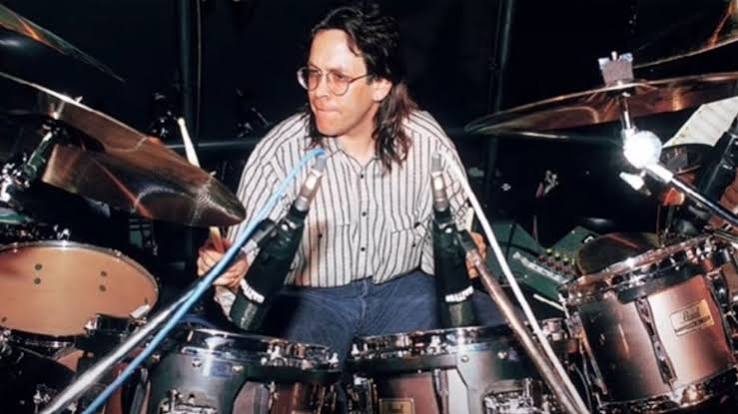
In the first episode of Who’s on Drums?, Sydney-based drummers Stevie and Jonnie introduce their song-focused podcast and spotlight “Big Bone,” the fourth track from Los Lobotomys 1989 self-titled debut, recorded live in the studio at The Complex in West LA before an invited audience. The drummer on "Big Bone" is Jeff Porcaro.
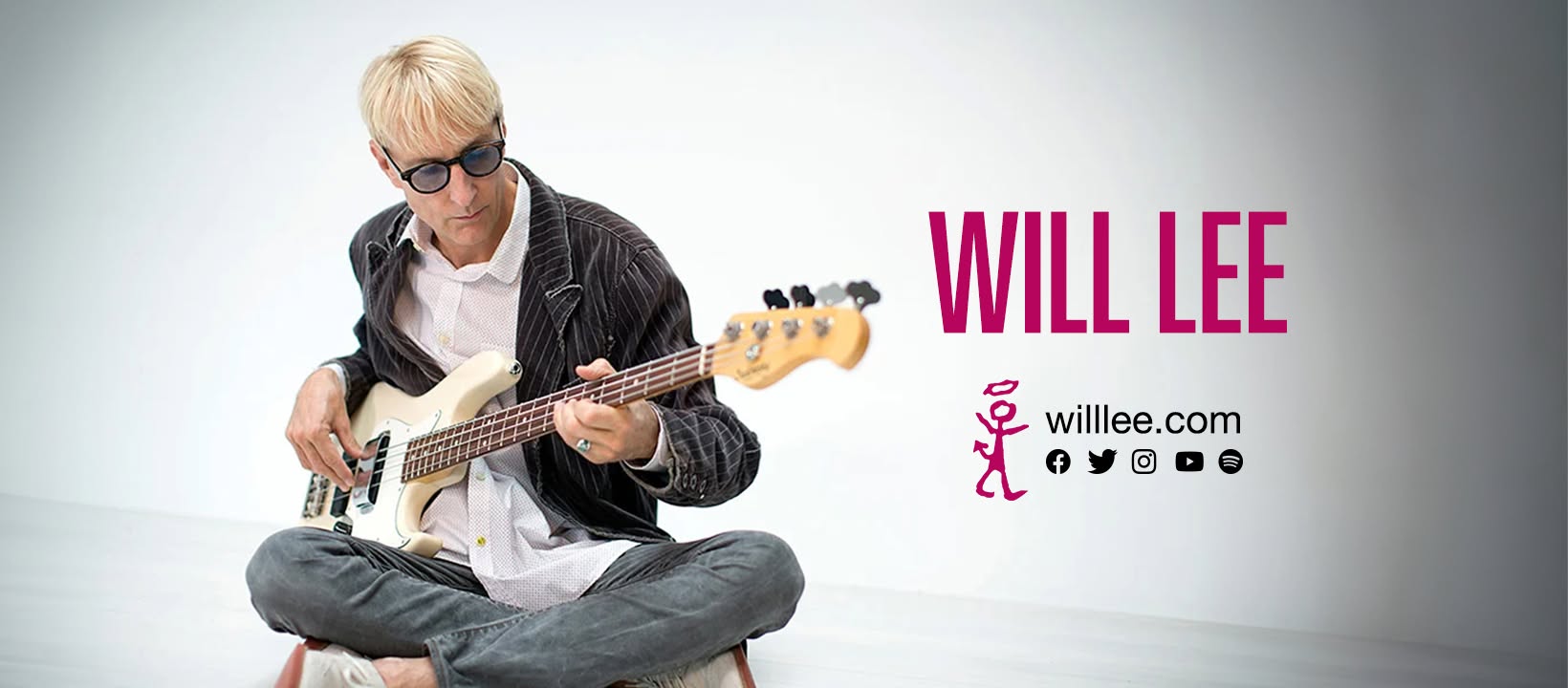
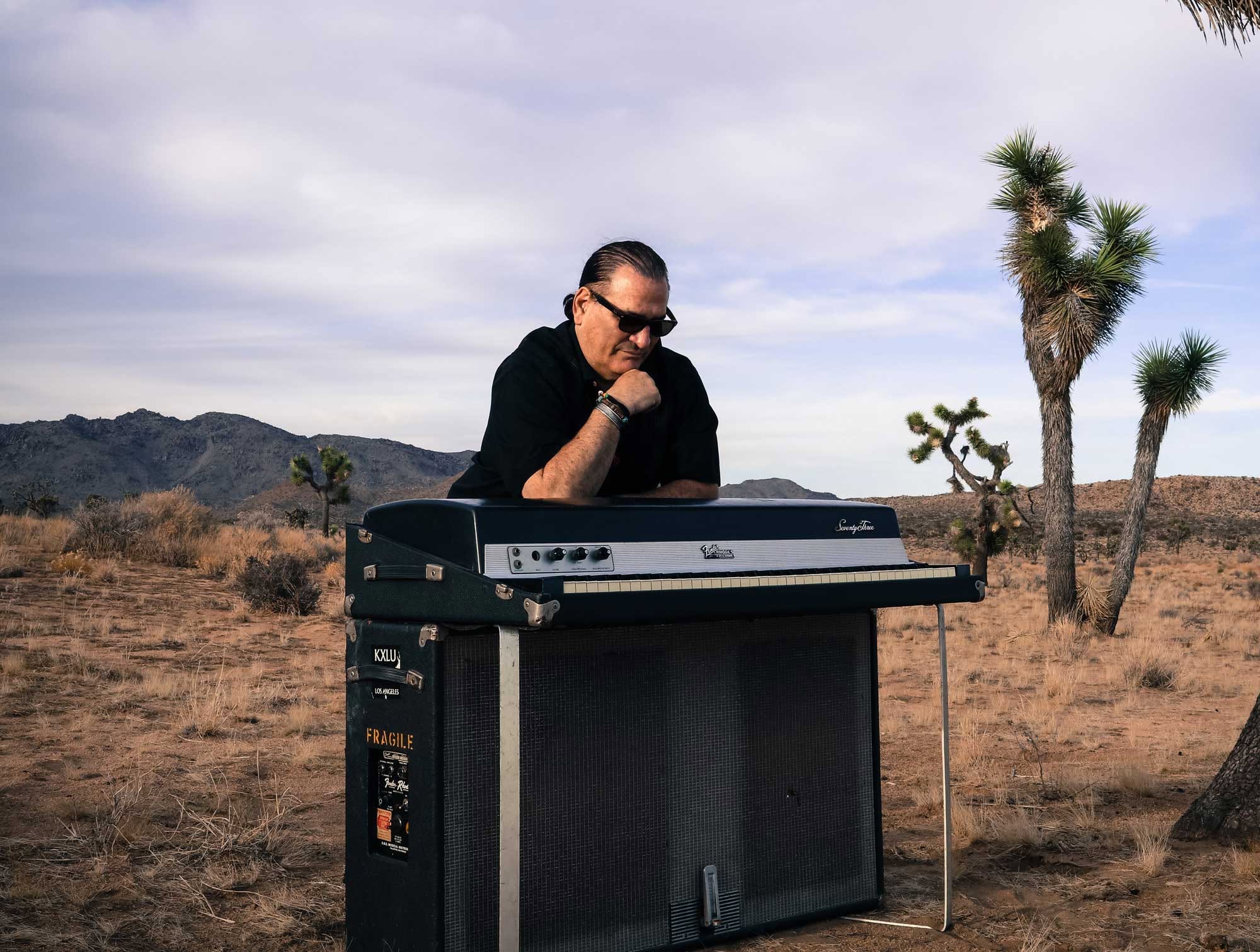
In this episode we have special guests interviews with Los Lobotomys bandleader/keyboardist David Garfield and bassist Will Lee.


In the first episode of Who’s on Drums?, Sydney-based drummers Stevie and Jonnie introduce their song-focused podcast and spotlight “Big Bone,” the fourth track from Los Lobotomys 1989 self-titled debut, recorded live in the studio at The Complex in West LA before an invited audience. The drummer on "Big Bone" is Jeff Porcaro.
In this episode we have special guests interviews with Los Lobotomys bandleader/keyboardist David Garfield and bassist Will Lee.
For all things David Garfield and Will Lee, check out creatchy.com and willlee.com
Check out the Big Bone live video
00:00 - Introduction
02:39 - Featuring Big Bone by Lost Lobotomies
04:59 - The David Garfield interview
09:23 - The Big Bone writing session
11:05 - Recording Big Bone at the Complex
17:50 - Jeff Porcaro's influence and legacy
25:45 - Big Bone's arrangement and rhythmic structure
35:14 - The outro section of Big Bone
38:57 - The drum setup for Big Bone
41:33 - The Will Lee interview
41:40 - Discovering Big Bone
48:20 - The Big Bone recording day
52:55 - What made Jeff Porcaro's playing special
01:00:50 - After the recording and Jeff's passing
01:02:57 - The drumming techniques Jeff inspired
01:08:10 - The Big Bone session video and Joe Porcaro's guidance
01:12:44 - Episode conclusion and credits
WOD - Big Bone - Jeff Porcaro final
[00:00:00] Stevie: "Big Bone" is the fourth track from the self-titled debut album by LA supergroup, Los Lobotomies. The eight-track album was recorded live in the studio before an invited audience at The Complex in West LA on the 29th of April, 1989. The musicians on Big Bone are David Garfield on keyboards, Will Lee on bass, Lenny Castro on percussion, Carlos Vega on electronic percussion, Steve Lukather on guitar, and Branner Fields on saxophone
[00:00:50] Jonnie: Who's
[00:00:52] Stevie: on Drums?
[00:00:53] Stevie: Hey, welcome to Who's on Drums? I'm Stevie.
[00:00:55] Jonnie: G'day, this is Johnny.
[00:00:56] Stevie: And we're a couple of drummers from Sydney, Australia, and we-
[00:00:59] Jonnie: And New Zealand.
[00:01:01] Stevie: We've known each other since the late '90s. Chairbro. Chairbro. We used to follow each other around to gigs, and then at the end of the gig, we'd inevitably end up in a car park for a couple of hours and just talk about our favorite drummers and favorite musicians and songs and stuff like that.
[00:01:16] Stevie: So, you know, we've sort of reconnected in the last little while, and we thought let's make a little podcast about those conversations that we used to have. But we're gonna g- make it a little bit more exciting, a- and we're actually bringing in the actual musicians that played on these songs, so. Th-
[00:01:33] Jonnie: this is highlighting a particular song rather than a whole era.
[00:01:40] Jonnie: But that conversation about a particular song ends up talking about many people over many years.
[00:01:48] Stevie: And we don't, we don't end up... Or sorry, we don't start out with that. It ju- that's just how it sort of ended up.
[00:01:55] Jonnie: Well, uh, mercifully, we've been blessed with, uh, the people, the artists we've been talking to. Uh, you start a suggestion or a comment, a question, and, uh, they just take off on their own accord.
[00:02:15] Stevie: Yeah.
[00:02:15] Jonnie: And it's- We- ... been a pleasure to listen to.
[00:02:17] Stevie: We just hold on, man.
[00:02:19] Jonnie: Yes, yes.
[00:02:19] Stevie: We're, like, we've got our list of questions we wanna ask, but we just, we sorta hang on. We let them go 'cause really it's about them. It might be you and me behind the microphone here, but we really wanna be sharing
[00:02:30] Jonnie: these stories.
[00:02:30] Jonnie: Oh, who wants to
[00:02:31] Stevie: listen to
[00:02:31] Jonnie: us?
[00:02:31] Stevie: Yeah. It'd probably be too long already. So- What have
[00:02:35] Jonnie: we done?
[00:02:36] Stevie: Yeah. What have we done? So, okay, well, on that then. So this first episode, we're featuring the song Big Bone by Lost Lobotomies, and the drummer on that there is the great Jeff Porcaro. And f- you know, f- f- for me, he's probably been one of the biggest influences in my drumming career.
[00:02:54] Jonnie: All drummers.
[00:02:55] Stevie: All dr- yeah, that's right. And since Jeff's not with us anymore, we decided that we would try and get ahold of David Garfield. Now, David Garfield is the keyboard player and, well, he's the brain trust really behind Lost Lobotomies and Charisma and so many of, of the LA projects back in the '80s and '90s.
[00:03:15] Stevie: And
[00:03:15] Jonnie: now.
[00:03:15] Stevie: And now. Still recording and releasing. Still doing stuff.
[00:03:17] Jonnie: Yeah.
[00:03:17] Stevie: Still doing stuff. So you're gonna hear from him in a minute. And then also, one of my favorite bass players, who is the bass player on Big Bone, Will Lee, and we're gonna have a chat to him too. Unfortunately, Johnny wasn't able to make that conversation, uh, that, that evening.
[00:03:34] Stevie: So it's me and Will But talking mostly about Johnny, but I cut all that out
[00:03:38] Jonnie: It's a relief we didn't have to listen to my voice So must have been a pleasure for you to edit. You've been work- Knowing the deal with cutting my voice out ... you've been working on it.
[00:03:46] Stevie: You've been working on it though, haven't you?
[00:03:48] Jonnie: Yes, I have. Yeah, yeah. Now.
[00:03:49] Stevie: Yeah, and why, why is that?
[00:03:51] Jonnie: Because my voice sounds bloody awful. Can't stand the sound of it. Uh- But- And what comes out of it.
[00:03:59] Stevie: You know what? The only person that thinks that is you, because everybody you've ever met, everybody you know, hears the voice that you heard the first time from that first recording.
[00:04:09] Jonnie: Yeah, yeah. Yeah, but they probably weren't listening to me, mate. They're
[00:04:11] Stevie: probably not. All right, let's get onto it. So we're gonna start this with a conversation with David Garfield. We managed to catch him on, it was a Saturday morning our time. It was I think 5:00 PM- 5:00
[00:04:25] Jonnie: PM in,
[00:04:25] Stevie: in Los Angeles ... in, in LA. So we come into the conversation where, uh, I ask him about where or how Lost Lobotomies started.
[00:04:35] Stevie: And so then straight after the David interview, there'll be a short intermission.
[00:04:41] Jonnie: Boom tish.
[00:04:41] Stevie: Yeah, boom tish. Yeah. And maybe a bit of a drum roll or something like that. And then we'll lead into the, uh, interview or conversation with Will Lee. So please sit back and enjoy our conversation with David Garfield and Will Lee.
[00:04:59] Stevie: How
[00:04:59] Jonnie: did
[00:04:59] Stevie: Lost Lobotomies start?
[00:05:01] David : Here's how Los Lobos started. I came out here to Los Angeles in '74 wanting to do my own music, and I had this idea for a fusion band where we would play, like, instrumental fusion music and we would be very fun to watch. And my idea for the band was called, uh, the name was Charisma.
[00:05:21] David : That was my name, and that was the idea. I started the band in 1975, and we got very popular in Los Angeles, and then we started doing other things, and then we started up again in '78 and '79, and then in '83 I got a record deal from a Japanese company. So when I went to make the record, I invited Jeff Porcaro and Luke and Paich, David Paich, all from Toto, to be guests on my record.
[00:05:51] David : And the reason why is we were kind of like parallel bands, Toto and Charisma. We had a lot of friendships within. Our guitarist was Mike Landau. Him and Steve Lukather were best friends. Our percussionist, Lenny Castro, played with Toto, you know. And there was all these connections, so we were like... But our band was instrumental, and their band was a rock band.
[00:06:14] David : They were trying to be like Foreigner and Boston and all that stuff, and we were trying to be like Weather Report and Return to Forever. And so what happened was after we recorded Dream Come True, the very first Charisma record in 1983, Luke, Steve Lukather, my buddy, you know, for years, came down to the Baked Potato and wanted to sit in with us, and he got up and sat in on a song with us that, one of the ones that we had put on the record.
[00:06:40] David : And after that night he said, "I wanna play at the Baked Potato with you guys. But I don't, I don't wanna do the Charisma music. I wanna do some jam stuff. I want it to be more fun. I don't wanna have to learn all that material 'cause it's quite intricate." So we started playing at the Potato as David Garfield and Friends, Jeff Porcaro, Steve Lukather, Nathan East, Brandon Fields, myself, and Lenny Castro, and we played about five or six songs, you know.
[00:07:09] David : And this is how it all started. And it was packed 'cause nobody could ever s- there was no internet. There were no... And nobody could ever see Jeff play. People wanted to see him play. When they saw Jeff was playing with us, they'd line up at noon for a 10:00 gig. They'd be outside waiting all day So we played a few gigs there, you know, sold out.
[00:07:29] David : It was great buzz. We were jamming on a Herbie Hancock tune, a David Sanborn tune, a Miles Davis tune, couple of the tunes from the Charisma record. So one day Lenny goes, at soundcheck, he goes, "I got a name for the band, Los Lobotomies," because there was a Los Lobos band at the time. And so Lenny goes, "Los Lobotomies," 'cause we can have the skull with the incision on it.
[00:07:54] David : He had the whole idea. And Jeff goes, "Yeah, man. Yeah, I can, I can make the cover. I can paint the cover." So that's how it all started. I gotta give Lenny credit, but it basically was just me. I'm, I'm a band leader. I, I write charts. I make phone calls. I remind people, "You gotta be there at 4:00 to get your equipment in."
[00:08:14] David : And that's always been my role, so I never stood out front. I let Luca Thurlow and Vinnie Colaiuta, all the guys shine, but I was the guy that made it all happen. And so I've been happy to do that for over 50 years. But back to the, to finish this story, uh, we played every week and be- now instead of David Garfield and Friends, it was Los Lobotomies, and then eventually we had the offer to do a record.
[00:08:40] David : And so when we had the offer to do the record, that's when we said, "We gotta write some material." That's gonna feed into the song you wanna talk about, Big Bone, because I wrote that with Jeff
[00:08:51] Stevie: From, I've, I've, I've heard you in interviews before and, and you have said that, you know, when, yeah, when you decided to write material for that album, you wanted to write songs with each of the guys in the band.
[00:09:03] Stevie: Exactly. Right? So, so that wasn't just y- you know, you weren't just the s- the sole songwriter, or you were just, Luke wasn't the sole songwriter. So how-
[00:09:11] David : If I left it to them, they would've never done... And that's the way we were. It was like, "We need a song. Oh, yeah." You know, nobody got down to business. I was like, "Okay, tomorrow I'm coming over."
[00:09:22] Stevie: Okay. Let's talk about the Big Bone writing session then. So how did that come about?
[00:09:28] David : Okay. So Los Lobatomies had, we had developed one song in the time we were playing at the Baked Potato. It was a jam. Jeff started a jam. It was basically Grease Lightning from one of the Steely Dan records. And we were jamming on that.
[00:09:45] David : It became Lobotomy Stew. So that was, like, the one song that we kind of wrote and we never, we maybe we played it on the gig. So now it's time to make the record. I said, "Okay, I wanna write with Jeff, I wanna write with Lenny, I wanna write with Luke, I wanna write with Joe Sample." And so Jeff, I'm in my house, literally that side of the room, he was standing there.
[00:10:09] David : A- and my Fender Rhodes was there, and he signed me this line. It goes, "Creach." Jeff always called me Creach, and Mike Bacar was the one that came up with the name Creachie. So Jeff was like, "Creach, I got this groove." That's
[00:10:26] David : what he sang it to me. And then he started showing me the beat. I was like, "Great, man." And he goes, "And I want the trumpet to play," like a Mi- Mi- muted trumpet like Miles Davis. So G- Jeff grew up hearing jazz in his house. His dad was a great jazz drummer, and Miles Davis was one of the groups they heard all the time, so he immediately wanted that sound.
[00:10:54] David : So I wrote the rest of the little chord changes in the bridge and stuff, and that, that is still a great song today. We're planning to start performing it in the near future again.
[00:11:04] Jonnie: Wonderful.
[00:11:05] Stevie: The session itself, the recording session, so that was re- recorded at The Complex in, in West LA. Correct. So c- Right
[00:11:12] Stevie: I, I did a bit of, was having a little bit of a look around on the net about The setup of that studio and, and I couldn't get too much. I'm, I'm trying to paint a picture, right? 'Cause
[00:11:22] David : Did you see the video we put up of the session?
[00:11:25] Stevie: I've seen the videos of... But there's not a video of Big Bone though, is there?
[00:11:28] David : We haven't put it up yet.
[00:11:30] Stevie: All right. Oh man. Can't wait. Put that up next 'cause then we can, we can reference that.
[00:11:36] David : I'm glad you mentioned that because I don't, I don't believe we put that up yet. What we did was we ran a video camera just in a stationary stand for the whole day just, just as an afterthought.
[00:11:48] David : 'Cause back in those days we didn't... You have to imagine what things were like. Video was very intrusive. We didn't like video 'cause they'd come in with lights and directors and clipboards and they would... It took away from the vibe. Like we, all of our music was about the vibe. We didn't want any video people in.
[00:12:06] David : So when we, back in, this is like 1989, you know, 1989. Video became much more of a common thing in the last years with the technology with our phones and the clips and you can post things. Now it's pretty common. You know, in fact, I just had somebody do some recording for me. I said, "Please send me a video clip of the recording."
[00:12:26] David : But it used to be very, very uncommon. But I got that tape and I held onto it for all these years, and then we finally pulled it out and said, "Let's see what we got." But we were just doing that as a way to document it. It wasn't like, we weren't trying to shoot a video. We were just trying to have a time capsule so you could see what we were doing, what we looked like.
[00:12:45] David : But back to the complex, the complex had several different studios, A, B, C, D, whatever. It's over in West LA. And the group Weather Report had done a record there called Eight.30. It's a double album, and some of it sounds like it's live. And it turns out they had recorded that there in the same room we recorded it.
[00:13:09] David : They have a really, really big room, and then it had tie lines to the studio next door So like we were in B and then we had tie lines into C or something like that. So we set up a whole stage, we set up lights, we had the whole... We treated it like it was a gig. We put up chairs. Now we decided to do it like that because originally we would've done it at the Baked Potato, but there would've been a problem there because there wouldn't have been room for us.
[00:13:38] David : The Baked Potato's trying to make drinks and take orders. There would've been blenders, you know, people going- Yeah ... "Hey, quiet." You know? So, so why don't we create our own gig where we don't have to, nobody can tell us to be quiet or make noise, and we just put out folding chairs. We bought trash can- big plastic trash barrels, unused, filled them up with ice and beers, Corona beers, put out chips and salsas on tables, and we got our own security guys.
[00:14:07] David : We had, we paid for it all ourselves, and we invited, we made a list, we invited 50 people to come down. Said, "Just come on down. We're doing a thing." It was very cool And here's a funny story about the session. David Paich o- sent his organ down there to the session. They showed up with an organ. They walk in the room, they go, I go, "What do you got?"
[00:14:28] David : He goes, "I got David Paich's organ." I go, "Well, put it over here." He never came. He never showed up.
[00:14:34] Jonnie: Okay.
[00:14:35] David : But his organ was there. Had he had showed up, we would've put him... We, he would've jammed on something, you know? No, I'm just saying, it was in a studio environment, but it was like our own private audience.
[00:14:48] David : So we played, we had a mixer. We mixed for the audience, but all the tie lines went into the next studio where my engineer and my partner, Alan Hertzberg, was sitting behind the desk recording it. Oh. Yeah. We did very little fixing, very little overdubs. I'll tell you that right now. It was a... We fixed a bas- he had to punch in a bass thing in one place, or I think I a- I added strings to something.
[00:15:12] David : It was very minimal. Very minimal.
[00:15:14] Stevie: So back to the writing of Big Bone then. So y- like you said, you, you were sitting in your room now and Jeff was there, and he had the idea for that, for that, that groove, for that-
[00:15:25] David : Yeah ...
[00:15:26] Stevie: sort of bass line. Doo, doom, doo, doom, doo, doom, doo, doo. So from that point, how do you guys work up a song t- till it's at a point where you're gonna hit record and start playing it?
[00:15:36] Stevie: Was it, do you just get in a room together and start playing or?
[00:15:40] David : Song writes very quickly. Like Jeff, Jeff said, "Boom, boom, boo, boo, doo, boom. Boom, boom, boom. Boom, boom. Boom, boom." In fact, a little faster than that. Mm. Boom, boom, boom. Da, doo, doo, doo. Da, doo, doo, doo. Okay. Okay. So then I go, "Da, doo, doo, doo, doo, doo.
[00:15:58] David : Dun, dun, dun." I come up with the melody, come up with some changes. I mean, probably written within six hours. You know, the next day it was probably 80% written. That's how good songs, good songs just write themselves, you know? I have a new song out on the radio this week that they're playing here in, in this, in, uh, Los Angeles, and you just wrote.
[00:16:19] David : I woke up one day, it was in my head, and I just wrote it down. Like a good song. I've been very lucky because like song- songs and melodies come to me very naturally But Jeff, I mean, he had to approve what I did. Like, he had his basic groove, and I, I put what I put on it. I'd say, "How do you like this?" And he'd go, "Yeah, that's cool."
[00:16:37] David : You know, "Try, how about this?" The other thing was the bridge. But then check this out. So that was
[00:16:52] David : also Jeff's. I almost, I forgot. Jeff's idea. That's right, I did the whole Then Jeff did That was his idea. Yeah. So I just, I just made the chords to go with it. I think I used some suspended chords, like in an octave G, C, D, G. Like And then Jeff did
[00:17:22] David : Then the, the spacing between those, that was also him. That was also his, his i- So yeah, we were just sitting at a drum set at a Rhodes, you know, just the two of us, you know? But, um, no, it didn't take long, and it wasn't on paper. It was, we worked it up just playing, and then I had to put it on paper. Have you seen the chart to it?
[00:17:42] Jonnie: Can't find one.
[00:17:43] Stevie: No.
[00:17:44] Jonnie: Yeah. Well, we'll do it.
[00:17:45] David : Well, I'll send you, I'll send you one of the original charts. That'd
[00:17:48] Jonnie: be wonderful. Yeah. Awesome. Thank you.
[00:17:50] David : That's great. You know what the original title of the song was? The work title?
[00:17:54] Jonnie: No.
[00:17:55] David : Don't Be a Dick.
[00:17:58] Jonnie: That sounds very Australian actually.
[00:18:01] David : Yeah. And that was Jeff's idea too.
[00:18:02] David : Yeah, Jeff's title. And then when we, when we changed the title, changed it from Don't Be a Dick to Big Bone.
[00:18:08] Jonnie: Did you get- Oh, I see. Yeah, it's a bit of a link. Gotcha. Yes. Okay. To get the- There's a little bit, bit of a metaphor there.
[00:18:13] David : I was so lucky to play with him. See, I didn't... I look back now and I, I, it's like I pinch myself, man.
[00:18:19] David : Like, I'm gonna be 70 this year, and it's like I've, I've played... I mean, my whole life I've played with the greatest people, been in the middle of the greatest music for the whole time. It's just like... And I realize that's the payoff more than the money, is being, living it. You know? Like, just like the fact that you guys dig this and reached out from Australia, want to connect, it's really cool.
[00:18:43] David : I mean, it's important. Um, very close with Jeff's family. His mom is still alive, although she's having some health e- issues now. But I've always loved her. And when Jeff was a baby, she used to burp him To the swing cymbal beat.
[00:18:58] Will Lee: Yeah. Bump, ba-dum.
[00:18:59] David : Jeff, Jeff always had the most amazing groove. But, see, I got to play with him and his brother Mike on that video of the three of us, and, uh, the story about that video was that Jeff got kinda ro- He never used to like to do clinics or videos or anything like that.
[00:19:15] David : He got kinda roped into it through this guy that he knew, and he kinda ended up saying yes, and he was committed. And Jeff's dad was there in the studio, really kind of telling him, he was standing behind the camera. He's telling, "Jeff, why don't you tell them about this? Why don't you tell them about..." He was really helping him get through the whole thing.
[00:19:34] David : And Jeff wanted me and Mike to be there, and we didn't have anything prepared. We showed up, a keyboard. He said he wanted to do Babylon Sisters. He says, "Let's do Babylon Sisters." 'Cause Jeff, Jeff was really all about that Purdie shuffle and the Rosanna beat. You know about the Rosanna beat, I'm sure. Oh, yeah,
[00:19:50] Jonnie: yeah.
[00:19:50] Jonnie: Yeah, yeah. And
[00:19:51] David : Jeff was heavily into Bonham and Purdie. And so we get to the studio, and I bring my cassette player, and my headphones, and some music paper, and I'm trying to scratch out a chart to Babylon Sisters. Babylon Sisters is not an easy song to chart out, man. Yeah. You know, and so I couldn't get it written out, and so we ended up not doing it.
[00:20:14] David : But one of the reasons when I did my tribute to Jeff Porcaro's CD in 1996, the first thing I said is, "We gotta do Babylon Sisters. We have to do it," 'cause Jeff wanted, he wanted to play that song, and I just, I just didn't have enough time to prepare it. But I have the chart. Now, the chart's, like, six pages long.
[00:20:33] David : And, um, so in the studio, Jeff would ask me to come up with things. He'd say, like, "We need to do the Mashanga groove or something," and I'd be like make up some chords, and, "We need to do... Let's demonstrate this." And I was just... But me, Jeff, and Mike, we did a few gigs together. That was a hell of a trio, man.
[00:20:53] Jonnie: Ah, I bet.
[00:20:53] David : Mm. Well, you know who Jeff's favorite drummer was? Mike Porcaro.
[00:20:57] Jonnie: Oh, really?
[00:20:59] David : Well, I mean, and, you know, in the, in the, in a funny sort of... He would say that in a funny way. You know, growing up in the family, J- Mike, they all played drums, and Mike, but Jeff really loved the way Mike played.
[00:21:09] Jonnie: Ah, okay. I thought you were gonna say Keltner.
[00:21:11] David : Well, he loved Keltner too, that's for sure. Have you guys seen the little video on my, on my, uh, YouTube channel of Keltner and Steve Gadd showing each other the tricks?
[00:21:22] Stevie: I've seen the video. I haven't watched it. I've been slowly going through all your, all your videos
[00:21:27] David : Good. It's a great one. Joe Picarro was there too.
[00:21:30] David : We were... That was when we made the tribute to Jeff record. Keltner is amazing, man. I, I loved Keltner. Yeah, Jeff loved him, and Jeff also really liked Jim Gordon too, Jim Gordon.
[00:21:41] Jonnie: Oh, yeah. Yes, I remember Jeff talking a lot about that at a, a clinic. Yeah, he, he was really raving about Jim Gordon.
[00:21:47] David : Jim went to the same high school that Jeff went to.
[00:21:49] David : Oh, really? Fairmont High School. Oh,
[00:21:50] Jonnie: okay. Yeah.
[00:21:50] Stevie: I was gonna say, what's the age difference between Jeff and Jim Gordon?
[00:21:54] David : Jim was probably, like, seven, eight years older than Jeff, something like that. Oh,
[00:21:58] Stevie: okay. Okay.
[00:21:59] David : I'm just guessing, you know? All right. He just had mental illness. It was unfortunate. Yeah,
[00:22:03] Jonnie: very, very sad story.
[00:22:04] Jonnie: Yeah.
[00:22:04] David : The, uh, I was, I had to do an arrangement of Wichita Lineman. I was the musical director for George Benson for many years, and we, we were, George wanted to do Wichita Lineman, so I'm listening to the Glen Campbell version, and I'm writing down the chord- you know, figuring out the chords. I was always big on that.
[00:22:21] David : I like to figure out what are the real chords before I change anything. And I'm listening to the drums, and I go, "Wait a second. He was playing with brushes a minute ago. Now he's playing with sticks."
[00:22:32] Stevie: Mm.
[00:22:33] David : And, and I look, and I, I was quite impressed, and I looked up who played the drums on Wichita Lineman. It was Jim Gordon.
[00:22:40] David : And so he switched from playing the brushes to the sticks so seamlessly you could not tell. And I know it wasn't live. He had, probably had them there right by his drums, and he probably just picked one up. You know what I mean? And never missed a beat.
[00:22:55] Will Lee: Nice.
[00:22:56] David : But see, there was a hierarchy of the LA studio drummers.
[00:22:59] David : You know, there was Hal Blaine- Mm ... John Guerin, Jim Gordon, Jim Keltner-
[00:23:06] Jonnie: Yeah ...
[00:23:07] David : and Jeff was right, right there.
[00:23:08] Jonnie: Yeah.
[00:23:09] David : A lot of people think it's Hal Blaine playing Hawaii Five-0. You know, doo, doo, doo, doo, doo. That's John Guerin playing.
[00:23:15] Jonnie: All right. I was, I was actually gonna... Did you meet him, John Guerin?
[00:23:19] David : Yes. All right.
[00:23:20] David : I, I was, he was a lovely guy, worked a lot with him. Yeah. And he became a very good friend of mine before he passed. You know, we- Wow ... we, we became very good friends. All right,
[00:23:29] Jonnie: man. Yeah, yeah.
[00:23:30] David : He was one of the heroes when we were coming up. He was like, he was way up there, but, but see, there was Hal Blaine, John Guerin, you know, Jim Gordon, Jim Keltner.
[00:23:40] David : You know what I mean? Yeah. And then Jeff was right below them, and Jeff was like the young prodigy, and everybody just loved him. Everybody just loved working with him. He, one of the things that people don't know about Jeff is he had a reputation in the early '70s when I came here. He was like the studio drummer king, the king, the new studio cat, king of the studios.
[00:24:02] David : Everybody thought of him as being slick, a really slick player, 'cause most of the studio drummers were like that. They didn't hit hard, and they were slick and this. When you listen to it on the record, you don't know what's going on. I heard some- he played on a single for one of the artists I worked for, and I'm, you know, listening and everything.
[00:24:19] David : When the first time I played with Jeff, I was blown away because Jeff played hard. He played from his heart. He put everything he had into it, and that influenced me, 'cause I- that's the way I play the keyboards. But I kinda picked that... I mean, I was like that already, but I picked it up from Jeff. Jeff em- Jeff kind of re- re-emphasized to me by the way he played how important it was to play with complete conviction, you know?
[00:24:47] David : And so often when Jeff would do a, we'd do a take in the studio, say we'd run down a song, work out the kinks, we'd put on the red light, we'd do the, we'd do the track. Jeff would play his heart out. He would play the perfect drum track, but some of the other guys would've missed a coda or they would've made a mistake and they'd wanna do it again.
[00:25:05] David : And I looked, over the years I noticed that, well, Jeff got it right. Why don't we just do it again with Jeff's track instead of making him play it again, you know?
[00:25:15] Jonnie: Oh, okay. '
[00:25:16] David : Cause there's something about when you put everything you have into it, it's like, like playing in a football game or something, you know, running for the goal line.
[00:25:22] David : So that's what impressed me about, about Jeff a lot. We had a lot of great gigs. The Los Lobos record, he was very instrumental in that whole thing. I mean, he, he wasn't a band leader. I was the band leader, but he basically let me know sometimes what to do and what not to do, and we always respected him
[00:25:45] Stevie: Johnny, do you have anything specific you wanna talk about, about Big Bone in the, in the- Well, uh,
[00:25:50] Jonnie: the...
[00:25:51] Jonnie: It's, uh, it's got an, uh, it builds quite nicely every four bars from the beginning, every, roughly every four to eight bars. And, um, uh, you know, it drums the percussion first, bass for four bars, then four goes guitar, four bars of the synths come in, the melody starts coming in, and then you get into the verse.
[00:26:07] Jonnie: And, um, it's in- it's interesting what you said, David, with, uh, Jeff coming up with a groove, and then he imagined a trumpet, and, uh, you would, you'd come up with this, uh, melody. Well, to me, in the verse, it, it's like there's a call and response between the g- the guitar of riff, bass and guitar riff, and the melody.
[00:26:27] Jonnie: Uh, they all go for about two bars each. So the melody- Right ... roughly two bars, and then you've got two bars of, uh, the heavy string, uh, and bass, bass guitar and guitar, and bass drum riff which has got the, uh, uh, syncopated 16th notes, you know? Uh, which- Right ... it's really kinda pushing it along, especially the andahs with the bass drum.
[00:26:47] Jonnie: Da, da, da, da, da, da. Is that which seems to give it some real forward momentum. And, um, yeah, I just noticed that there seems to be a lot of call and response, which is quite, quite nat- So it makes it sound quite natural.
[00:27:00] David : Yeah. I mean, that's just the way I write. I write all by ear and by from the heart. I don't...
[00:27:05] David : It's not out of a book. So it's like, doo, doo, doo, doo. Doo, doo, doo. Da, doo, doo, doo, doo. Dun, dun, dun, dunya, dun. Dun, dun, dun. You know, now that I'm thinking about it, I think Jeff might've helped me write that melody a little bit. It's been a few years.
[00:27:24] Jonnie: Okay.
[00:27:25] David : But I really haven't talked about this. I haven't talked about this in depth.
[00:27:30] David : But now that I think about it, we, yeah, we, we, we, we were bouncing all of that off of each other. I'll be like- Yeah ...
[00:27:35] Jonnie: da, dun,
[00:27:36] David : dun, dun, dun. Bump, bump, bump, dunya, dun. Ba, dun, dun, dun. Ba, dun, dun, dun. Just little things. You go up, you go down. Yeah.
[00:27:46] Will Lee: Yeah.
[00:27:46] David : You go back to the riff. But now, do you know that there's another recording, another arrangement of Big Bone on the Tribute to Jeff Porcaro record?
[00:27:54] Stevie: Oh, yes, yes, yes. I've heard that. Gregg Bissonette's playing drums on that,
[00:27:56] David : right? Gregg wanted, when we did the Tribute to Jeff record I asked each to f-, the plan for the record was each song would have a different drummer, and each drummer would pick either a song or a groove of Jeff's that they liked. So Carlos Vega picked Black Friday, you know, the Steely Dan groove song and, um, we brought, uh, Bernard Purdie in for Babylon Sisters, you know, stuff like that.
[00:28:27] David : But now for Big- now Greg Bissonette wanted to do Big Bone, but he wanted to do it in this New Orleans thing. Yeah. It's like, which is nice, but I'll tell you, I prefer the Jeff, the original one. That's the one we play. That's the one.
[00:28:44] Stevie: I read or I heard something, that version that Greg Bissonette's idea behind the groove for that was taken from the outro of Rosanna, the, you know, the outro, the- Yes,
[00:28:57] David : exactly
[00:29:00] Stevie: Exactly. 'Cause that's, that's the groove. Mm-hmm.
[00:29:06] David : You're
[00:29:06] Stevie: absolutely right. That's how he plays it in that tribute version. Now,
[00:29:08] David : if you look on our, on our YouTube channel, you'll see I have a version of Rosanna. Have you seen that yet?
[00:29:14] Stevie: No, I'm just-
[00:29:14] David : With Steve Gadd and Greg Bissonette playing.
[00:29:17] Stevie: Aha.
[00:29:18] David : And Mike Porcaro, Bobby Kimball, and, uh, Steve Porcaro, Lenny Castro.
[00:29:25] David : It's quite something else. We did a show in Germany and the core band was Mike Porcaro, Steve Gadd, and myself with the core rhythm.
[00:29:34] Will Lee: Right.
[00:29:35] David : But Greg was up. Yeah. Yeah, you'll see we do Rosanna, and we do that exactly what you're talking about, that same groove. You're absolutely right. That is what J- that is...
[00:29:45] David : See, you know, I haven't talked about this or thought about this in so long. That's exactly what Greg said. He said, "I wanna do it off of the groove on the end of Rosanna," which is kind of a New Orleans-y kind of thing, you know?
[00:29:56] Jonnie: Yeah.
[00:29:57] David : If you watch my live video, you'll see I even, at one point I quote The Meters in my piano solo, which is a New Orleans group.
[00:30:05] David : And here's a fun story for you We were mixing this version of "Rosanna" in the studio back. We recorded multi-track in Germany of the performance. We were recording, and we were mixing the multi-track, and our engineer put in the Toto version of, um... Was it "Rosanna"? No, I'm thinking about "Africa." So we also did "Africa."
[00:30:31] David : Same thing with Gad and with this and that. So we put "Africa"... He put "Africa" into the session. Like our session, he brought Toto's "Africa" in as an additional track, lined up the start place, just to kinda check the vibe and, you know, make sure he was getting the right kinda sound. "Africa" from Toto played along with our "Africa" live, the whole song, and never got out of sync.
[00:30:58] David : Oh,
[00:30:58] Jonnie: God.
[00:31:00] David : And the reason it did that was because Greg had a click set at the "Africa" tempo on stage, and he just looked at it, you know, as a visual thing. Clicking,
[00:31:13] Jonnie: yeah. Mm-hmm.
[00:31:14] David : And so Greg played along with the... Greg kept it with the click, and Gad was just playing along with Greg. Just- And they were so solid.
[00:31:22] David : There's no video of "Africa" yet, but it's on the, the Mike Piccaro record. You can hear it. It's really fun, man. Man, I've just had so much fun playing music. I'm, I'm so lucky. I never... I finally look back and I go, "My God, I've been so fortunate." We started our band, Toto started the same time, watched them. I was in the studio when they did "Hold the Line."
[00:31:44] David : I heard tracks, and I said, "Man, that's gonna be a hit song." And then I heard it come on the radio. You watch all this stuff happen, you know? And, um, um, Vinnie Colaiuta came into our group as a sub. He was unknown, new guy in town. We, you know, we put him on the map, and I watched all this stuff happen. Now Vinnie's considered one of the greatest drummers in the world.
[00:32:07] David : I remember I was carrying his drums out of his car with him, man, and we rehearsed three days a week for my band, you know? But we just, all we ever cared about was the music.
[00:32:15] Jonnie: Yeah. I, I think I saw a photo of you and Vinnie playing just after you moved to Los Angeles. Um, it looked like it was in someone's house somewhere.
[00:32:23] Jonnie: Like it was daytime, bright light coming through the windows- Wow ... and everyone just sort of set up in someone's lounge room. And I think Vinnie's, uh, yellow Gretsch, um-
[00:32:31] David : Oh, yeah, the yellow Gretsch? Just,
[00:32:32] Jonnie: just, yeah, yeah, just, uh... Everyone had set up sort of like in a circle. That's what I, how I remember it anyway.
[00:32:38] Jonnie: And, um- Yeah ... just there to play.
[00:32:41] Stevie: That's the Zappa kit you're talking about, eh?
[00:32:42] Jonnie: Mm.
[00:32:43] Stevie: The yellow Gretsch? Yeah. Yeah,
[00:32:45] David : yeah, okay. Gotcha. It's also kind of a Tony Williams color. Mm. You know? Yeah. But, you know, I just- You know, with, with doing all this music, I was talking with one of the guys. We found a recording of, of somebody put up a recording of us playing at The Potato in 1992.
[00:33:01] David : I just saw it a couple nights ago, and Vinnie's playing with us and it ... And I'm listening to it and I go, "Man, this sounds so, so good." I mean, I'm thinking back to like, I got to do this, you know? Mm. And my friend, one of the other friends on, that was in the band, Larry Klimas, the saxophone player, I sent it to him and he was like, "Man, how
[00:33:21] David : We were so great. How come we didn't get more, more known or more popular?" And I'm like-
[00:33:26] Stevie: Yeah. Yeah ...
[00:33:27] David : you know, I don't know. You know, it's like, um, it's just like it doesn't even matter. I mean, it's like ... But what we were realizing was that we went for it. We were just going for it, and,
[00:33:40] Jonnie: uh- You can feel that when you hear him, hear the playing.
[00:33:42] Jonnie: And particularly there's an album that came, I think it was a live album that Charisma did in the late two thou- uh, late '90s I think. I got it, I bought it in the year 2000, and it was-
[00:33:52] David : With the four pictures on the cover?
[00:33:53] Jonnie: Yeah, with a white background and yeah, I think it was live- Oh, it was ... in Europe somewhere.
[00:33:57] Jonnie: Yeah. That
[00:33:57] David : was our European tour from 2000, yeah.
[00:34:00] Jonnie: Oh, I hooked on that album. Fucking- That was a cornerstone album for me. Like it was just absolutely ... I couldn't get enough of it. It was, uh, s- I couldn't believe what I was hearing, you know, and feeling.
[00:34:08] David : Well, thank you, man. Yeah. I mean, that was just a testament, that was just a testament to the chemistry we had because Vinnie had a chance to do a show in Germany for drums, for this big drum shop.
[00:34:20] Jonnie: Yeah.
[00:34:21] David : And we went there to play with him and, and we ended up doing a few gigs, but it's just the chemistry. But there was a point I was gonna try to make and I'm, I'm j- I'm just ... I just like this particular, um, performance on my YouTube channel. I, I saved, and I have a, I have a playlist called My Favorite Performances From Other People's Channels, and I just liked it.
[00:34:43] David : It's, it's us playing with Landau and Vinnie, Jimmy Johnson, Larry Klimas at The Baked Potato in 1992. But what I, where I was going with this is that we really, um, we went as far as we could. You know, it was always about the music and, um, I don't mind that, like you say, maybe we didn't get- Get s- more, uh, recognition at the time, but I think we'll be getting recognition for decades and decades to come
[00:35:14] Stevie: Yeah, I wanna talk about that, there's that outro section of Big Bone.
[00:35:18] David : Sure.
[00:35:19] Stevie: So, and that comes just after the, there's the breakdown, right? Yeah. And it's just, it's just, it's bass drums, percussion, do-doom, do-doom, do-doom, do-dooms. Da, da, da, da, da, da. Yeah. Some, yeah, yeah, boop, boop, boop, boop, boop. That's And then at the end of that, Jeff just goes, ba, bidda-loo, ka. And then it goes, bum, bum, bum, ba, ba, ba.
[00:35:39] Stevie: Yeah. And then the guitar goes wah, wah, wah. And th- like that, those guitar chords with the notes that Will is playing on the bass- Mm-hmm ... and then what you're playing on the keys, there's one part there where that's, tho- all those notes sort of coming together create, for me personally, create this vibration every time I hear it, where it makes the hair stand up on the back of my neck.
[00:36:02] David : Nice. Nice. That's what we wanted.
[00:36:27] David : I'll tell you one thing though, the big boom, the bass line that Will's playing In the end, he does a thing. The thing that Will's playing at the bottom is, . He's playing a Beatles thing from Magical Mystery Tour.
[00:36:45] Stevie: Yeah, yeah.
[00:36:46] David : You know
[00:36:51] David : what I'm talking about? Yeah, I know that, yeah. He's always been a big Beatles fan. Right. So he dropped the Beatles line in there, but see, here's the thing. Jeff knew how to set-- That's how a drummer sets up something. Bah, boom. Yeah. You know what I mean?
[00:37:04] Stevie: Exactly.
[00:37:04] David : It's a musical way of signaling you what's coming next, you know?
[00:37:09] Jonnie: I, I think just on Jeff, I can't think of many drummers where someone has got their name a- and their style attached to so many iconic different elements, be they short drum fill type things or like the, with Big Bone too, the jazz ride cymbal beat on the hi-hat swung with the backbeat. I don't know if anyone really, uh, paved the way with that groove as much as Jeff did.
[00:37:38] Jonnie: Then his 16th note triplet, tom to bass drum fill, which he does at the, um, end of the chorus on Big Bone and, and it's anchored very well because the, the, it must be good for the other Mission decisions to, um, play along with that, those sort of turnarounds because the snare drum is on beat one, so there's no doubt about where the quarter note pulse is, you know?
[00:37:57] Jonnie: But he's, he's doing these- Mm-hmm ... um, wonderful embellishments all the way around the quarter note, you know? And then putting the groove in some instances, like Nashango putting, taking the groove off the snare bass and hi-hat and putting it on the drums themselves, you know, things like that. But I think he's just offered so much that people can borrow from.
[00:38:15] Jonnie: It's amazing.
[00:38:16] Stevie: Well, we've borrowed the hell out of him, haven't we? Yeah. Haven't we, John? Yeah. I know I have. Yeah.
[00:38:21] David : And you know what I remember in that moment, oh, I promise you I'll get that video up. Awesome. In that moment, you listen to Jeff, he knows exactly what to play. He doesn't overplay, but he, he doesn't underplay.
[00:38:34] David : You know what I mean? You're not wishing that he'd do something. He does some cool stuff. He just knows exactly what to do to support and drive the whole thing, and that's what Carlos Vega learned from Jeff. Carlos picked that up from Jeff. Wow. It was very much like that. We'll have to do another episode and talk about Carlos.
[00:38:52] David : Carlos Vega. Oh,
[00:38:53] Stevie: yeah. Yeah. Absolutely. Abso- absolutely. Just, okay, just one more, one more thing. Now C- Carlos is playing double drums on that, electric drums. Is that right?
[00:39:02] David : On the record, here's what we had. We had three drum kits up there. We had Jeff's kit, and we had Carlos' kit, and then we had an electric, kind of an electric kit.
[00:39:15] David : On certain songs, there's two drum kits. Like on All Blues, there's Vinnie and Jeff are both playing drum kits.
[00:39:23] Stevie: Yep.
[00:39:24] David : On, there's a song called Dismemberment where- Lenny's playing the electric kit
[00:39:31] Stevie: Yep
[00:39:32] David : and Carlos is playing his kit. Jeff's just playing on, performing around the percussion. Yeah. But yeah, they're
[00:39:39] David : I don't remember on Big Bone, I don't remember off the top of my head if, if Carlos was playing on that too. It might have been just Jeff.
[00:39:49] Stevie: That's why we need to see this video, see. Yeah. 'Cause those, of those videos that I saw that are already up, you can see the, you can see when Jeff's playing and Carlos is playing on something, and Lenny's over on percussion.
[00:40:01] Stevie: And then you can see the s- the Lenny and Carlos playing, and Jeff's over on the percussion kit. Then yeah, the, the song that Vinnie's playing on, Jeff's on the other drum kit. So yeah, I'm, I'm, I'm excited to hear that there's gonna be a video version of Big Bone.
[00:40:26] Jonnie: Between recordings with David and Will Lee, David actually uploaded the Big Bone video
[00:40:33] Stevie: He sure did
[00:40:35] Jonnie: And actually he did find it during the actual, uh, interview
[00:40:38] Stevie: He did. And then- And I actually, I actually mentioned that to Will. Yeah, if it, when- Yes ... you know, once we get to it, you'll, you'll hear me sort of say that, that, like, he found it in real time.
[00:40:47] Jonnie: Yes.
[00:40:48] Stevie: Yeah. Yeah. Which was exciting for us.
[00:40:49] Jonnie: And it was about within a few days after the, uh, discussion, the recording w- uh, it was on YouTube.
[00:40:56] Stevie: Yeah.
[00:40:56] Jonnie: Mm.
[00:40:57] Stevie: Another thing I wanna add too, which I don't think we... I can't remember if we talked about it, Will and I talked about it, but the, um, the chart that David sent-
[00:41:05] Jonnie: Mm
[00:41:06] Stevie: Well, Will actually showed me the chart that... 'Cause he did the, y- you know, talk about the gig that he did
[00:41:12] Jonnie: with Lukather. He ha- said he had several charts, I think. Yeah, yeah. He pulled them up live as well. Will said, "I've got several charts for Big Bone."
[00:41:19] Stevie: Yeah. But he showed me one. He pulled one up. It was on his iPad.
[00:41:22] Jonnie: Right
[00:41:23] Stevie: Like a copy of it on the iPad, and showed it to me.
[00:41:24] Jonnie: Yes.
[00:41:25] Stevie: And it was, it was the, the Lukather version. Mm-hmm. Not his version, but the one that they-
[00:41:29] Jonnie: Used
[00:41:29] Stevie: for whatever- ... played at the Bake- ... particular gig, yeah ... Bake potato, whatever it was. Mm-hmm. So, um, all right. Well let's, let's rip into the Will Lee interview.
[00:41:36] Stevie: Enjoy. So yeah, Big Bone. So I first heard of Big Bone, I think a mate of mine, a mate of mine gave me like a, a mixtape stuff, of stuff, and there w- there was some Journey on there. There was, The Tubes were on there, and Big Bone was on there. And, um, I've got this thing where if I, if I hear a song and I really, really like it, I get obsessed with it, obsessed with that song, and I'll listen to it over and over for weeks.
[00:42:09] Stevie: Nothing else, just that one song, and Big Bone was, was one of those songs for me, right? And then I remember talking to Johnny about this years and years and years ago, and, you know, it was, that song was something that really connected with him, too. So that's why we decided that- That's,
[00:42:27] Will Lee: that's amazing. You just never know when you're gonna be playing like, like a, a s- a singular piece of music that, you know, what's gonna ever be heard, first of all, and what's gonna actually mean something to anybody in the long run.
[00:42:41] Will Lee: It's like amazing, you know, 'cause that's just one of quick song- you know, one of a, a batch of quick songs that were, that were just crammed together in a rehearsal, and then with the intention of recording the next day, you know. And, well anyway, I'll let you go.
[00:42:57] Stevie: No, no, no. This, I, I, I like, I like to hear this because it's funny you say that because I think just before we spoke to David, actually, uh, Johnny and I got on a call beforehand and were talking about some stuff.
[00:43:07] Stevie: And I, and I'd just been out for a run, and I was driving back, and I'm thinking to myself, "So we're gonna meet up with David, and we're gonna start talking about these, all these old songs and what they mean to us." And 'cause Johnny and I, you know, we've, we've gotten back really deep into this music, and we were thinking to ourselves, "Well, these guys may not have heard these songs," uh, 'cause this was back in 1989.
[00:43:30] Stevie: That's a lo- that's a long time. So we're k- yeah, we were kinda thinking, "Oh," you know, "I wonder if these guys are gonna go, 'Ah, I don't remember that song,' or..."
[00:43:40] Will Lee: Well, you know, it's not one of those songs that you- That you necessarily deal with on a day-to-day basis. Once, once that record was done, that was, it was onto the next thing, you know, kinda thing.
[00:43:52] Will Lee: But it did mean a lot to me 'cause, you know, I would visit it now and again. And then one day, God, I think it was, uh, shit, was it Lukas that came to town and we were playing a gig maybe, maybe doing this Toxic Monkey gig with Bill Evans and Keith Carlock and Steve Weingart, or it could've been a, a David Garfield gig.
[00:44:12] Will Lee: But anyway, somebody brought out the chart and said, "We're gonna do Big Bone," and, and I thought, "That's, that's co- that's cool." And we started playing it, and I just realized, that's what a cool tune this is. What an amazing thing, and to me that song, that's a very typical song, a version of a... That's a good example of a song that would not have been written anywhere but LA.
[00:44:37] Will Lee: And I think the real giveaway in that equation to that, to my s- summation of, of that, what I mean by that is take those Rosanna accents that are in there. Yeah. That doesn't come out of New York.
[00:44:54] Stevie: Okay.
[00:44:55] Will Lee: Or Nashville or anywhere.
[00:44:56] Stevie: Right.
[00:44:57] Will Lee: So that's a strictly LA thing. I don't know what that is, where it originated, but, you know, when you hear that, you know it came, comes from LA somehow.
[00:45:06] Stevie: Right. So David said that, I think Jeff had said to... 'Cause, 'cause, you know, I, and correct me if I'm wrong here, David said when he s- was putting that, wanting to put that album together, he sort of wanted all the guys in the band to, to put forward a song that would kinda be their song, and this one was, this one was Jeff's song.
[00:45:25] Stevie: And he said- Oh, okay ... yeah, and he s- it, and he said to, yeah, Jeff said to David, you know, "Hey, man, I've got this sort of, this riff," and then that was it. So then David sat at his keyboard and played something, and there was some, there was some drums at David's place, and then they, Jeff and, and David kinda worked that, worked the song up from there.
[00:45:48] Stevie: But do you remember working that, that bass part up at all?
[00:45:51] Will Lee: Oh, boy. You know, it was such a, it was such a, a quick, you know, learning thing. I think we had one day to rehearse, and the next day an audience comes in and we play the, we play the thing with the intention of making a live album. So I just know that I was like a deer in the headlights 'cause I was the only guy fr- not from LA on that gig.
[00:46:15] Will Lee: They had flown me in, and it was really strange because I always assumed that that was Nathan's gig, Nathan East's gig, because, uh- The first version of that band that I was aware of, I came down to the, to the, uh, Baked Potato one night, and those guys were playing, and it was just a quartet, if I remember.
[00:46:37] Will Lee: And I think it was, like, Creachy, it was David Garfield, I guess Jeff, and I-- fuck, it could've been Carlos Rea- Carlos Vega, and definitely Luke, and it was Nate on bass, Nathan East. And I was in the audience, and Nate was up there with his five-string, which I'm a four-string guy, even though I play a lot of five these days.
[00:47:00] Will Lee: Mm-hmm. Um, but when I wanna have fun, I play four-string. I get asked to come up to the stage to sit in, and I was, like, em- kind of embarrassed into it. So you go up, and Nathan hands me this five-string bass, and, "Okay, we're gonna do 'Freeway Jam' by, uh, Jeff Beck." I remember this because I didn't know the song.
[00:47:22] Will Lee: So they t-they-- I don't know, somehow they started playing it, and I fumbled around and next thing I knew, you know, I was, I was totally embarrassed 'cause I didn't get it right. Was like, "Ugh, God, I don't know this song." And next thing I know, I get this phone call to come and do the, do the record, which to this day I don't understand, but I really appreciate it, you know, the thought.
[00:47:43] Will Lee: And they really made me feel at home. You know, when I got to the rehearsal, David Garfield was wearing a Late Night with David Letterman T-shirt.
[00:47:51] Stevie: Yeah, cool.
[00:47:52] Will Lee: And it was like- Very cool. ... oh, wow, okay. And there's all these great guys, Lenny Castro, you know, and there was, uh, Joe Sample and the great Brandon Fields, you know, and all the drummers that I love and know were there.
[00:48:05] Will Lee: Vinnie, Jeff, and Carlos, the great Carlos Vega. So I knew I was gonna be all right. Even if I screwed up, the groove was still gonna be there.
[00:48:16] Stevie: So what's your recolos- recollection of that recording day then?
[00:48:20] Will Lee: Well, you know, we-- I mean, when you're s- like, in my career, I've always felt like that the only way to go is to surround yourself with people better than yourself, and that was absolutely one of those scenarios.
[00:48:37] Will Lee: And I-- and it just, it gives you this, this feeling of, um, of like, first of all, you're, you must be there for some reason 'cause there's about a million other people that could've been called for that gig. So what are you gonna do, s-sabotage the music? No, you're not gonna do that. You're gonna do the best you can.
[00:48:59] Will Lee: And, uh, and it's funny because
[00:49:07] Will Lee: In a, uh, i- in a music situation, of course, when there's a, when there's an audience and stuff, they're like the, they're like one of the band members, the audience. But the thing that r- that, uh, that, that coaxes you to do better is the people that you look up to surrounding you. You know, when you see that That takes you to another level because you don't wanna screw up in front of these guys.
[00:49:38] Will Lee: You just don't. You wanna try to just t- any- lock in any way you can. So the, it, so that started at, uh, when there wasn't an audience, and it continued when there was an audience, so the feeling of being in the room with those guys was, it was a real motivational driving force, you know, that kinda fast-forwarded me into the music.
[00:50:00] Will Lee: You know, I was riveted to the chart, and I did not wanna, like, s- screw things up. So, uh, you know, when you have a, a good drummer to play with as a bassist, I mean, I've always felt that a bass player like me, and I consider myself sort of a groove-oriented bass player, I'm not a big solo, bass solo star of any kind.
[00:50:23] Will Lee: You know, I just, uh, like, the guy driving the bus with the drummer kinda guy. That's how I feel about myself. That's what I think the job is for me. And when you have a guy who's solid to lock into, you look like a million bucks, so... I know, what's a million bucks these days? But anyway
[00:50:42] Stevie: Had you played with Jeff previously?
[00:50:45] Will Lee: Yeah, we had done proper record dates. We, I think at that point we had already done a Boz Scaggs record maybe, parts of a B- Boz Scaggs a- album, album produced by Bill Schnee. I forget the name of the record. We had done, um, some things produced, I believe, either by, by Tommy LiPuma or Arif Mardin out in LA Studios.
[00:51:08] Will Lee: Oh, and the first time I met him was, we had done Saturday Night, Saturday Night Live with Boz Scaggs doing Low Down and, and maybe Lido or s- another tune at the beginning. Remember that, when, uh, Saturday Night Live first came on, I guess they still do it, they have two, they have a musical act that does two songs within a 90-minute show.
[00:51:31] Will Lee: And, uh, I was asked, along with a couple of other... They didn't wanna fly everybody from L- LA in to do these, this show, so he, he brought a couple guys. Jay Winding on keyboards, Luke Athur. I-- no, wait a minute. Luke Athur may not have even been there. Elliot Randall was on guitar, and there was Jeff. They had two drummers, Jeff Porcaro and Chris Parker played together on that one.
[00:51:57] Will Lee: And that's when I first met Jeff, and I, I think it went well because Jeff, if I remember the, the chronology right, Jeff went back to LA, and I think maybe I'd done some recording with Luke. I can't remember at that point, but I started getting phone calls from those guys saying, "Hey, we're starting th- this band, and we want you to be the bass player.
[00:52:18] Will Lee: You gotta move out to LA." And they were starting Toto And I had a career going in New York, and I had no interest in leaving and starting over again anywhere else. So I said, "No, thank you." But I think it all came from, from the way it felt to play together on that, on that Saturday Night Live thing with Boz Scaggs I could have been a Toto guy, but you know, I'm glad, I think they did the right thing.
[00:52:44] Will Lee: They found a guy way better, Hungate, and then of course they ended up getting Mike Porcaro to, to continue on with, and they just made the most gorgeous records.
[00:52:54] Stevie: So what was it about Jeff's playing that, that... Well, how, how did, how did it make... Do you, I don't know if you remember how it made you feel playing with him.
[00:53:03] Stevie: What, what did he have that some of the other cats didn't have?
[00:53:06] Will Lee: I think that the immediate reaction came from him, from seeing how sure he was Like he, he seemed to be able to zero in on just what was right for the song, but it not, without any hesitation, just immediately. You know, he just kinda knew what the song needed or what the section of the song needed always.
[00:53:30] Will Lee: He made quick decisions about things like that, and it, I guess you probably can figure out that it kinda worked out for him pretty well over time. Listen to those Steely Dan records and stuff, just you name it, whatever he did.
[00:53:43] Stevie: So Big Bones now, like David released the video of that, and- Ah ... when, when Johnny and I spoke to, to David a little while ago, he was talking about some of the Los Lobatomys videos on his YouTube.
[00:53:56] Stevie: And, and I said to him, "Well, you know Big Bone's not on there." And he went, "Oh, really?" So while he's sitting there, he g- he got onto his computer, and he looked in his hard drive, and he goes, "Oh yeah, I've got it. I've got it here. So give a, give me a little bit of time, and I'm gonna put it up." And then when I, when I saw the, the post, the Facebook post that he put it up, I was so happy.
[00:54:15] Stevie: But having, having heard that just in, you know, on speakers and headphones for all, all those years and sort of analyzing it with my eyes closed to, to now be able to, you know, watch that, watch the video and actually see you guys playing it, it's, yeah, just certainly puts another level on it. Now, so the Magical Mystery Tour riff that
[00:54:38] David : Who's noticing?
[00:54:39] Stevie: Oh yeah. Can't miss it, man. I know you're a big- I'm a big- You're a big Beatles man ... I'm a big Beatles man, yeah. Yeah, I know you are. Yeah, yeah. Yep.
[00:54:45] Will Lee: Yeah.
[00:54:45] Stevie: Do you remember sort of writing that into the song and, and did you say, "Hey guys, do you think it's, is it, like can I just play this?" Or, or did you just do it and they went, "Fuck, and that's awesome"?
[00:54:55] Stevie: No,
[00:54:55] Will Lee: it was more like I just snuck it in and nobody said anything.
[00:54:58] Stevie: Did you just sneak it into the rehearsals or to, just to the-
[00:55:01] Will Lee: Probably.
[00:55:02] Stevie: Yeah, okay.
[00:55:03] Will Lee: Probably looked at the chart and saw s- some chord change that suggested, hmm. Could sneak a thing in here. What would that thing be?
[00:55:13] Stevie: Yeah.
[00:55:14] Will Lee: So, you know, like that's kind of, it just was like one of those, uh, spontaneous fanboy moves.
[00:55:22] Stevie: Yeah.
[00:55:22] Will Lee: I've always had this thing like, because The Beatles were the thing that really kicked my ass into being a, a professional musician and being serious about it, and was, uh, whenever I would go into a studio and you got a fresh piece of music and you gotta, you gotta come up with something, a part, it al- it always, for decades it was always like what would The Beatles, Beatles do here, you know?
[00:55:48] Will Lee: I was always informed by having listened to that stuff. You know, to me, I mean, I was a big fan of, like, a lot of really great pop music and things and, and other kinds of stuff, but it was always the Beatles that had the biggest, uh, impact on my brain, I think
[00:56:06] Stevie: Now, I don't know if you'll remember this, but in the recording, so there's that, the little breakdown section, ba-bow, and then it's percussion, boom, boom.
[00:56:16] Stevie: It does that four times, and then it... And then on the very last time, ba-bum, ba-bum, ba-bum, bum, that very last note that you play before Jeff does the da, ba-doo, ga, there's this boost in volume in, in the song, i- on your, uh, your ba- your base note. So I've always thought, are you hitting a pedal there? Are you-
[00:56:40] Will Lee: I don't know
[00:56:41] Stevie: See, this is how much I, I've, I listen and think about these songs and, and wonder how each sort of n- note thing came about
[00:57:13] Stevie: That last note goes like it just, it boosts somehow. And I've always had in my mind, do you like go and stomp on something to add an effect to that outro? I don't know. I just always wondered that.
[00:57:24] Will Lee: I might have gone to fingers for that note-
[00:57:27] Stevie: Okay ...
[00:57:27] Will Lee: on my way out to the fade or the next section.
[00:57:30] Stevie: Yeah, man.
[00:57:31] Stevie: You're having lots of fun in that, especially on the video. I'm watching, I watch you on the video of that, playing that outro, and you're, that's when you start, you're starting to jump up and down and do your, do your, your bounce. It's, it's really cool. Well,
[00:57:43] Will Lee: sometimes you get excited about the project. What can I tell you?
[00:57:46] Stevie: Yeah. You know?
[00:57:48] Will Lee: I think, I think that was, I'm glad it's over.
[00:57:51] Stevie: So what- Uh- So what was, uh... So just on that then, so what was the most challenging song from that album, do you remember? If you, if you can remember all the tracks on it.
[00:58:02] Will Lee: I think maybe that, that pause before the, there's a weird, there's a weird hold before the sort of breakdown with drums and bass before the, the, uh- Yeah
[00:58:12] Will Lee: there's a very scary pause that happens before that, and you're just- Yeah ... just
[00:58:18] Stevie: hoping- It's, it's hard to keep- That you- I don't know how we count set.
[00:58:22] Will Lee: I'm looking at the chart.
[00:58:23] Stevie: I'm trying to- It's
[00:58:26] Will Lee: writ- it's written here. So it's, it's just a whole note anticipated by a 16th note. Two, three, four, and, right?
[00:58:35] Will Lee: It's like you have to make the sign of the cross if you're Catholic- ... and just hope for the best.
[00:58:40] Stevie: Yeah.
[00:58:41] Will Lee: That's the thing about, about great drummers, you know, and I, and I ... I'm gonna use Steve Gadd as the ultimate example of this. If there is a, any amount of space between now and the next note, Steve Gadd, Jeff was amazing at this, of course, all, all the great drummers are.
[00:59:01] Will Lee: Once you, once you learn their feel, once you learn them well enough to note that you can predict where they're gonna land with their foot, of all those guys, and this was, this is, this was why it worked with Jeff playing that song and me being able to, to properly guess where that was gonna happen even after a long silence.
[00:59:25] Will Lee: Right? Um, the best guys for me are, for me, and this is not really any kind of overall blanket statement about who's good and who's bad or anything like that, but for me, the best kind of, the guy for me to, to call a partner in the drum department is a guy who I can predict where that's gonna land, no matter what the distance between now and that next note is, if it's a 16th note later, or if it's three tied whole notes later.
[00:59:56] Will Lee: And Gadd is the ultimate for me, where I can, I can rely on the fact that where I think it's gonna be, it somehow always is right there with Gadd. S- and Jeff had, he, whatever percentage of that he had was enough for me to, he, for him and I to f- he and I, him and I, to lock in after a long pause like that, thank God.
[01:00:26] Will Lee: Uh, yeah, but I, you know, those are the moments in life where, like, as a professional musician, you know, in those situations, you, you really need something to rely on in that kinda way And that's what was happening. That's how we were able to sort of pull it off after, like, an uncomfortable moment of silence.
[01:00:47] Will Lee: Awkward. Yeah.
[01:00:49] Stevie: So after the recording, what ... Did you end up playing any live gigs?
[01:00:54] Will Lee: I never did any other things with any version of Los Lobotomys except for maybe a, a track or two on later albums because, you know, I wasn't available to go out and do gigs, but they wanted to go out and do gigs, so they put together a band with John Peña, Simon Phillips, Lou Guither, and- Mm-hmm
[01:01:14] Will Lee: and Creachy, and David Garfield. So they kept going with that and, you know, they wouldn't have abandoned those guys to do studio recordings, so they would do the studio recordings with the band that, you know, was giving themselves up to do the live stuff, s- to stay faithful to the Cats, if you will.
[01:01:33] Stevie: Okay, so after, after the Los Lobotomys gigs that you did with Jeff, you know, it was probably, oh, so what's that?
[01:01:41] Stevie: '89, so '90, what, so three years, three, three and a bit years later, he, he passed away. So did you get to play with them again after that session? Do you remember?
[01:01:52] Will Lee: I think we did some. I'm not sure of the chronology of anything, but I think we did. Yeah. But I remember getting that phone call from Steve Jordan, the phone call I didn't wanna hear about, and he didn't wanna make, and that was when Jeff passed away, and he got the news, and he called me right away, and boy, oh, boy, we just cried over the phone going, "Why?"
[01:02:17] Will Lee: You know? Jeff was really worshiped, man. Cats, cats' lives changed when he went away, you know? I mean, people just had to figure some new shit out for the rest of their lives, you know? They were left really, uh, empty-handed, they felt. There was such a void. And it wasn't that they didn't love a lot of other drummers, but he was one of those guys that everybody looked forward to.
[01:02:43] Will Lee: If you get, if you're gonna get a call as a session player or something to be on a, a date and you heard, you know that Jeff's gonna be there, you would really not wanna miss that.
[01:02:57] Jonnie: I'd like to emphasize something Will mentioned with Jeff's passing, Jeff not being around anymore, and a whole bunch of people for the rest of their lives had to figure out new stuff for themselves, you know. Uh, some examples would be the taking the grooves strictly from a snare bass hi-hat setup to onto the drums grooves with the all of the drums being played, uh, like Mashanga, the intro to the Jeff Porcaro instructional drum video, uh, et cetera.
[01:03:32] Stevie: Cre- Creature Stomp.
[01:03:34] Jonnie: Oh, yes. Creature
[01:03:35] Stevie: Stomp.
[01:03:35] Jonnie: Oh, that was at the end of the video.
[01:03:36] Stevie: Oh, you're right. I apologize. There
[01:03:37] Jonnie: was two. The first-- The beginning was the actual- That's right ... the halftime groove on the toms with the, um-
[01:03:42] Stevie: Creature Stomp was, um-
[01:03:43] Jonnie: With the trio, yeah. That was the 16th notes. About 80, 85 BPM, something like that.
[01:03:49] Jonnie: Yep, yep. 16ths, yeah. Yep,
[01:03:51] Stevie: yep.
[01:03:52] Jonnie: Uh, and that was the-- I'm sure that was the outro of the instructional video. But the Uh, another one is the jazz ride cymbal beat in a contemporary pop setup with basic snare and bass drum figures with the swing feel.
[01:04:10] Stevie: Mm.
[01:04:11] Jonnie: Very elastic swing feel, too, with the jazz, uh, cymbal beat on top, which is a little bit different to a hip hop, and you can play it a little bit faster than a regular hip hop, you know.
[01:04:22] Jonnie: But, um, so there's two examples. Uh, also commencing turnarounds or drum fills, a term which I really dislike, but turnarounds- Do you? Yeah. Oh, I can't stand it.
[01:04:35] Stevie: Why is that?
[01:04:36] Jonnie: Drum fill. It sounds awful. It's, it's... Because-
[01:04:39] Stevie: But that's what it is ...
[01:04:40] Jonnie: we need to come up with a new term.
[01:04:43] Stevie: And- No, I, I... No.
[01:04:45] Jonnie: Well, let me tell you something.
[01:04:46] Stevie: I've always played drum fills, Johnny.
[01:04:47] Jonnie: Well, uh, when I was about 17, 18 doing the gigs down in the basement with Doug and so on, uh, Doug used this word all the time, and I couldn't figure out for the life of me what the bloody hell it was, and it was turnaround. He said, "You've gotta watch your turnarounds, kid.
[01:05:05] Jonnie: You watch your turnarounds," you know, uh, straight after we'd get off, you know. Uh, in the band room he'd say, "Turnarounds, boy. Turnarounds." I'm thinking, "What is this turnaround business?" But he's basically talking about it from a musician's point of view that doesn't play drums, you know. What are you doing at the end of an eight bar figure?
[01:05:24] Jonnie: What are you doing from one section of the song to the following section?
[01:05:28] Stevie: Right.
[01:05:29] Jonnie: Drummers play drum fills, right? Or embellishments is another word I like to use. Yeah. Yeah. Embellishments. Yep. Yeah. Because it might be just two or three notes.
[01:05:37] Stevie: Mm. Or setups.
[01:05:38] Jonnie: Uh, s- Yeah, and there's another one. Jeff Porcaro is perfect.
[01:05:43] Jonnie: We've just heard that from, from David and Will. Mm. They... That Jeff was such a supportive player.
[01:05:51] Stevie: Mm.
[01:05:51] Jonnie: Setups, you know, uh, trust, having that confidence. You know, even if, uh, another musician wasn't sure of a figure, Jeff was there to be able to, uh, provide a cue to be able to lock into to get to the next section.
[01:06:06] Jonnie: So, but, um, uh, but Jeff going, playing turnarounds-
[01:06:12] Stevie: Mm
[01:06:14] Jonnie: Or drum fills on the end of, on the offbeat eighth note, starting them on the offbeat eighth note of the quarter note pulse, and also which makes it more interesting-
[01:06:24] Stevie: Mm.
[01:06:25] Jonnie: Uh, quite often on a high-pitched sound like a snare or a high tom. Uh, and Vinnie really picked that one up and ran with it, 'cause V-Vinnie quite often will do the same thing on an offbeat 16th note, which is extremely difficult.
[01:06:41] Stevie: Mm.
[01:06:42] Jonnie: That, that's gotta be played perfectly. When you start doing, uh, s-starting figures and turnaround, you know, turnarounds and patterns, whatever it might be, on whatever surface of the set, doing them on offbeat 16th notes is, is particularly at faster tempos, has gotta be played with absolute precision.
[01:07:02] Stevie: Mm.
[01:07:02] Jonnie: And Vinnie does that beautifully Interesting on Vinnie's solo album. V- Vinnie in the album credits, if you open up a CD, if people still have those There's I think a whole page, white page inside the album notes, and it says, uh, dedicated, Vinnie dedicated that album to Jeff Porcaro and Jaco Pastorius- Mm-hmm
[01:07:28] Jonnie: for laying it down.
[01:07:31] Stevie: Right. That's cool. I didn't know that.
[01:07:35] Jonnie: Well, these are the things you pick up when you read album cover notes and-
[01:07:38] Stevie: Mm ...
[01:07:39] Jonnie: tangible things.
[01:07:40] Stevie: That's it.
[01:07:40] Jonnie: Tangible things. Things you- Yeah. I've, uh, I know
[01:07:41] Stevie: the album you're talking about, but I've only got a, the digital copy. I haven't got
[01:07:46] Jonnie: the- See, we miss a lot of that stuff now.
[01:07:47] Jonnie: Yeah, we do. You know?
[01:07:48] Stevie: Yeah, we do.
[01:07:48] Jonnie: Yeah. So, uh, that drumming video from Jeff-
[01:07:52] Stevie: Mm ...
[01:07:52] Jonnie: is, like, I think I broke the tape.
[01:07:55] Stevie: Yeah.
[01:07:55] Jonnie: The VHS tape.
[01:07:56] Stevie: Yeah.
[01:07:57] Jonnie: And I'm sure many people broke the tape watching that drum VD, uh, that drum video, and I was fascinated with every part of it.
[01:08:06] Stevie: Yeah.
[01:08:07] Jonnie: And fortunately- Same with me ... or mercifully for us, uh, David was on that session, so I was interested in David, Mike Porcaro obviously, and, and Jeff, the drum setup.
[01:08:19] Jonnie: Bill Schnee, 'cause you'd read all the credits. Bill Schnee, the famous engineer, and, uh During David's discussion, he mentioned that at that session, uh, Jeff's father, Joe, was behind the camera partially directing Jeff and- Mm ... recommending what to do. I thought that was very- Yeah ... very insightful and something we would never have known.
[01:08:43] Stevie: No, that's right. That's right.
[01:08:45] Jonnie: And some of the tracks they wanted to do and couldn't, like Babylon Sisters was too, too long to write out on the day. See, they just turned up- Yeah ... y- and played. And you can kind of tell that because if you look in the background of the, of the visual of that, that, uh, that recording session, it almost looks like they've just pulled their instruments out of their cases- Yeah
[01:09:06] Jonnie: and just set them up and started playing, and the cases are all over the place out of the back and, you know- Yeah ... that sort of thing. And, you know, it, it, the production wasn't the emphasis, uh, which is great because the content was the, uh, the, the, the emphasis and that was what came through, the content.
[01:09:22] Stevie: That just,
[01:09:22] Jonnie: see- Not the production ... yeah,
[01:09:24] Stevie: it's interesting you say that. It- to me it sounds like, like I always thought that Jeff had just eaten something.
[01:09:32] Jonnie: Oh.
[01:09:32] Stevie: Because there's sort of parts there where he's trying to explain and it's like he's kind of-
[01:09:37] Jonnie: You know why? ...
[01:09:38] Stevie: food's coming up or so- or something. Yeah.
[01:09:40] Stevie: You know when he's talking about the-
[01:09:41] Jonnie: There's some
[01:09:42] Stevie: edits ... snap ups, he's talking about snap ups and, and as he's saying it he's kind of like, um, the food's repeating or something.
[01:09:50] Jonnie: Or he's gasping for air or something.
[01:09:51] Stevie: Yeah.
[01:09:51] Jonnie: But there's two versions of that video, at least in Australia.
[01:09:56] Stevie: Right.
[01:09:56] Jonnie: There's a half an hour version and a 50-minute version.
[01:09:59] Stevie: Right.
[01:09:59] Jonnie: I've only ever seen the half an hour version. In the half an hour one, there's some edits that appeared a bit odd to me.
[01:10:05] Stevie: Right.
[01:10:05] Jonnie: Like all, he was laughing at one point and all of a sudden he wasn't laughing. Like it was instant, like, and I thought, "What's going on here?" And that was the-
[01:10:12] Stevie: Right ...
[01:10:13] Jonnie: the, uh, shorter version.
[01:10:14] Stevie: Right,
[01:10:15] Jonnie: okay. Starlicks. Yes.
[01:10:16] Stevie: Starlicks it was, yeah.
[01:10:16] Jonnie: And you remember The Chases, there was one with, um, Chet McCracken, uh, and there was a rock drummer, double, double bass, Bobby- Bobby Rock ... Bo- Bobby Rock.
[01:10:28] Stevie: With the PV drums.
[01:10:29] Jonnie: Yeah,
[01:10:29] Stevie: yeah.
[01:10:30] Jonnie: Yeah, yeah. And there was, yeah, Chet McCracken and, um, oh, I can't believe I've forgotten his name.
[01:10:37] Jonnie: Played with Genesis and Phil Collins for many years.
[01:10:41] Stevie: Mike Rutherford?
[01:10:42] Jonnie: No.
[01:10:44] Stevie: Darryl Sturmer?
[01:10:45] Jonnie: No.
[01:10:46] Stevie: Lee Sklar.
[01:10:47] Jonnie: No, drummer.
[01:10:48] Stevie: Oh, drummer. Chester Thompson.
[01:10:49] Jonnie: Chester Thompson. So, and then there was one with Chester Thompson and Chet McCracken.
[01:10:54] Stevie: Okay.
[01:10:55] Jonnie: Double up. Right. Playing double drums. Right. Right. Yeah. So.
[01:10:58] Stevie: Yeah.
[01:10:59] Jonnie: Starlicks.
[01:10:59] Jonnie: They n- they- Uh, they, they didn't have as many videos as DCI from memory, but, um- Oh, I
[01:11:06] Stevie: can't, can't remember ...
[01:11:07] Jonnie: but, you know, I wish there'd have been more of all of them, you know? Yeah. Tony Williams would've been, would've been gold. Yeah. The people that we've spoken to about Jeff, and I think Gary Husband alluded to this as well, is that, um, that Jeff was someone who just knew what to play all the time.
[01:11:26] Stevie: Mm.
[01:11:27] Jonnie: Knew, knew the right thing to play all the time without hesitation, and did it with great conviction. And the beautiful thing about that is that we've heard it from Gary Husband. I'm quite sure Gary, uh, said something similar, if not- Yeah.
[01:11:43] Stevie: I'll, I'll ... Yeah, go on ...
[01:11:45] Jonnie: And we've also heard it from Will Lee, and we've heard it from David Garfield.
[01:11:48] Jonnie: And I think it's wonderful when pe- people, uh, in different discussions talking about something or some person say the same thing, and they've all done that. They've all said the same thing here about the same bloke.
[01:12:03] Stevie: So the Gary Husband thing, and people ... We've got a, uh, the episode coming up after this one is with Gary Husband.
[01:12:11] Stevie: Gary Husband was telling a story about Jimmy Johnson, and Jimmy Johnson used to do a lot of sessions with Jeff. Mm. And Gary was having a conversation with Jimmy one day and said, "What," you know, "What are the, what were the, what are the sessions like?" And he goes, "It's kind of like this, but all the time."
[01:12:30] Stevie: Meaning- Always on ... you just know what you got
[01:12:34] Jonnie: with him. Always on.
[01:12:45] Stevie: Well, that brings us to the end of the very first episode of Who's on Drums? A huge thank you to David Garfield and Will Lee for generously sharing their time with us, for their stories and their memories of Jeff Porcaro and the recording of Big Bone. It was an absolute privilege to hear those stories firsthand.
[01:13:02] Stevie: If you'd like to find out more about David and Will, you'll find links to their music, websites, and social media in the show notes below. If you enjoyed this episode, we'd really appreciate it if you'd follow or subscribe wherever you're listening, leave us a review or a rating, or maybe even share the show with a friend.
[01:13:20] Stevie: You can also check us out on whosondrums.com. So on behalf of Johnny Adams, I'm Stevie Taylor. Thanks for listening and until next time when we ask the question
[01:13:32] David : Who's on drums?
David Garfield has been driven by the same mission statement since moving from his hometown
of St. Louis to Los Angeles as a teenager in the early 70s: “I make music.” Fully living up to this
vision and in more expansive ways over the past few decades, the multi-talented keyboardist,
composer, arranger and recording artist has established himself an eclectic force of musical
nature. At any given point during his career—and often at the same time—he has been a
renowned songwriter, producer, bandleader (of Los Angeles based contemporary world jazz
collectives Karizma and Los Lobotomys), arranger, recording artist, record label owner
(Creatchy Records), session and touring musician, musical director and composer of various
commissioned themes for global organizations.
The multi-talented musician has had a particularly fruitful career spanning over five decades
starting with stints with Willie Bobo, Freddie Hubbard, and Tom Scott in the ‘70s, joining Boz
Scaggs and George Benson, and releasing his first solo recordings in the ‘80s. After spending
much time in the studio working with the LA session elites, Garfield joined forces with members
of Toto to continue recording, touring and performing locally in the LA scene.
Eventually, he started a songwriting partnership with Smokey Robinson, which led to a lasting
studio relationship arranging and producing for the Motown legend. Robinson’s current release
Gasms features Garfield on piano, arranging, and producing. Besides his collaborations with
Smokey, Garfield has done numer… Read More
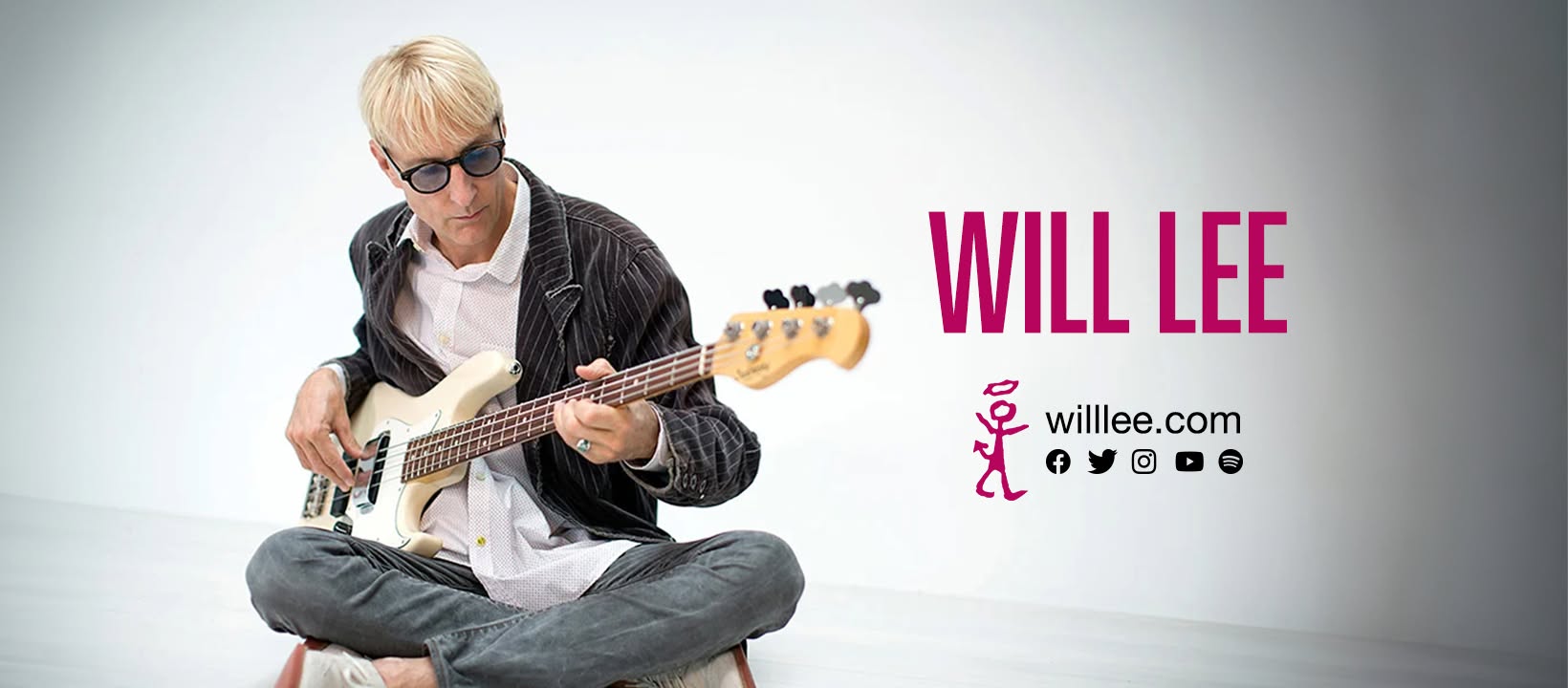
Grammy Award-winning Will Lee is mostly known as a bassist for over three decades on Late Show with David Letterman, giving him the world’s record for longest-running bassist on late night television.
Will has also lent his considerable talents to over 2,000 Pop, Jazz, Rock, Reggae and Gospel albums from Chaka Khan to Ricky Martin, Frank Sinatra to James Brown, Barbra Streisand to D’Angelo, Cat Stevens to Alicia Keys, Aretha Franklin to BB King, David Sanborn to Spyro Gyra & Bob James to Pat Metheny…go to Discography page for full list
He has sung and played on an equal number of TV and radio commercials as well as many movie soundtracks.
Will performed at Live Aid with The Thompson Twins & Madonna
Will has been part of the house band for most of the Rock & Roll Hall Of Fame Induction Ceremonies.
Will’s also been Sting’s bassist of choice for all of Trudie Styler’s Rainforest Benefit concerts.
He has played with Miles Davis, Gary Burton, Dizzy Gillespie, and was held in Charlie Parker’s arms as a baby.
Will also has the enviable position of having performed or recorded with all 4 of the Beatles, which is pretty thrilling for a guy who is a founding member of the world’s premier Beatles band, The Fab Faux!
Will is an inductee in the Musician’s Hall of Fame in Nashville.
Will has recorded 2 solo albums and multiple records with bands from The Brecker Brothers, The 24th Street Band, Joe Cool, Toph-e & The Pussy Cats, Oz Noy Trio & Band Of Other Brothers.
And when not … Read More