Gary Husband - "If You Were Mine" - Level 42


 iHeartRadio
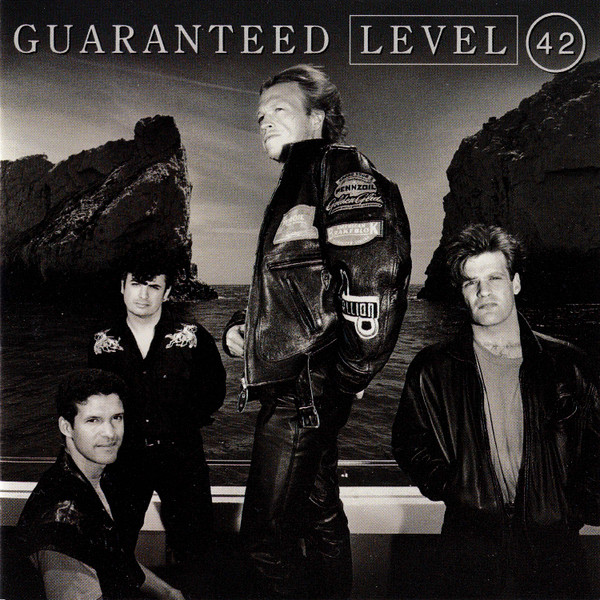
 Gary Husband joins Stevie Taylor and Jonnie Adams on this latest episode of Who’s on Drums to discuss Level 42’s “If You Were Mine” from the 1991 album Guaranteed, which he wrote and recorded at Mark King’s Summerhouse Studios on the Isle of Wight, featuring Mark King, Mike Lindup, Wally Badarou, Dominic Miller, and Alan Holdsworth.
Gary recalls festival encounters with Chick Corea, the importance of strong time, and how bands gravitate toward players with the strongest pulse. Gravitas!
He describes Mark King’s clear expectations for drummers, his fast, decisive production style, and the largely first-take approach on Guaranteed, plus dissatisfaction with the album’s later compressed mix compared to a tighter DAT reference mix.
Gary also explains lyrical and structural inspirations for “If You Were Mine,” including Madonna’s “Open Your Heart,” its early chorus modulation, difficult 16th-note anticipations, and the “balls to the wall” drum build into Holdsworth’s solo, while reflecting on imperfections as musical character.
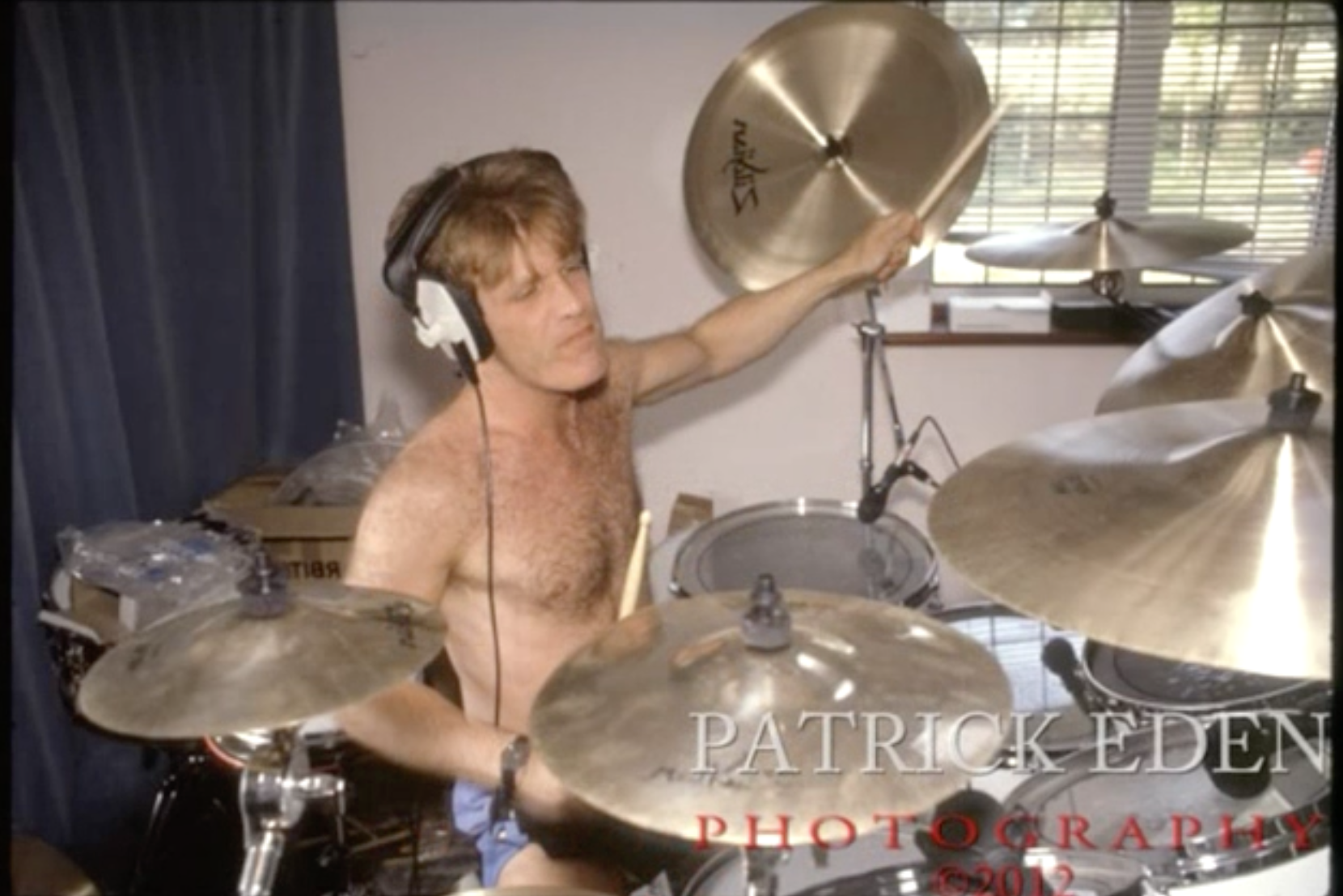
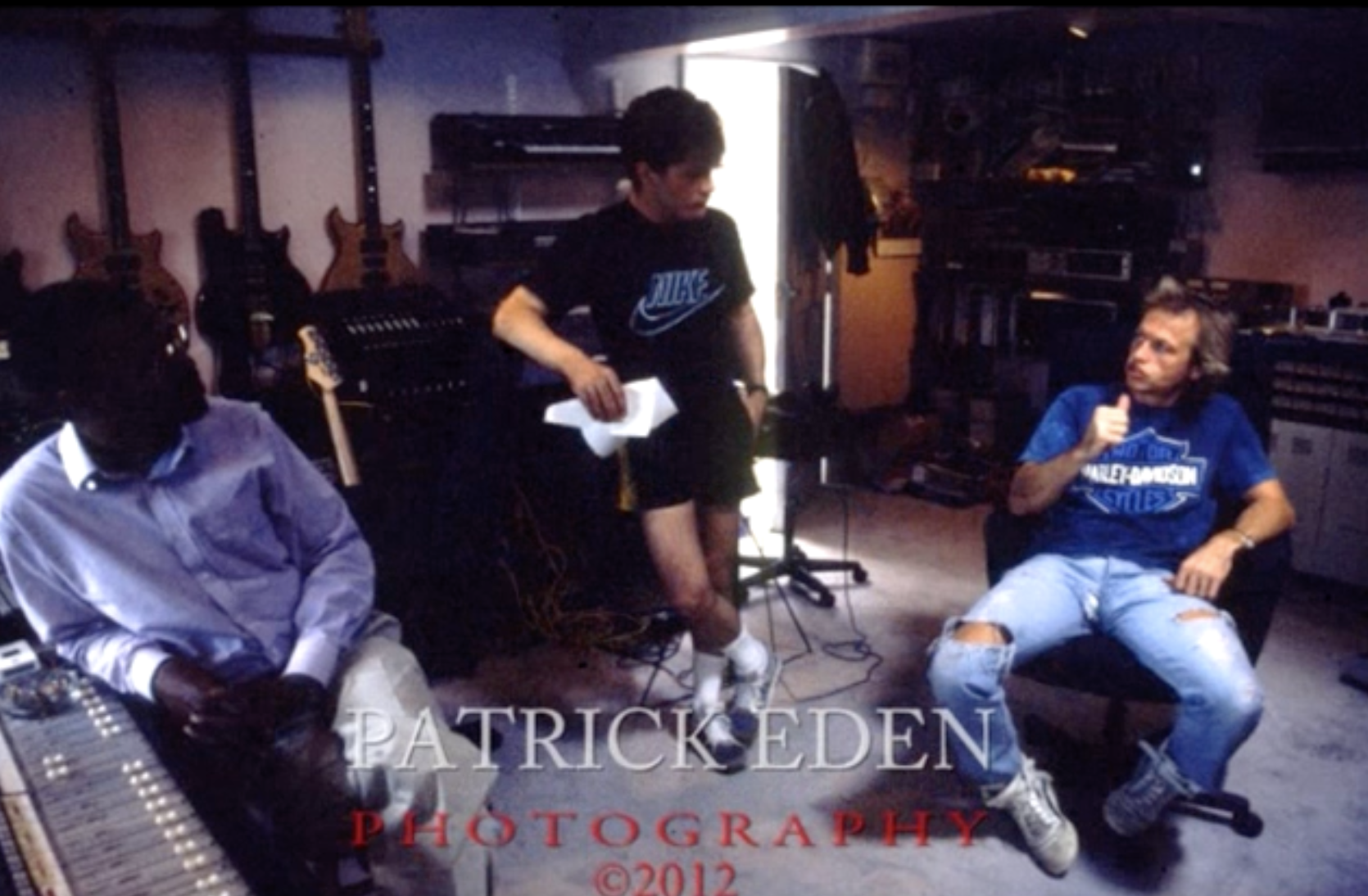
Check out this photo reel of the Guaranteed album recording sessions
Level 42 - Guaranteed Live 1992 - Full concert video
For more on Gary Husband, check out his Facebook, Instagram and website or head to whosondrums.com/garyhusband.
For all things Who's on Drums?, head to whosondrums.com
00:00 - Introduction
01:54 - If You Were Mine by Level 42
02:31 - Find the center of time with Chick Corea
06:31 - Play with people to grow as a musician
08:06 - Build songs around Mark King's strong sense of time
10:06 - Keep the groove while making room for improvisation
12:04 - Shape the verses and choruses of Something About You
18:10 - Return to the depth of earlier musical eras
20:23 - Discover Level 42 and the Guaranteed album
24:24 - Record quickly and trust the first take
26:44 - Resist overcompressed production
30:17 - Preserve the original feel of the songs
32:21 - Find the pulse and keep the recording honest
34:32 - Write songs that build toward a memorable chorus
37:58 - Fashion Fever: create movement and modulation
44:34 - Take risks when playing live
51:39 - Build a drum solo around the arriving guitar
01:03:02 - Bring Alan Holdsworth into the band
01:08:22 - Capture a spontaneous guitar solo
01:16:56 - Reflect on Gary Husband's musical legacy
01:21:52 - Gary Husband on Who's on Drums
Gary Husband - If You Were Mine - Level 42
[00:00:00] Gary: Hello, this is Gary Husband, and I wanna know who is on drums?
[00:00:28] Stevie: "If You Were Mine" is the 10th track off Level 42's 1991 album, Guaranteed. Written by Gary Husband and recorded at Mark King's Summerhouse Studios on the Isle of Wight, the track features Mark King on bass and vocals, Mike Lindup and Wally Badarou on keyboards, Dominic Miller on guitar, Alan Holdsworth on lead guitar, and Gary Husband on keyboards
[00:00:51] Gary: Who's on drums?
[00:00:52] Stevie: Welcome to Who's on Drums. Stevie here.
[00:00:55] Jonnie: G'day, Stevie.
[00:00:56] Stevie: You're supposed to introduce yourself there.
[00:00:58] Jonnie: Well, I was gonna talk about the red light.
[00:01:01] Stevie: Oh, yeah, I forgot to hit record.
[00:01:03] Jonnie: It's on.
[00:01:03] Stevie: It's on now.
[00:01:04] Jonnie: All right. We can go.
[00:01:06] Stevie: But the, but the pressing issue was- Rah ... the press- the press- pressing issue was how's your voice training going?
[00:01:11] Jonnie: Well, uh, best if I say nothing.
[00:01:14] Stevie: Okay. So people, during some early recordings, Johnny heard his voice for the first time.
[00:01:20] Jonnie: Through a proper microphone- Through, through- ... on a recording ...
[00:01:22] Stevie: on a recording, and-
[00:01:23] Jonnie: Mortified ...
[00:01:24] Stevie: Johnny wrote to me saying he's gonna be looking into getting some voice training and, and practice s- you know, uh-
[00:01:31] Jonnie: Intonation
[00:01:31] Stevie: dotting his T's and, and crossing his I's. Intonation, that's it. Well, crossing the T's
[00:01:36] Jonnie: and dotting the I's, yes.
[00:01:37] Stevie: That's it. Okay.
[00:01:38] Jonnie: Finishing words would-
[00:01:39] Stevie: Right ...
[00:01:40] Jonnie: once you start them is a good idea, isn't
[00:01:42] Stevie: it? Yeah, it is. It is. I can hear it's working. I can hear the change. We've known each other- All right ... a long time, and I, I haven't, I haven't heard this intonation from you yet.
[00:01:50] Jonnie: Oh, I'm sorry.
[00:01:52] Stevie: So-
[00:01:53] Jonnie: Uh, you go, you have my sympathy.
[00:01:54] Stevie: So we're here to talk about the song If You Were Mine by Level 42 off the Guaranteed album, played by and written by the great Gary Husband. So we're gonna kick off the conversation with Gary here. So the conversation starts with Gary talking about when he was playing in Fourth Dimension, going out on festivals and actually seeing Chick Corea play, which is something you sort of prompted during our interview, which I haven't actually included in this.
[00:02:25] Stevie: So please enjoy our conversation with the great Gary Husband.
[00:02:31] Gary: One of, one of the great things about being, um, in a band like, uh, uh, the Fourth Dimension that with, with John McLaughlin was, was the fact that we played quite a lot of festivals, and on those festivals you invariably meet a lot of people who you'd like to meet or a lot of people you already know and, uh, you know, the whole kind of s- circulation of people.
[00:02:52] Gary: Uh, and it's, it's, it's very inspiring to be around great people. But, uh, he, I, I think there was a kind of reformation of Return to Forever at one point. I know that Stanley Clarke and Lenny White were there.
[00:03:05] Jonnie: Right. Okay.
[00:03:05] Gary: And, uh, and, uh, and they both watched our... They, all three of them watched our set, and Chick in particular was, uh, that w- we came up, he said, because I used, I used to do second drum kit sometimes in that band.
[00:03:19] nil: Right. Uh,
[00:03:20] Gary: and we, we'd do at least two occasions, sort of some combination drum kit things, and I'd go from the keyboards to the drums and back again like that. And, and Chick was like, "Man, that is what I've always wanted to do. I always wanted to be pianist and drummer," you know? Right. Yes. And because he plays, you know, he played drums-
[00:03:40] Jonnie: Yes.
[00:03:40] Jonnie: Yes ...
[00:03:40] Gary: in a, in a certain way, in a very abstract way, kind of bari- altal, kind of free Kind of out, bendy
[00:03:48] Jonnie: Yeah, yeah. Stretch time and, and-
[00:03:50] Gary: Stretch time, yeah. He'd do that. And he was a master at time. Yeah. I mean, you only have to hear him on piano. You, you, you immediately- Yeah ... struck by the, by the, by the absolute gravitas- Yes
[00:04:01] Gary: and the center of his timing. It's, it- Yeah ... and so everything is kind of off of that, you know? Mm. And that's, that's your center. That's your focal point. So-
[00:04:11] nil: Yeah ...
[00:04:11] Gary: he, he had that. So he could really stretch, but, but, but, but still be very active in the pulse somehow. Yeah. One of those guys. Can I-
[00:04:20] Stevie: Very
[00:04:21] Gary: talented
[00:04:21] Stevie: can I just ask then what you're saying there about Chick's time and his center.
[00:04:26] Gary: Yeah.
[00:04:27] Stevie: Do you, do you think that, you know, the, the, the bands and the projects that he, he sort of put together, there was an understanding that, that he is that, he is that center? And so say, for example- Uh ... the, the Chick, Chick Corea Electric Band, right?
[00:04:43] Stevie: So-
[00:04:44] Jonnie: Yeah ...
[00:04:45] Stevie: you know, Dave Weckl knows that Chick is the center, or is, is Chick bringing in players to, you know, to be able to, to match what he's doing, I suppose?
[00:04:55] Gary: Uh, I would think so. But, you know, I, I, I think really any band sort of revolves around, and it, and, and really, uh, comes to their best, um, around the people in the band with the strongest time.
[00:05:12] nil: Right.
[00:05:12] Gary: I mean, I, I mean, that's just one, one element. But of course, the, the, the time is so crucial to, to so many different kinds of things that it's, um ... When it's strong in people, people tend to sort of adjust themselves around, you know, who happens to be very, very strong with it, you know? And invariably it's the drummer, I guess.
[00:05:34] Gary: But I mean, there are certain in- instrumentalists. You, you may play with a bassist that's, um, has really got a way to, uh, center the time very strongly and, and he does it with s- with such, uh, conviction and, and, and you really, there's no mistaking where the feeling is coming from. And you kind of sort of align yourself in with that, you know?
[00:05:57] Gary: If you're not sure, I mean, there, there, there are people who are just not as strong as that. And I think that one of the, one of the great things about working with people like that is that, that it really brings you around. It's not like playing with a click track. It's just, it's finding a, the, the really center of truth in, in the time.
[00:06:16] Gary: And, uh, uh, I mean, I think Chick had a knack of surrounding himself with just the right people for each project that he did. Um, but a- and it's, and it's why incidentally that on, on, you know, clinics and w- whatever else, I always emphasize that, that the, the greatest experience, number one, you can have as a player is just to start playing with people, you know, and, um, and being very active doing so, and all kinds of people.
[00:06:49] Gary: And, and, you know, then people would say to you, "What, what are the favorite kinds of players?" And I say, "Well, the good ones and the bad ones," because the bad ones I'm, I'm saying bad, you know, it's a massive generalization. But, but you can, you can work with people whose, whose abilities in some areas are great, but they, they just don't have that pulse thing.
[00:07:10] Gary: They don't have that great place where they just automatically, not sync, you know, it doesn't turn into a grid and something really stiff and, and, and conquering us. It's, it's, it's, it's pliable, but it's ... it just feels great. And, uh, some people don't have that, yet they play a very instrument, uh, v- rhythmic instrument.
[00:07:33] Gary: And, um, so when I say even the bad ones, this puts the responsibility on, you know, in many cases on, on me as, as drummer or whatever, to try to pull all that into alignment and, and to pull him. Because that, that's invaluable experience for me to, to actually play with a musician who hasn't particularly got great pocket or time and, and pull him in.
[00:08:00] Jonnie: Mm.
[00:08:00] Gary: So- Having said that, there are other musicians that say that about me. Oh, no. Yeah.
[00:08:05] Stevie: Okay. I, I was gonna ask this a bit later when we start, start talking about Level 42 and, and, and, you know, the, the reason, uh, inevitably why we're here, but-
[00:08:15] Gary: Yes. Mm ...
[00:08:15] Stevie: so Mark, so how was Mark King in that then? 'Cause you ... Well, we will talk about how you got into Level 42 and, you know, the, the, the songs we're gonna talk about.
[00:08:25] Stevie: But, you know, I was watching- Yeah ... again today I was watching the ... There's a 1992 live, uh, recording of the Guaranteed concert. And-
[00:08:36] Gary: Yeah ...
[00:08:36] Stevie: yeah, so I, I was watching that. And then, you know, there's so many notes getting played between the both of you guys. I know.
[00:08:42] Gary: You
[00:08:43] Stevie: know? Too many. Yeah. Beautiful. I don't think so.
[00:08:43] Stevie: Beautiful. It's gorgeous. Comp- complimenting- Yeah, yeah ... each other. Yeah. So- It was a very exuberant time.
[00:08:49] Stevie: Yeah, yeah. What can
[00:08:53] Gary: I say?
[00:08:54] Stevie: And thank you for that. Yes. Um, so, you know, uh, so my question later on was gonna be, you know, so how, how was that relationship and time and, and rhythm built? Do you have conversation with ... when you're, when you're building up a song, a Level 42 song with, with Mark? Um- Or is it just you just n- you know what to do?
[00:09:17] Gary: Well, well, no. I mean, it, it, the ... I think the ... Again, we talk, we talk about stronger people. Mark, Mark, very strong. Mm. And very, very, um, very, very aware of what he wants at all times really. And- Okay ... and of course, he comes from the experience of, uh, you know, let's face it, he, he, he led that band. You know, he, he was the propulsive force in the band, and predominant one really.
[00:09:43] Gary: And, uh, he'd, uh- He kind of knew not only what he wanted from a drummer in general terms ... Sorry, are you okay?
[00:09:52] Stevie: Yeah, I just dropped, I just knocked my iPad. I'm okay.
[00:09:55] Gary: Yeah. You want an
[00:09:56] Stevie: apple? Sorry.
[00:09:59] Gary: It's not real.
[00:10:00] Stevie: Sorry,
[00:10:01] Gary: guys. But it tastes great, you know? No, but right,
[00:10:06] Gary: we, see, you know, you, we, we'd run quite early on in my tenure in the band, we'd run things like, um, what you might regard as, as a, a simple form, simple song with a very simple groove, um, uh, Something About You. Okay? And there was this whole thing about what, what to play in the verses, uh, essentially. You know, 'cause, 'cause another interesting thing was, like Mark, Mark would say, "I know you're very improvis- improvisational, but, and you can play what you want as long as you keep the two and the four."
[00:10:46] nil: Mm.
[00:10:47] Gary: So as long as you got the two and the four happening on the snare drum clearly and consistently, you can play whatever you want around it, and that's, it kind of encapsulates really how he's, he's, he's had all his drummers play. You know, I noticed that with the guy that, uh, the band has at the moment, Pete Raybig.
[00:11:05] Gary: You know him?
[00:11:06] Stevie: Yeah.
[00:11:06] Jonnie: Yeah. Yes.
[00:11:07] Gary: Great player. And in around this thing he's, he throwing accents all around the kit off of the two and the four. It's maintained all the time. And, a- and every time I hear Pete, I think, "Wow, man, he really got what Mark ... " You know, I don't even know if I understood that at that time, but, but, but I tried to get an idea of it.
[00:11:32] Gary: But I think Pete really, really gets it. You know, he's, he's got like the offbeats happening on, on timbales, little fills here, little things with the toms, cymbal, bell, whatever. And they're all like- The, this kind of bolstering really, and, and, and bits of decoration around the essential beat. And, and that makes absolute com- complete sense to me now.
[00:11:59] Gary: Probably didn't at the time, but so much. But I th- I think in a way I saw it. But the, the thing with Something About You was that, uh, it was definitely a kind of in the verses. You remember when we used to have verses, bridges, and choruses? Yeah. Yeah. We don't have it anymore. But, um, you know, it was the time and, um, you know, there's, there's this clear definitions between the, the, the verse on that song, which with the bass drum would be on one and three.
[00:12:30] Gary: Uh, there was a certain change, I think, in the bridge. In the first few choruses, um, the da, da, da, da, da, dun, dun, was this thing of I'd go into four on the bass drum. I'd kind of double it. Doof, ba, doon, ba. Dun, dun, dun, dun, dun. I can't sing, but. Babe. Whatever it is. And you got this thing, and he said, "No, no, no."
[00:12:58] Gary: You know, you'd break it up. He said, "No. One, two, three, off on the bass drum." And you think do, do, do, nothing. Do, do, do. And I said, you know, "That's, that's not funk, is it? It, uh, that's like a march or something," you know? Yeah, yeah, yeah. Da, da, da, da. You know? And I thought, "Wow, that, that must feel so awkward." And then when I heard a playback of it, 'cause I'd record everything big help during I've always recorded stuff.
[00:13:35] Gary: I'm sure you, you know, do the same. But it's, and it's only when listening to it, not while playing it, but by listening to it, I heard exactly what he meant. And it absolutely worked perfectly. So bear in mind, Mark comes from being a drummer anyway. You know that, right? Yeah. Yep, yep. So, I mean, he plays fantastic.
[00:13:48] Gary: I don't even want to be in the studio when he's around a drum kit, you know? Right, okay. I mean, it's ridiculous, this guy. Yeah, yeah. And then he'll strap on a, you know, a strap and, and, and start jamming along, coming up with ideas on guitar. Ridiculous. Should be illegal, this kind of talent, but that's him.
[00:13:48] Gary: So I mean, yeah, it was just sort of, I don't know about lessons in love, but it was in lessons in how to approach a song and make a song work. And, and these were very valuable point. You know, Mark would be full of those, just little things that made all the difference in the world to something intrinsically simple, but gives, gives an impression of, of, of a certain feeling, but, but...
[00:13:49] Gary: And, and sometimes awkward to play, you know, like tricky to play, but they just make the groove work. And, and, and I, and I think a lot of his wisdom revolved around the fact that he, he was quite a, a very active, uh, quite a-
[00:14:54] Gary: You know, his, his style is very, very prominent. You know, it involves... There's quite a lot going into what he's doing. And he would really know what, um, what worked best, you know, to do around that or with it. I mean, sometimes you, you, you can meet that kind of thing. Like, we'd, we'd play things, um, like the early hit Chinese Way or, um, Love Games.
[00:15:20] Gary: A- and you've probably... You know, if you've seen videos
[00:15:22] Stevie: from- Dun, dun, dun, dun, dun, bop, da dun dun dun, builda bop, da dun dun.
[00:15:25] Gary: Yeah, exactly.
[00:15:25] Stevie: Yeah, yeah, yeah.
[00:15:26] Gary: But you wanna hear the speeds we used to do it. Oh, really? And he's... And, uh, not Love Games. Da, da, da, da, da, da, da, da, da, da, da, da. Poof. Da, da, da, da, di, do, do, do, do, da.
[00:15:43] Gary: Da, da, da, da, di, do, do, do, do, da, da. Da, da, da, da, di, do. Ba, ba, da, ga, ga. Boom, boom. But that and the Chinese Way, for some reason we'd launch into, tear into that like it was 100 miles an hour or something. And people would be like, you know.
[00:15:59] Jonnie: Yeah. I...
[00:16:00] Gary: So a lot of people hated it. No, no, just play it. The BPM, it was on the record, you know.
[00:16:06] Stevie: Yeah.
[00:16:07] Gary: But no, we had to go do this sort of boy racer thing on it, you know?
[00:16:12] Stevie: Yeah, yeah.
[00:16:13] Gary: Which was just part of the time and our youth, you know. Let's face it. Yeah. But it seemed, it just seemed exciting to, to do that, you know. But it's kind of unlistenable to me now.
[00:16:24] Jonnie: Oh, okay.
[00:16:26] Stevie: That's interesting. Yeah, 'cause
[00:16:28] Gary: it, it- I mean, not unlistenable, but you just think, well look, it's the exuberance of youth, you know?
[00:16:32] Stevie: Yeah. Yeah, yeah.
[00:16:33] Gary: Let's- Nothing wrong with it ... it's natural.
[00:16:34] Jonnie: Oh, it's a very exciting energy that comes out when you're younger, you know? Uh, and it's only natural I think, you know? That- Yeah ... energy. Yeah.
[00:16:42] Stevie: And it's something that Johnny and I are holding onto. Like, 'cause you know- That's what
[00:16:47] Gary: we're all, we're all holding onto it, Stevie.
[00:16:50] Stevie: Yeah, yeah. Yeah, but, but see, bec- you know, with us doing this- Through thick and
[00:16:53] Gary: thin.
[00:16:54] Stevie: With us doing this, this, this podcast and, like, we're, we're digging really deep into these songs. You know, the songs that, that we love and, and the songs that- Yeah ... m- made us the musicians and, and drummers that, that we are.
[00:17:08] Stevie: E- every now... I, I, we actually... I was saying to you before we, when I, uh, we were talking to David Garfield, and I just remember driving. I'd been for a run and I was driving back to my house, 'cause Johnny and I recorded that, the session with, uh, with David, uh, early on a Saturday morning. And I remember driving back going Man, so I'm gonna s- I'm gonna sit down with David Garfield.
[00:17:32] Stevie: I've got everything in, in the song in my head. Like I was there on the day and I recorded it, and everything's fresh, and, you know, I know every single note, just like I know every note that you played on the Guaranteed album, right? To that like today. And then I've gotta sit back and go, "Man, these guys, they've, they've probably moved on from these songs", right?
[00:17:55] Stevie: You know? Like... And so we're, we're ask- you know, we're asking you guys to s- go, go back into the memory banks and, and, and dig this stuff out for us, you know? It's, um-
[00:18:05] Jonnie: Well, great m- But it's- Great material is eternal, you know? 100%. 100%. And, and, and, um, the... I was saying with, uh, Stevie and I have said, uh, recently that there's a saturation, a ubiquitousness of, uh, young people shredding in bedrooms on YouTube, uh, clips and things like that- Yeah
[00:18:22] Jonnie: um, that, um, is, uh, gets a little bit mundane. And so we always come back to particularly the '70s, '80s, '90s, um, uh, bands such as, as Little Fortitude, Toto, and, and a whole bunch of others. Uh, and a whole bunch of music- Yeah ... from that, that epoch. And then maybe there's even separate epochs within those three decades.
[00:18:41] Jonnie: But, um, uh, uh, it's a real golden, uh, era, you know? So.
[00:18:48] Gary: Yeah.
[00:18:49] Jonnie: Yeah.
[00:18:50] Gary: Um,
[00:18:50] Jonnie: and a lot of depth, uh, a lot of substance to it all, you know? Um- Yeah ... and I'm sure a lot of, like you mentioned before, human to human cl- uh, interaction, a lot more of that going on rather than what you, what you'd find coming off the, the computer screen online, uh, with people just by themselves in their bedroom just looking, perhaps look- looking for likes- Yeah
[00:19:09] Jonnie: and things like that, which is really not that appealing, uh, to, to a lot of us. Uh, but, uh-
[00:19:14] Gary: I know. Yeah. We're all seeing it. Yeah.
[00:19:16] Jonnie: Mm.
[00:19:16] Gary: Yeah. It's way different. I mean, it's, uh... You know, I'm just saying, "Hey, man, go and rent yourself a room, get in there with some people, and stay there." Yeah, yeah. You know? Do it.
[00:19:27] Gary: Stay- Put a, put a
[00:19:27] Jonnie: bed in there. Yeah. Sh-
[00:19:28] Stevie: Yeah, yeah.
[00:19:29] Gary: Yeah. Stay there. Move in.
[00:19:31] nil: Yeah,
[00:19:31] Stevie: yeah. Yeah.
[00:19:33] Gary: Move in and stay there until it starts feeling good.
[00:19:36] Stevie: Yeah.
[00:19:37] Gary: That's the way to do it. Anyway, but y- there's no telling. But, but it's a different emphasis. You know, it's, it, it's... Yeah, it's, it's, it's interesting to compare Maybe we shouldn't compare.
[00:19:48] Gary: I don't know.
[00:19:49] Jonnie: Different era Different epoch. Yeah, so. But, um- Yeah ... our fa- well, in that case, our favorite era, and well, perhaps epochs within a big era of 70s, 80, 90s is, um, is what we like to look at, you know? And,
[00:20:02] Gary: uh-
[00:20:03] Jonnie: Mm ... it's, it's in the DNA, so. And thank you for... Sorry, sorry, Stevie. Yeah, and on that, that note, um, uh- We finished?
[00:20:09] Jonnie: We pa- part way sh- Yeah. Part way. Part way too. We, we wanna thank you as much as we can for allowing, um, us to, um- It's been a pleasure. Thanks ... to, to interact. No,
[00:20:20] Gary: sorry.
[00:20:21] Stevie: Yeah. All good. Right. So I wanna, I want to tell you guys how I first discovered Level 42, and, and essentially how I discovered the Guaranteed album.
[00:20:34] Stevie: And that was my, that was the first time I ever heard of Gary Husband, right? So I'm from a small town in New Zealand called Masterton, and there's, there's one record store there. And at the time, CDs had just come out. Like, we got, bought our new, first new CD player, and it was about- Hmm ... that big. Yeah. It was, it was heavy.
[00:20:55] Stevie: So Mum and Dad said to us one Saturday morning, "You can..." Oh, no. Okay. Uh, sorry, let me, let me backtrack a little bit. So around that era, there was this, this very small music scene with a lot of funky bass players at the time, and the, the, the go-to song for these funky bass players to learn was "Hot Water", Level 42.
[00:21:17] Gary: Oh, yeah.
[00:21:17] Stevie: And I had, I'd never heard the original song, right? I'd only heard all these different versions of "Hot Water", right? So, uh, the, the, the name Level 42 was kind of, you know, was in the forefront of my mind. So w- Hmm ... going back to that, that day we went to... Mum and Dad said, "You, you guys can go t- we'll go, go down to the record store, CD store, and you can choose two CDs each."
[00:21:41] Stevie: Right? So we walked in there, and I found Phil Collins' But Seriously Live album, which was a double- Mm-hmm ... double CD. And, and as I'm walking along, I see this CD with a, with a, um, dark cover, and there's like a l- like a water scene with a break wall with these four dudes standing in, standing in front of this with leather jackets on and Level 42 Guaranteed.
[00:22:07] Stevie: And I went, "Oh, that's that band that, that those Hot... That, that everyone talks about with 'Hot Water,'" right? So I said to Dad, "I want that. I want that album." And, um- From, from... So and from that, from that mo- from that first listen of that CD, that changed everything for me drumming wise and, and the way I thought about music at that time- Yeah
[00:22:30] Stevie: at that age. Um- My
[00:22:31] Gary: God. No.
[00:22:32] Stevie: Yeah, I was just, uh, just seriously blown away. And, and not, of course there was the drums, but you know, I, I'm a bass player as well. So, you know, the first time I heard, um, "Seven Years"-
[00:22:44] Gary: Oh,
[00:22:44] Stevie: yeah ... a bass line in seven years That's a nice
[00:22:46] Gary: song.
[00:22:46] Stevie: I got goose- Yeah ... you know, that's another one that, uh, ju- just gives me goosebumps, you know.
[00:22:50] Stevie: It starts off with the and just that whoa, boom, ba, ba, ba, boom. And it sounds like it's played on a fretless, right? Played on a fretless bass, I think.
[00:23:00] Gary: Oh, a good chance, yeah.
[00:23:01] Stevie: Yeah, yeah. Anyway.
[00:23:02] Gary: Yeah, he did, he did s- yeah, Mark did start doing some fretless things on things,
[00:23:07] Stevie: yeah. Yeah, and there's another song on the, on that album, Lasso The Moon, which is a fret- sounds like a fretless sort of thing.
[00:23:13] Stevie: Yeah, so then of course I'm, I dig into the drums and, uh, you know, I copied every fill that you played on that album and- Oh, fuck ... copied your grooves and- Oh, man ... you know, and this is, uh, I hadn't quite got into the, into my Jeff Porcaro era-
[00:23:28] Gary: Mm ...
[00:23:28] Stevie: at that stage. So you were first for me. You were, you were the first groovy, funky drummer that, that I, you know, I, I, I dug into, and it was just that one album, Gary.
[00:23:40] Stevie: It really, really was.
[00:23:42] Gary: Goodness me. I don't know what to say.
[00:23:46] Stevie: You don't have to say anything. I'm just... I,
[00:23:48] Gary: no, no, I, I, I, I just don't feel worthy of that. But, you know-
[00:23:52] Stevie: Oh, man. Fuck ... it's
[00:23:53] Gary: like you're talking about somebody else.
[00:23:55] Stevie: I thank you for that wonderful album, all, the, I mean, all, all you guys. It was just-
[00:24:00] Gary: Wow.
[00:24:00] Gary: Um ...
[00:24:01] Stevie: magic. Really, really, really is.
[00:24:02] Gary: Well, well, I have to tell you that I remember when, when we, when we, we, we'd recorded it on Mark's, uh, in Mark's remote studio, um, right, right next to his house, and I played Mark's Gretsch drum kit on it, and, uh, I guess his cymbals. I don't know. I didn't used to care in those days.
[00:24:24] Gary: Mm. But anyway, the point to all this was that, um, we, I think the producer, Wally Badarou, was around. Mike for some reason wasn't. Maybe it was some kind of Formula 1 weirdness. He was away racing and whatever. I don't know. Choosing another car or something. I, I don't know, but he just wasn't at the studio.
[00:24:49] Gary: And, and Mark, uh, is, you know, you know, his, his, his temperament, um, in, uh, as compared to Mike's was one that's like, "Well, you know, let's get to it. Let's, let's, let's do it right now, you know. Let's just go to the studio, put that down," you know. And that's, that, that's him, you know? To the point where a, a, a lot of those takes on that record, you know, didn't I have to be honest, you know, I would have much preferred to have done again, just refine them a little, get them just sitting a little better, you know, maybe just looking at a couple of fills here and there.
[00:25:26] Gary: But no, it's just warts and all majorly. At best, there's a first and second take, but usually first. And he'd just taken me to get, "Right, we got it." I'm like, "No, no, no, no, no, no. You know, you got to give me another run at that, man. You know, I want to, I want to get that feeling better." He's going, "Nope, it's done.
[00:25:46] Gary: Moving on. Change the tape." Damn. Wow. You know, so the tape up. Sounds like- You know, we were going at such a furious pace. I was going, "Oh man, I want to be happier with this stuff." But I mean, it's, it's, I admire him because he, he's the kind of guy who can actually just come up with the goods, you know, throughout an entire take, first take.
[00:26:08] Stevie: Okay.
[00:26:09] Gary: I mean, he, he's that good. You know, for me, it takes a little more work or at least a little more work to, to, to get happy with it. But, you know, but I also have to respect his experience and his gut feeling towards whatever's happened and think, "Well, you know, if, if that's popping for him, if it feels good, then maybe it's not so bad after all."
[00:26:29] Gary: But, you know, I would, I, I, I would have liked to have got a lot happier with them, let's say, in particular one or two of those tunes. But that said, um, what I was about to say was, um- The, because it was 1990, a lot of, a lot of pop was sounding quite... It was like a big production thing. I mean, coming off the back of the '80s and stuff, there was a big, uh, there were a certain breed of engineers that were, were really into this whole highly compressed kind of FM radio mix thing.
[00:27:05] Gary: Mm-hmm. Mm-hmm. I'd sort of say he would make a, a Metallica record sound really great, you know, really powerful. Right.
[00:27:12] Jonnie: Right.
[00:27:12] Gary: To me, that didn't really work for Level 42. I mean, this is just personal preference, and, and, and it's, and it, and it's actually reinforced by the fact I have a, a DAT tape that Mark did of all the songs in complete form mixed, and, uh, it was just him and Wally Badarou, I think, in the studio, did like a, a mixing kind of s- you know, a, a, a thing of, of everything, the whole album, um, one after another, tracks.
[00:27:44] Gary: And, um, we, it actually just sounds glorious. It's so contained, and tight, and in. No compression. It's just like, it, it's got this thing. Mm. And all the grooves were speaking great. The moment it went into, to, uh, that mixing session, I'm sorry, never did it for me.
[00:28:06] nil: Oh, okay. Mm.
[00:28:07] Gary: Uh, y- I just didn't think it suited.
[00:28:10] Gary: I think the band needed more, it just needed to be, to reined in, like poppy, tight, and, you know, without all that compression, because that compression really, really gave it a kind of sluggish, thick thing for me. I don't, I don't wanna down it. You know, it was an approach. Yeah. And this, this engineer was a very fashionable, you know, trendy guy to have around at the time, I remember.
[00:28:34] Gary: Um, and the, the record companies at that time would, would be, you know, ready to dictate to their artists, you know, who they want to, who's, who the happening engineer is right now. And they go, and this guy was obviously very, very good, but, eh, didn't work for me You know, personal apples and oranges, I guess.
[00:28:54] nil: Mm-hmm. Mm.
[00:28:55] Gary: But, uh, whenever I put that, that tape on, I can see actually why Mark kept the, the majority of the, those takes, you know, not to boast my own trumpet or trumpet my own boast, whatever the phrase is. Uh, you know, it, um, it was good. It was good. And when I, when I hear those tapes back, I thought, I just, I keep saying to Mark, you know, "Why don't you release those?"
[00:29:20] Gary: Just- Mm-hmm ... just as the alternative mixes guaranteed.
[00:29:24] Jonnie: Yeah, yeah,
[00:29:24] Gary: yeah. And, and I think you guys would enjoy it more too, you know?
[00:29:28] Jonnie: Um- Oh, yeah. Right. Love to hear it, you know.
[00:29:30] Gary: It, it's great. It's just great. I mean, it, it, it hasn't got the sheen on it of a- Mm ... of a finished production, but it, it's just feels so much better.
[00:29:39] Gary: I mean, the f- the, the funk is speaking s- so much, so much better, you know? It's just, just, uh, it's just got that feeling. It's got that thing. And it's, and it's reined in, and it's tight, and it's all kind of popping really nicely, you know, internally and, a- and as a group. It's, it's great. Yeah. So, I mean, now I've voiced the unmentionable after all these years.
[00:30:03] Gary: I've never told anybody that before.
[00:30:04] Jonnie: Oh, oh, thank you for sharing. That's, that's lovely.
[00:30:06] Stevie: Yes.
[00:30:07] Gary: No, absolutely. It's a, it's a, it's a world exclusive, ladies and gentlemen.
[00:30:13] Stevie: That's it. It's- Right. So... Oh, sorry, Johnny. I'm just gonna say, so-
[00:30:16] Jonnie: Yeah, go for
[00:30:17] Stevie: it ... just going back to what you were saying about, you know, if you had your chance you would do those takes again, was that feeling right after you'd played the take or after you heard the, the, you know, the, the sheened up, glossed up, compressed version of the songs?
[00:30:36] Stevie: Oh. And then are you thinking, "Oh, actually, if I'd known it was gonna sound like that, I would've played a little bit different," or was it at the time?
[00:30:44] Gary: Man, I, the, I, I don't, I don't really think the drums worked with that degree of compression for that- Mm ... for that band, for that music, you know. Aerosmith, Metallica, yes.
[00:30:58] Gary: But no, I didn't get it. I didn't get it for Level 42. Sorry. I mean, this just personal. So I, I would've probably got involved Uh, if it were me, I would've liked to have, um, pushed a little more to, to realize the s- the, the original presentation of these songs, which at the time of recording we were listening to that kind of sound.
[00:31:24] Gary: You know, with a, with a, a just a, a, a, you know, a, a modicum of verb on things just to liven things up a little bit in the cans, but it just felt great. We were just listening to the t- to the center. It's the word of the interview- Right ... isn't it? The center. The center. Yeah, yeah. Yeah.
[00:31:44] Stevie: And, and- Oh, what was the other word you used be- And it was good
[00:31:46] Stevie: you used another word, you used another word before the, um, oh, when you were talking about Chick Corea's time. Um, there's another big word that I'm gonna try and use another day.
[00:31:56] Gary: Gravitas.
[00:31:57] Stevie: That's the one. Oh, yeah. The gravitas. Oh. That's the gravitas. That's a grand word,
[00:32:00] Gary: isn't it? Yeah. I don't even know what it means, but it sounds great.
[00:32:06] Jonnie: Oh, it's ...
[00:32:07] Stevie: Yeah. This, yeah, this conversation was brought to you by gravitas.
[00:32:12] Jonnie: Gravitas. Yeah. In the deep voice, yeah.
[00:32:15] Stevie: Johnny, you were gonna say something.
[00:32:16] Jonnie: Oh, I was just wondering, um, internally, uh, naturally, where would you feel the pulse, the quarter note pulse? Is it right in the middle, or is it just ahead? Or, you know, um, uh, w- like when you're playing at the actual feel, do you like to f- feel and play right on, right in the middle of the, of the quarter note, or just ahead slightly, or parts just ahead maybe, or does it change from one- Oh
[00:32:41] Jonnie: bit to the other or?
[00:32:42] Gary: That's ... Yeah, that brings into question some of this approach. Like, some people like to set the click just a t- tiniest tad back to the track. And, and, and, and somehow that brings about with a certain player as opposed to s- another player would bring about a big change in the feeling, in the general Construction or center of the time, uh, it would, would change it.
[00:33:11] Gary: It would change the feeling, change the emphasis a little. And, you know, all, all those kind of experiments. But to be honest with you, um, we, I mean, we didn't have Pro Tools and all that kind of stuff, you know, in those, in those times. We were just going direct to two MTR-90s, you know, two-inch. And, um, uh, there were very little, you know
[00:33:32] Gary: Like editing in those days was, like, a big deal, you know? And, uh, so basically we were just going for the take each time, you know, warts and all. You know, if there's something in something, I don't know, maybe you can look at a, the take before and somehow ... Whatever. However we used to do it. I can't even remember.
[00:33:53] Gary: It seems so archaic now to, to, to think about those days. But, um, and take for granted what we've got now, you know. Whereas, uh, very easy just to change something radically bad into something absolutely fine in Pro Tools in a matter of seconds. So what to do? But, you know, there's a certain satisfaction is, is that I, I would like to have been responsible for actually playing that and nailing it and get it right and, and come up with a take that's, that's, um, consistent all the way through.
[00:34:26] Gary: I mean, that's a great feeling. And, you know, if it means there's just something a little off now. You know, I wa- I was, I was listening to a Madonna song the other day, and it was actually with a view to talking about If You Were Mine, because you'd mentioned that, Stevie. And, um, and I, I, I remember that I was very defin- there, there were two songs in question that not influenced me but, but more inspired me to try to w- to write a song like that.
[00:34:56] Gary: And one of them was, uh 'Cause I tried to come up with a, like a ... I loved the, the verse, bridge, chorus of Open Your Heart by Madonna. I thought that was one of the f- fantastic '80s pop song. I just thought it was brilliant, and I loved the, when the chorus hit, it was just so, it's like, "Ah, yeah," you know? The flood gates opens, and it's just all there.
[00:35:20] Gary: It's that big build, that lovely bridge build up into that chorus, and it doesn't even modulate or anything. It's in the same key, and, and, and yet it just, it's just great. Just builds and builds. Perfect song structure. But the drums are kind of, you listen to a track like that, or maybe some others like it, and it's like, "Wow, how did they let that go?"
[00:35:42] Gary: You know, it's just, just certain things that like, like timing things, and you think, "Wow, I don't remember the '80s being like that," but I guess they were. But the, the, there was, you know, th- that's, that's not to, th- that's not to really pan flexibility within people's time. I mean, you look at somebody like Tony Thompson.
[00:36:01] Gary: What, what a great beat in Chic, but he ha- he had a propulsion just to sort of take a, a run just a little bit too eager fills, but it was part of his character, you know? And w- and we forget that kind of word, you know, a value associated with a term like character. That was his thing. You know, you'd know it was Tony, man.
[00:36:24] Gary: You know, he, he just had that, it had that, da da da, da da da da, bow. Just very slightly rushed, pushed. And then, and then the moment he's back in it, it, you know, pa pa, boo boo. You know? Yeah. You got this. Identity. It, it's just- Yeah. I love characters. Yeah, yeah. And, and more than, um, uh, you know, hear little flurries that, uh, just pushed a little and r- rushed very slightly or something, or one thing.
[00:36:53] Gary: I went through a, a definite period thinking, "No, no, that just doesn't cut it. That's not on the grid." You know? I, I would've absolutely done that again. Whereas now I think, "Actually, I like it. It's, it, that's the character." It was, that was Tony Thompson, man. You know, you know immediately it was him just by the way he did that.
[00:37:14] Gary: And I think it was one of those nice things you could kind of, uh, you know, I, I hasten to say get away with in the '80s, but 'cause you couldn't. But, but, but it was, uh, they were not afraid to leave certain imperfections in there. Put it that way. Anyway, anyway, but that's ... So I wanted to get something with, with a chorus that absolutely delivered, and, and the sun came out every time the chorus hit, and that was like Open Your Heart Is it called that?
[00:37:46] Gary: Madonna. Yeah. Open your heart. Yeah. You
[00:37:56] Gary: know.
[00:37:57] Jonnie: Fantastic.
[00:37:58] Gary: And, um, another one was a Level 42 song, like 'Fashion Fever.'
[00:38:03] Jonnie: Gary, I was, uh, just wondering where the idea for the song came from 'cause I, I wanted to focus chatting or putting some questions to discussing the lyrics, and just wanted to know, um, if the lyrics came first, or were they with the music at the same time?
[00:38:19] Jonnie: Or did the, did they come after? And, and, and could I just put, put something out there? If I was to summarize up the entire song and the meaning of the lyrics, w- would, would, uh ... Please tell me to be quiet, but, um- Uh, could, could you sum it up by saying searching for a renaissance/rebirth with the partner? Um, uh, is that
[00:38:44] Gary: I didn't actually get If You Were Mine For, for If You Were Mine
[00:38:47] Gary: I mean, I, I wrote them and- Yes ... I'm embarrassed to have to admit. But, um, I mean, they- That's a
[00:38:53] Jonnie: good rate ...
[00:38:54] Gary: they, th- you know what they do is sometimes, excuse me, is if a lyric can scan good. Everybody knows what that means, right? So for those who don't, it's, it's like when, when it scans good, it's something you can sing, but, but maintain a kind of funkiness in, in the way that you can sing it.
[00:39:12] Gary: It, uh... and it, and it kind of, it sits very well with, with the, in the track. So, and ob- obviously, it's, it's a, you know, hopefully a memorable, um, theme melody. And, um, so you, you know that a lot of people kind of sing any words, you know, like Paul McCartney doing Scrambled Eggs, you know? "Da, da, da, da, da, da, scrambled eggs".
[00:39:40] Gary: I believe that he was singing that, you know, at the beginning of Yesterday, writing that, for instance. You, you hear stories like that, and, uh, that's because it's kind of scans, scans right. So on further introspection in, in... Yeah, he'd, he'd, he came up with the whole Yesterday angle on it. But, uh, anyway, I'm digressing terribly.
[00:40:02] Gary: Uh, but the, the If You Were Mine, uh, it was just like, if, my God, you know, if you were mine , you know, the sun would come out for an eternity, you know. The stars would stay in the sky and, uh, you know, and all these magical things would happen if you were mine. That, uh, that's basically all it is, you know. Now, of course, it's, it's terribly intellectual.
[00:40:22] Gary: I know.
[00:40:25] Stevie: Did you, did you, did you write it about someone in particular, or did you just sit down and go, "I'm gonna write a song like this"?
[00:40:31] Gary: No, actually on the first album I did with them, Staring at the Sun, was, uh... There was a song called Tracy, and Mark said, in his usual fashion, you know, "Hey, man, go upstairs, write some lyrics for this.
[00:40:40] Gary: We'll record it tomorrow."
[00:40:42] Stevie: What?
[00:40:43] Gary: You're kidding me. So I actually went upstairs and wrote my first lyrics. Basically, you know, it had to have been among my very first attempts at ever trying to write lyrics or anything, and I actually wrote it about a girl at school. Yeah. And she was, uh, under a pseudonym.
[00:40:59] Gary: We decided to call her Tracy. Right. Right. Remember that song? Yeah. That was a nice, that was a nice drum.
[00:41:05] Stevie: I can see where you're coming from.
[00:41:06] Gary: Yeah, really liked that production. That was Julian Mendelsohn, same guy who did the Running in the Family album and, and-
[00:41:11] Stevie: Uh-huh ...
[00:41:12] Gary: and a few others before that.
[00:41:14] Stevie: So you've writ- you've written your lyrics, and, and c-...
[00:41:16] Stevie: Okay, so now, uh- Is it really that interesting? Yes, to me it is. To us it is. So that, um, so Fashion Fever, let me just play a little bit of it. See if it comes
[00:41:26] Gary: up. Oh, yeah. There you go.
[00:41:28] nil: Fashion fever
[00:42:07] Stevie: And then that, that- Do you get it? I
[00:42:08] Gary: mean,
[00:42:09] Stevie: it's, it's- I do, I do, I do, I do get it. And then- Yeah ... and then that Open Your Heart, to me, that chorus, so you're kind of not emulating it, but you're giving it that, that blast opening up thing with the key change, right? Because there's a key cha- the, the-
[00:42:25] Gary: Yeah ...
[00:42:26] Stevie: the key changes into that, into the chorus of-
[00:42:29] Gary: Oh, yes
[00:42:30] Stevie: If, If You Were Mine. Yeah. Oh, yeah. You,
[00:42:31] Gary: you, you heard that little statement at the beginning? The
[00:42:36] Jonnie: hook, the hook. Yep. Yeah. Mm-hmm.
[00:42:38] Gary: Yeah.
[00:42:38] Jonnie: I call it the hook. Yeah. Mm-hmm.
[00:42:39] Gary: And I, I think it ends like that, or it appears... And anyway, but it's just that immediacy of something with a lot of motion to it and, you know- Yeah
[00:42:48] Gary: dramatic sort of like chord changes and things like that, and I wanted something like that. Uh, so that influenced If You Were Mine for sure. And the fact that, uh, Open Your Heart had such a great strong chorus after, you know, going the distance through the verses and the bridge, and then this chorus came, and I wanted something that had that.
[00:43:11] Gary: So I emphasized that by actually making a modulation there, which even more, um, gives, gives that feeling of, of like, "Wow, man. Where did that come from?" Yeah, yeah, yeah. I wasn't expecting that. Exactly. You know, that's, that's basically the sort of reaction I wanted to, to ins- you know, provoke from somebody.
[00:43:28] Jonnie: Yep. When listening to it. And at the first chorus. Sorry. At, at that- I'm sorry ... mo- that modulation, sorry. Yeah, that modulation's actually at the first chorus, not like at the second or third one. It's right- No ... it's right up the front. Yeah.
[00:43:39] Gary: Oh, you mean in Fashion Fever?
[00:43:40] Jonnie: No, sorry, in, um... Sorry, I was talking about If You Were Mine.
[00:43:43] Gary: Oh, okay. Sorry. Yeah.
[00:43:45] Jonnie: See?
[00:43:45] Gary: We're making comparisons, and I know it's absolutely nothing like Fashion Fever or Open Your Heart. But- Yeah ... you can, I think, you know, it, it's, it's not hard to see the, the, these little ties I was making and where they'd come from. So a combination of sort of influences from those two songs basically.
[00:44:04] Gary: Uh, a- and, and, uh, and with a drum beat. There were all kinds of things I hadn't taken into, um, consideration. Like really there's a lot of 16ths to that song and a lot of anticipated 16ths and like half, uh, like anticipated eighths, and it's actually bugger of a song to play and, and get feeling good. I mean, I don't know if I ever did it.
[00:44:29] Gary: But I heard somebody on YouTube do it, and I thought, "You rat."
[00:44:34] Stevie: That's interesting you say, that's interesting you say that because I, I've watched the live version on that, um, that concert I, I mentioned earlier, and that's the feeling I got. The feeling I got was it f- it feel, it feels better on the, in the recording, and it kinda- Yeah
[00:44:50] Stevie: felt like it might have been a little bit like of a struggle to play. That's just, just from watching that, watching that video. Yeah
[00:44:57] Gary: Yeah, it was a struggle for you. Plus, you know, the, um, it, plus, you know, it's gotta be said, we all have good nights, bad nights. I remember that was the third, no, it was the second night in a three-day run at the Town & Country Club in, in Camden in London, and they filmed that Guaranteed video there And the first night was a stonker.
[00:45:23] Gary: And, and, and immediately I start getting, "Uh-oh, I don't like this." You know? Oh, wow. Oh, wow. 'Cause it invariably means tomorrow, hmm. Are we gonna get this tomorrow? And you're, you're, you are generally, I mean, naturally I think we, we are propensity to ha- to be full of hope. Yeah, it's gonna be great, you know?
[00:45:40] Gary: This is boding well for a great gig tomorrow. And it, and that's the, obviously the, the, the positive way to look at it and think about it and take attitude towards it. But, um, it, uh ... I thought the second night was a stinker.
[00:45:56] Jonnie: Really?
[00:45:56] Gary: Sorry. Oh. And everybody had been, the whole film crew, you know, the whole expense of, of, you know, what it took to get that, you know, the, the trucks and everything else that- Mm-hmm
[00:46:07] Gary: you know, the major, major video shoot, you know, in those days. Pretty pricey thing. And I, I was saying, "I will give six months of my entire wages to have this done again tomorrow." I remember saying that to Mark, and he said, "You're dreaming."
[00:46:23] nil: Wow.
[00:46:23] Gary: You're dreaming. Really? It's done. It's down. You know? And he was quite phils- philosophical but, you know, about that.
[00:46:30] Gary: And, you know, it's, "Hey, well," you know, "there goes the live video." No, he didn't say that. He just said, "Well, it was what it was, man." You know, Mark would probably say something more akin to that. It was what it was, um, without being beside himself with joy like, "We managed to capture a real happenier," which we didn't in my opinion, you know, in my estimation.
[00:46:53] Gary: But I'm probably the worst one to speak to, man. You, you speak to performers who've responsible for certain albums, certain live shows and stuff, and invariably they've got some gripes about it or some, some hesitations about some of the things that happened in there. And, um, a- a- and it just felt like we were just kinda hanging on for bare life in that recor- in that live version, to me.
[00:47:16] Gary: To me. It, it's only because I got the f- the, the first night we, first night's show at that place, got it really good. Damn it. What can you do? You know? But, um, it was an exciting song to, to, to go for, that's for sure. And I remember myself and Mark kind of had to get a great, you know, a really good sort of synchronicity on there.
[00:47:42] Gary: Um, with, and, and, and, and then, and in regard to the, the, the drum pass itself, just a lot of inherent little things are very difficult. All those anticipations and stuff. And, um- You know, I, I wasn't, wouldn't say that I could n- never really get it. Occasionally I got, I got it. I found a way to kind of orchestrate those on drums.
[00:48:05] Gary: But what I didn't do was, was ever sort of maintain this two and three. Uh, sorry, two and four. Two and three is a waltz.
[00:48:16] Gary: Why'd that happen? No. So, you know. So, and, and I didn't. And, and I wanted, and I'd set out, but I couldn't have both, you know? I mean, I wanted a certain amount of regularity throughout as the core thing for the drums, with these things on top of it, these, these push 16ths and everything happening anyway. But I, you know, never really did get that right.
[00:48:40] Gary: Mm.
[00:48:40] Jonnie: But,
[00:48:40] Gary: but I could've.
[00:48:42] Jonnie: It's extremely difficult to start a phrase on an offbeat 16th, you know, especially with, if you're within- Yeah ... a groove, like to actually start on the a of a four and E, you know, an, an offbeat 16th on any of the chord notes. Uh, and you do that a lot, and there's actually some really neat at the, in the recorded version, the studio recording version of, if you don't mind, the, the, um, there's some very short spa- uh, rests between a frenetic 32nd notes on the snare drum.
[00:49:10] Jonnie: Uh, and then the, the following phrase which starts on an offbeat 16th. I mean, to, to, to get those, uh, gaps and the f- keep the groove going is two things. And then, and then thirdly, start a phrase on the offbeat 16th all within a couple of beats. I mean, I, I'm a, I'm absolutely in awe of it, and I think it's wonderful, so.
[00:49:29] Jonnie: And very difficult. Extremely difficult. Uh, some- ... a lot of people would start, would create interest by starting something on an offbeat eighth note. Um- Yeah ... Vinnie Colaiuta, Jeff Porcaro, one of the kings of that. But, um, but you, you've done, uh, 16th note pushes of starting phrases and patterns on the 16th note offbeat and, um, I actually wrote in my notes here, "Vinnie does that a lot," so you're it's, it's extremely difficult- Oh, geez
[00:49:53] Jonnie: you know, um, and, and very impressive and, and beautiful to listen to. I, I, I think it's, uh, magnificent.
[00:49:59] Gary: Oh, man. Yeah, you're too kind to both of you. But-
[00:50:02] Jonnie: No, no, it's, it's, it's, uh, it's, it's, it's great, great to listen to, really. And the energy. You know what? When Stevie said- Oh ... "Oh, look, I think we're, um, uh, we're," I'm winding up Gary Husband for, for a discussion, and I think one of the first things I said was, uh, uh, when Gary plays, his brains are in his guts, and he's got the big heart, you know?
[00:50:24] Stevie: Yeah, you did,
[00:50:25] Jonnie: you did say that. Uh, and that you can feel that coming out of the, uh, the, um- His, his brains are in his
[00:50:30] Gary: guts?
[00:50:31] Jonnie: Ish. And, and he, and he's got a massive heart on top of all of that, you know? Like, you know what I mean? Yeah. Like, it's coming from the, the core, the, the g- the, the, you know, everything, e- every note.
[00:50:41] Jonnie: And, and one of the examples I gave Stevie straight after I said that was, um, the New Blues Old Bruise, uh, recording you did. Um- Oh,
[00:50:50] Gary: there's another nightmare ...
[00:50:52] Jonnie: no, no, no, no, man. It's a, uh, the passion from, you know, every note that comes, uh, uh, that, that you play, I absolutely adore. I think it's, uh, I think it's magnificent.
[00:51:00] Jonnie: And, and I feel that everything I've looked at Today, years past, you know, 'cause we've done some, uh, refreshing in the last few days and so on. So, um, uh, you know- Johnny, man,
[00:51:13] Gary: uh, that's 2K... You know, I've got some cash on me here.
[00:51:16] Jonnie: No, no, that's
[00:51:18] Stevie: okay. It's okay. Just we, we just want that plastic apple. Just send the plastic apple over.
[00:51:21] Stevie: Oh,
[00:51:22] Jonnie: yeah. You take a check? That's it. No. That's, uh... What's that word we're using? Is it Gravitas? Is it- Gravitas. It's Gravitas.
[00:51:30] Stevie: Gravitas.
[00:51:31] Gary: Gravitas. Yeah.
[00:51:32] Stevie: Yeah. Now, that- We've all
[00:51:37] Gary: got it.
[00:51:38] Stevie: Yeah, yeah. Y- you, you mentioned earlier when you, when you first sort of came into the Level 42 scene and, and Mark was, you know, he was, he was saying, you know, "You can improvise, but you've gotta have your two and four," right?
[00:51:51] Stevie: How- You gotta have what? The two and four. Sorry, mister. You've gotta have- Yes ... your two and four, right?
[00:51:55] Gary: Yes.
[00:51:56] Stevie: Yes. So how did you manage to get that solo into, um, into If You Were Mine?
[00:52:31] Gary: Because it was like first, you know, initial goings at it, you know, shall we say, uh, first take and all that. Um, I'd actually gone for it, and I, and there was no guitar solo, of course, at the time. We didn't, we weren't recording live together. So, um, I was basically recording, I think Mark... No. Had he? No, I was just recording to the, we'd, we'd put like a sort of pre-production sequence of it down as we did everything, and, uh, I just played to that.
[00:53:02] Gary: But, uh, you know, you know, a lot of this thing is t- to, to successfully bring about sometimes the, uh, you know, what becomes the eventuality in terms of what other people put on there is you, is you're bearing in mind, you, you, you build yourself a little map. The guitar solo's gonna come in there, and he's gonna come in steaming.
[00:53:23] Gary: I knew it was Alan gonna be playing guitar, and I, I know he was not gonna mess around on that. So he came in like the, the, the, uh, the doors open, and, uh, the bulls started charging in. Like right from the get-go, he was like all guns blazing from the first second, and I knew that. So I set it up So that, you know, I wanted some activity from the drums, not to happen once, twice, but maybe four times, a good four times to really kind of build up the tension to get into that first beat there.
[00:53:56] Gary: So I, I tried to think of some kind of thing that I could do for eight bars, and something I could get away with on a pop record. No. And, uh, I came up with this cra- so I came up with a couple of ideas, and I was like, "Oh, damn it," you know? And, uh, and then I went in there, and, and it was just the ending we redid.
[00:54:19] Gary: To hell with it, I'm just gonna go balls to the wall on it. I'm gonna go ballistic with it, and, and just come up with something. Because it's the end of the album, we always planned to finish on that.
[00:54:29] nil: Mm.
[00:54:30] Gary: Um, and, uh, it would be the big sort of like sh- you know, ah, thing, the big statement to finish with. So yeah, there was these, these, uh, big fast 16th thing on the snare.
[00:54:43] Gary: It happened four times, and if you, if you listen closely, the first three, because I was playing so fucking loud that I, on the fourth one, I'm slightly tired, it's slightly lazy. And I was like, and, uh, even at that stage in my youth, uh, I wasn't able to quite maintain that fourth one, and that drove me nuts forever.
[00:55:11] Gary: Ah. I mean, yeah, I, I shouldn't be coming on your show to discuss all my little, um-
[00:55:16] nil: That's, that's,
[00:55:17] Gary: that's why we're here, man ... the problems. All the little things that I always go, "Oh, I remember that bit, and it's coming. There it is. No, don't listen."
[00:55:24] nil: Ah.
[00:55:25] Gary: Uh, but, but it was, I mean, it was there. And I, you know, sometimes, like we were talking about dear Tony Thompson, who I loved and adored, you know, that character, you can hear every time he plays, he reveals something, uh, deep from his character, in his character.
[00:55:45] Gary: And, and I thought, "Well, you know, that's me." And, and the fact that a part of my character believed I could sustain that for four times, doing it four times, uh, and be confident that on the fourth time I'd still do it, I didn't quite do it, but the guy went for it. And, and that is-
[00:56:03] Jonnie: Yes. Yes ...
[00:56:03] Gary: that- He went
[00:56:03] Jonnie: for it.
[00:56:04] Jonnie: Yes.
[00:56:04] Gary: He went for it. You know, and so it didn't quite happen. So what? You know? And, and, and maybe one of the values, you know, one of the benefits of, of getting older is to be able to see things- Uh, in a little more balanced and forgiving light, you know? And, and actually be happy with the fact that, well, at least I went for it, you know?
[00:56:27] Gary: And I didn't do something passenger-esque, you know, uh, you know, that, that really just kind of like a r- a lot more predictable thing. I mean, that was some serious kind of jazz fusion, South Indian permutations there. I mean, not, not in terms of what they were in drum play, in, uh, rudimentary terms, but, but from the point that you picked up on, Johnny, from where they actually start and, and finish on this kind of like hanging thing.
[00:56:57] Gary: Um, so I was taking a chance, and Mark went, "Got it."
[00:57:02] Jonnie: Yeah. "
[00:57:02] Gary: Right you..." I knew that I wasn't gonna ch- get another chance to, to redo that. He said, I don't, "I suppose it's a waste of time asking if I could do that again, is it?" He said, "Yeah, it's a waste of time." So he got it. Change the tape.
[00:57:15] Stevie: Yeah, yeah.
[00:57:16] Jonnie: Go home early.
[00:57:17] Jonnie: Yeah.
[00:57:18] Gary: Yeah, yeah. It's early doors, yeah. So, I
[00:57:20] Stevie: mean, no, no, no, not early doors. Right. Next song. Countdown in one, two, three.
[00:57:26] Gary: But I was, I was happy. I was happy. Yeah, I would be.
[00:57:29] Jonnie: Yeah.
[00:57:29] Gary: I mean, they, they, yeah, I mean, Mark, Mark produced that and put the, the horns on the end. He had the idea to do that, and make it really kind of heavy and resounding and joyous and full of bravura, you know?
[00:57:41] Gary: For the, for the fade out and all that. Always good to leave on a high note. And leave them kind of the fade out, the ultimate leave them wanting, uh, technique.
[00:57:50] Stevie: And he, he rips into it, the into there. He's got, << bom, bom, bom, bom, bom, bom >> Yeah, he did it. << Bom, bom >> But, and then it goes, << bom, ba-na >>
[00:57:56] Gary: Yeah. <<
[00:57:58] Stevie: Ba, da, da-loon, ba, da, da-loon >> And there's like a harmony there.
[00:58:03] Stevie: I think he's... Is he, is he,
[00:58:05] Gary: is he- <<
[00:58:06] Stevie: Ba, da,
[00:58:06] Gary: da, bom, bom, bom >>
[00:58:08] Stevie: Yeah, he's like dub- doubling up- Yeah ... with a keyboard or something, but it's, it's- Yeah ... oh, it's, it's throaty, man.
[00:58:14] Gary: Actually, he, he, I think he took that, uh, 'cause Mark arranged that for the horns, and kind of pr- like produced it on the fly really. But I'd actually come, um, it comes << da, da, de, da, da, da >> Was a kind of little, you know, like we all did in the '80s or the, the '90s, something, the, the little bells thing that, in the choruses, you know, << bow, ding, ding >> And you've got these little-
[00:58:36] Gary: you know, these sort of like gleaming little tones happening throughout. It's, it's nice. I, I always liked that. And, uh, that's in there, but it's actually the same r- tone roll as, as what he used for the, for the, for the horns figure at the end. And I thought that was great, you know? It just added to the excitement and the size of it, you know, and the delivery.
[00:58:57] Gary: So I mean, I, I g- I guess for sure we got what I wanted out of it, which was a lot of motion, a lot of activity, and a lot of, you know, exuberance and, and all that kind of stuff. That's what that song was about. I don't think it's any kind of masterpiece, but it's got that
[00:59:14] Stevie: Yeah. And I think that's what, that's why c- that's why, yeah, of all those songs...
[00:59:18] Stevie: I mean s- and there's some other fantastic drumming on that, that whole album. But to me, I... Maybe, maybe it is that little bit of, um, you know, you're not quite getting the fourth one and it, the little imperfections and the... It just feels, it just feels so natural, and I think that's probably why that song resonates the most with me from a, from a drum point of view.
[00:59:41] Stevie: Hence, hence us talking about that particular song today.
[00:59:44] Gary: Well, it depends how much you want the girl, doesn't it? I mean, if she was gonna be mine- If she was gonna be yours- Yeah ... you would attempt that fourth one with just as much gusto- Exactly right ... and
[00:59:56] Stevie: concentration.
[00:59:56] Gary: Sure, sure. And total conviction that you would do it, you know- Yep
[00:59:59] Gary: in order to get the girl, right?
[01:00:01] Stevie: Yep, that's right. Yeah. That's the
[01:00:02] Jonnie: message.
[01:00:02] Stevie: That's right.
[01:00:03] Jonnie: That's the message. That's the message,
[01:00:04] Gary: yeah.
[01:00:04] Jonnie: It's, it's, it's- Yep ... uh, uh, the music and the lyrics and everything coming together, yeah. And,
[01:00:10] Stevie: yeah, yeah. Yeah. Okay, so when you, when you played that song live then, w- uh, knowing that, you know, j- through that recording you hadn't quite got the fourth one- Yeah
[01:00:18] Stevie: how much work did you put in in rehearsals to make sure you nailed the fourth one in the live performances?
[01:00:25] Gary: I don't remember. Sorry.
[01:00:27] Stevie: Fair enough. Yeah,
[01:00:28] Gary: no, that, it's honest answer is I don't know. I don't know if I- No ... kinda stayed kinda true to that kinda feel because it become like a thing that sometimes, you know, something like that can become a bit of a talking point.
[01:00:39] Gary: You know, he g- he goes- Right ... he goes, uh, ape shit on the end of that. You know, it's, "And it, and it happens right now. Listen for it," you know. And people are expecting to hear that. Yeah. And if you don't do it, it's like, "Well, what happened?
[01:00:51] Stevie: Where is it?" Yeah.
[01:00:52] Gary: You know. So, you know, it's, "Okay, I'll give in. I'll do it."
[01:00:56] Gary: So I think pretty much I sorta stick, uh, stuck to something like that idea. But, uh, uh, I even tried it on the live video. As you could see, it was, um, a little loose as well. But again, you know, it's the guy going for it. He believed- That's it ... he could do it. Yes.
[01:01:12] Jonnie: Yeah, yeah.
[01:01:13] Stevie: That's it.
[01:01:13] Gary: And if you didn't go for it, you'll never know.
[01:01:16] Jonnie: Yeah.
[01:01:16] Stevie: That's it. I
[01:01:17] Jonnie: like that. I, I think, uh, uh, um, was it Beethoven said something about better to play a note with a lot of feeling and, uh, intent than, um... That's far better than a note being incorrect. That's far more important. Um, the incorrect note- Oh ... is nothing in comparison to... It's much, far more important to play with conviction and, um, and intent.
[01:01:42] Jonnie: Something like that, I think, um.
[01:01:44] Gary: Oh, yeah. Yeah. Yeah,
[01:01:45] Jonnie: yeah.
[01:01:45] Gary: What a, what a fantastic thing to say. Yeah, I, I agree wholeheartedly. Yeah, I think we can all agree on that.
[01:01:51] Jonnie: Yeah.
[01:01:51] Gary: Um, there was, there was a story about Beethoven also that he, he had a best friend who sort of accompanied him in, while he was going through the stages of, of going deaf and stuff.
[01:02:00] Jonnie: Mm.
[01:02:02] Gary: And then when he finally went deaf, I, I think he managed to sort of lip read to an extent. And his friend said to him, "You know, it's gonna be pretty hard, you know, to, to maintain all this, you know, now that, you know, you can't, uh, you, you've got this affliction. You know, this has happened to you. It's gonna be pretty difficult."
[01:02:19] Gary: Did he listen? No. Ah. Mm-hmm. Oh.
[01:02:22] Stevie: Ah, I see what you, I see what you
[01:02:26] Gary: did there. Oh, dear. Terrible,
[01:02:29] Jonnie: terrible joke. Yeah. No, that's all right. So, uh, the... A- apparently he did quite play very hard as well. Uh, I don't know if it was because of the hearing loss or anything, but he apparently, um, I don't know, uh, if this is true, but piano beaters, the, the keys were made out of little leather balls or something back in those days, and he used to break them.
[01:02:50] Jonnie: He used to play so hard, you know, he'd be really, uh, really going for it, you know? So-
[01:02:54] Gary: Really?
[01:02:55] Jonnie: Wow ... yeah. So,
[01:02:56] Gary: uh- I mean, good for him. Yeah, yeah.
[01:02:58] Jonnie: Just absolutely. Wouldn't you?
[01:02:59] Gary: Yeah.
[01:03:02] Stevie: So you, you mentioned Alan Holdsworth played guitar on that album, so- Yeah ... how was Alan brought into that session? Did you, did, was it something you, you brought in?
[01:03:14] Gary: Yeah, well, it did, around that time, if, if you know the trajectory of the band, we had, we had a great, uh, guitarist, um, Alan Murphy. Do you know his name?
[01:03:26] Stevie: Yes.
[01:03:26] Gary: And he'd, he'd done a lot of work on the Scritti Politti records, and the Kate Bush records, and, oh, what was the big band? Go West, of course. That was his big, uh, yeah.
[01:03:37] Gary: And he had a unmistakable quality to his guitar, this kind of glistening '80s kind of thing on the, on the, he'd bring about in the open chords and stuff. And, um, and he was a great soloist, and a fantastic gentleman. And, uh, unfortunately we lost him, um, well in advance of, well, within a year of, of, of, of starting that record, yeah.
[01:04:05] Gary: And, yeah, 'cause the, you know, we, we were going through it a little bit with guitar players. We had a friend of mine play for a little while. That didn't work out for Mark and him. Uh, and then another quite well-known player today came in and, and played. And he came dressed with all the gear and everything, and in, in a flash car, you know.
[01:04:27] Gary: And I think he had a dog with him, you know. Most impressive musicians do. And, um,
[01:04:35] Gary: a dog with him, or an alligator, what- whatever. Anyway, uh, it was, it was, he walked in with all this thing, a big fur coat on and a couple of guitars, and I just remember him saying, "This is gonna be great. It's gonna be the super band of all time." It was something like, words akin to that. And I think he, I don't think he lasted two days Uh, so it was, it was pretty-- We, we were stationed in, in France recording, uh, Staring at the Sun, the predecessor to, uh, um This album we're talking about, what's it called again?
[01:05:08] Stevie: Guaranteed.
[01:05:09] Jonnie: Guaranteed.
[01:05:10] Gary: Old Age. Guaranteed. Guaranteed you're gonna forget. But anyway, he came in, and then, and then I, I think somebody had given Mark a, a great talk up about Allan, you know, and, and, and Mark did his research and goes, "This guy's fantastic. He's gonna be just what we need." You know, and evidently in, in terms of a character, he's gonna be just the right guy to fit in.
[01:05:33] Gary: 'Cause that's, that's important to band leaders to, to consider those kind of things, especially if it's a main touring unit and it's an established u- unit of people. Um, anyway, he came in and just, I think the first song, he, he just put down a rough solo to the song Tracy, which was on the aforementioned, uh, record, Staring at the Sun, and he just slammed down a guitar solo.
[01:06:00] Gary: It was just stellar. And, and Mark, you know, in his usual way went, "Bought. Bought it. It's there. That's it. Done." You know, and, um, great, you know. It w- and it was a great solo, you know. I mean, there's, there was no need for any editing or anything. It just sat in there and, and bounced off all the different events in the songs that were happening leading up to the solo, and he just played a solo.
[01:06:26] Gary: Fantastic. You know, no need, no need to even think about doing another one. It's easy to say about guitar players. I mean, for a drummer, no, you, you need to you know. No, I'm kidding. But no, it was really great. And, um, and he stayed and become very much, you know, the, the band member, and then we, we lost him in '89.
[01:06:47] Gary: Uh, and we didn't have a guitar player, so Mark said, uh, "I'm playing catch up here," as you can probably see. Um, Mark said, "Can you, can you give Allan a call? Do you think he'd, he'd be willing to come and play in a band?" I said, "Man, you, you, if you want to ask, like, a guy who's kind of revolutionized the legato technique to play, like, funk unison things with bass, irrespective of how great it is, you try to get someone like that to do that, good luck."
[01:07:14] Gary: So I, I did sort of think, but he said, "He'll be fine." And he was. He was fine. I, I got on the phone, invited him. Mark says, you know, "You wanna, you wanna come over and play a solo or two or all of them?" Which he did end up doing pretty much all of them. And, um, and he came and he absolutely loved it. And I said, "But Allan, you know, if you, if you're gonna play with the band, there's a lot, there's gonna be a lot more to it than that."
[01:07:42] Gary: And sure enough, you know, that, um, Allan did come on the road for a short time with, with the band and, uh, and he learnt all those parts. I was amazed. So I was really proud of him actually for, for that because it, it was not a typical thing It, it, no, it wouldn't test Alan's capabilities too much, but it was quite a stretch to consider somebody like Alan Holdsworth doing that gig, you know, for, for anybody.
[01:08:12] Gary: So, uh, but he did it. He did it, and I was really proud of him. So we, we, we, we drank to his success quite copiously.
[01:08:22] Stevie: The, the standout guitar solo on Guaranteed is- Oh,
[01:08:26] Gary: yeah ...
[01:08:27] Stevie: is, uh- There are a few ... A Ki- a Kinder Eye is, is the one
[01:09:27] Stevie: Now that's classic Holsworth,
[01:09:29] nil: eh?
[01:09:30] Gary: Yeah, yeah. It's
[01:09:30] Stevie: like
[01:09:32] Gary: Yeah. I saw him do that. I remember him doing that. Yeah. And here was another one. I mean, you, he, he, I mean, he's 30, 40, 100 times worse than me at, like, you know, it's ... I, I couldn't possibly keep that, you know? I need, I need to do it again and all that of course.
[01:09:49] Gary: Oh, really? He, him and Mark are like oil and water on that front, you know? I mean, Mark ... But, so I think, I think it's also got to do with such a big factor, I think, in, in, in how we should aim to be as musicians revolves around respect. And i- if you respect authority, respect experience, and you respect knowledge in people, and their fluency in, in what they're doing, and their, and their long gained mastery in their craft, you know, someone like Mark, uh, 'cause he's played the long game, you know?
[01:10:27] Gary: And he knows. He's an experienced guy. So w- why aren't you gonna listen to an experienced guy? I mean, Alan, you know, w- we're both, him and I really come from a much more improvisational k- kind of grounding or, or leaning naturally. But, uh, who like finding their way in other kinds of music, and that basically kinda sums us up, you know?
[01:10:53] Gary: But, I mean, I, I don't take it lightly either. If someone's given you the responsibility to try to make a, uh, a mark in, in, in something because they believe you can do it, then I believe that they are right. I believe that they have a point. And, um, and I would like to fulfill that belief i- in, in them, and not disappoint them.
[01:11:16] Gary: So it's, it's all to do with benevolence and, and respect, I think, you know, all these kind of things. And I think we come from a time where maybe that was a little more prevalent than it is now.
[01:11:30] nil: Mm.
[01:11:30] Gary: You know? Not mentioning any. Yeah. In some respect. I mean, look, there are a lot of very nice and sweet people around.
[01:11:37] Gary: But, but I'm talking about, like, a, a balance between great people, you know? People who've really, really honed, honed their craft and, and, and ex- through experience. And, you know, the, the person you should be speaking to here is, is Mark, basically, 'cause he's, he's, he's, not only is he very entertaining, um, he's just full of, uh, whole life of music, you know?
[01:12:07] Gary: And, uh, great stories and, and just a wealth of experience. Like You could li- I could listen to him for, for many, many days and weeks. He's wonderful. So, uh, I think, you know, a short way to, to explain what I've been trying to say the, the last five minutes is that I think Alan respected him enough to even, uh, consider again his tendency to wanna do everything again and get everything even better, even better, even better.
[01:12:44] Gary: When Mark would say, "No, it's enough. That's it." You know, and that, and that is Mark of a great producer, which Mark really was and is, you know? And he, that was one of his areas of absolute expertise, and Alan was right, I think, to take notice, 'cause that is a great solo. And if it had been up to Alan, that solo would've been in the bin
[01:13:05] Stevie: Wow
[01:13:06] Gary: Uh, he, he probably would be still there now trying to get a perfect solo.
[01:13:09] Gary: Right. So I mean, he's one of those guys that can't stop by nature. So it takes somebody to take authority and go, "No, that's it," because that's really what it needs. And, and you, you, you, you come qualified at arriving at a decision like that, and you realize, actually, there was a couple of takes. You know how producers think.
[01:13:29] Gary: There was a couple of takes, a couple of takes ago. There's a great middle bit, and I know that I've got a great opener on the first take, and I could just, you know ... And if need be, and, and I think, uh, you know, good producers are on top of the game with that kind of sort of forward thinking and having that, all that stuff.
[01:13:49] Gary: And, and Mark knew. You know, it was all in the can. It was just a question of, um, if needed anything, uh, needed, if anything needed tightening up, he, he was very, very confident he, he had from earlier takes, you know, to do it. As it happened, they just kept it. Yeah. 'Cause I remember, I remember precisely when I said I was there when he did it, I was.
[01:14:09] Gary: And that is the solo he played. Yeah. I remember him just going ... And it went on for quite some time . Mm-hmm. It was a very slow fade.
[01:14:17] Jonnie: Yes.
[01:14:18] Gary: But he was playing his heart out, you know. And that's what more ... You can't ask for more than that, can you really?
[01:14:24] Jonnie: And what ... We were talking about that earlier, yeah. It sound- sounds like there's a lot of trust involved, uh-
[01:14:29] Gary: Yeah
[01:14:29] Jonnie: a lot of trust. Uh, but Mark knowing exactly what he wanted and, and, um, uh, you know, and, and being content with that, you know, so.
[01:14:38] Gary: Well, it's gonna ... You know, if you come out of a ... If you consider, like, the Miles Davis school or something like that, and this, the, the ... A guy with a, a very, very deep intrinsic, almost, um, zen-like way of giving instructions to people in the band.
[01:14:55] Gary: You know, sometimes saying a very obscure or obtuse thing to somebody in order to try to get what's out of them, it, what they want out of them, even though the musician themselves might not know that he has the capability to do that. So I mean, uh, that kind of quality. These is, like, special ... The genius producers have these qualities.
[01:15:17] Gary: You know, Trevor Horn. Uh, I could go on, but, you know, we all know who they are. And, and these, these people just know what to do, how to do it, how to, how to read people, how to make them comfortable, and how to get what they want out of them. And that's, and that's based on the knowledge. The producers have the knowledge.
[01:15:39] Gary: They know ... Everybody knows Alan was an improviser at heart. He'd play all night on that song, and you'd get, you'd get 500 fantastic variations of a solo from him But no, that was straight out of the bag and it had a freshness, and that was it. And he, he did try a couple more after that, and they just weren't
[01:16:02] Gary: I mean, they were more dramatic and a little more technical, some of them, or a little more restrained, some of them. But that one had it all. And, and I could see it was very interesting to sit and learn, you know, from somebody like Mark, a great producer, who's saying, "No, that's it. I know. I've got it. That's it."
[01:16:20] Gary: And I was going, "Oh, no." "Man, it was great. It was great. You'll listen to it again tomorrow and you'll know it was great." And he'd go, "No, it sucked." Well, it didn't suck then. It's really, really good. So we had to kind of ply him, you know, with alcohol usually to- And money of course to- Yeah, of course. To get him to, you know, um, accept a release of those.
[01:16:48] Gary: So anyway, all good. It's nice. Nice memories.
[01:16:51] Stevie: Yeah. Absolutely. That
[01:16:53] Gary: was good. And that is a great solo. Yeah, you're right, Stevie.
[01:16:56] Stevie: Well, look, Gary, we don't wanna take up more of your time. All right. But we could literally- After judging
[01:16:59] Gary: my Italian, uh-
[01:17:02] Stevie: Okay.
[01:17:03] Gary: Wristbands.
[01:17:04] Stevie: We could- Well- I, I, I, I know Johnny and I could literally sit in a room and talk with you for, for a whole day, you know?
[01:17:11] Gary: Well, I, I'd like to know more. Yeah. I mean, I'd- Yeah ... yeah. And but then it would be a conversation, and I'd like to know sort of more about you two, but of course, um, I'm here as your guest. And very, um, flattered to be here with you. Thanks, man. It's been a really nice experience talking to you.
[01:17:28] Jonnie: Oh, thank you very much.
[01:17:29] Jonnie: What a privilege.
[01:17:31] Stevie: Oh, man, Gary Husband, like, like such a hero of mine, so that was a real buzz actually getting to hang out and talk to him and... But you know what the, the big takeaway for me was just how, like for, you know, for me listening to that album for s- as many times as I did and, you know, knowing every song note for note, thinking it's the most amazing, you know, one of the greatest drum albums that I'd ever heard- Sure.
[01:18:00] Stevie: Yeah ... and for him to go, "I don't think I played very well on that." And then that whole, the whole Mark King thing saying, "No, this is... It, it's actually great."
[01:18:11] Jonnie: I, I think Mark King was going for energy in an overall recording rather than minuscule-
[01:18:19] Stevie: That, that's
[01:18:19] Jonnie: it ... drum notes, um, or turnarounds. Uh-huh. Or small parts and things like that.
[01:18:25] Jonnie: Things that, you know, a lot of people are really conscious of when they play. They, they like to go back and patch things up- Yeah ... if they, if they, um, particularly, uh, you know, are on a recording. Mm. You know? Because you wanna, you want the best presentation of everything.
[01:18:39] Stevie: Mm.
[01:18:40] Jonnie: Uh, especially if you know something can be improved, you know?
[01:18:44] Jonnie: Yeah. Yeah. But sometimes-
[01:18:45] Stevie: That's it. But yeah, that's just like, like Gary said, just goes to show how much of a great producer Mark is.
[01:18:52] Jonnie: He sounds like he'd make a great businessman as well, Mark, Mark King.
[01:18:56] Stevie: Probably
[01:18:57] Jonnie: is. 'Cause it, it sounds like he's really good at organizing people, giving them confidence to, um, believe in themselves and, and, uh, to push them- Right
[01:19:05] Jonnie: push people along. Right. You know? Uh, it seemed like he, Mark was very proactive with the recording, getting results.
[01:19:12] Stevie: Onto
[01:19:12] Jonnie: the next- Inspiring people. Yeah. Yeah. Onto
[01:19:14] Stevie: the next thing.
[01:19:14] Jonnie: Being productive.
[01:19:15] Stevie: Yeah. Sending Gary upstairs to write the song to Tracy. The
[01:19:17] Jonnie: night before. The
[01:19:18] Stevie: other night before.
[01:19:20] Jonnie: Gee, he did well, uh, to do that in-
[01:19:23] Stevie: Yeah
[01:19:23] Jonnie: such a short time, those lyrics, you know.
[01:19:25] Stevie: Yeah.
[01:19:25] Jonnie: Yeah.
[01:19:26] Stevie: But you know, the, and the other eye-opener w- for me was, you know, the inspiration to the chorus of that song being-
[01:19:32] Jonnie: Madonna ...
[01:19:32] Stevie: fucking Madonna.
[01:19:33] Jonnie: Yeah, absolutely.
[01:19:34] Stevie: Open Your Heart to Me.
[01:19:35] Jonnie: Yeah. I went back and listened to that- Yeah ... quite a few times after he mentioned that.
[01:19:38] Jonnie: And, um, it, well, yeah, I mean, she had so many big hits in those days, you know? Right. That's
[01:19:43] Stevie: it.
[01:19:43] Jonnie: Uh, and that was obviously one that he latched onto. Mm. Gary talked about big production. And, and the hook of If You Were Mine, the beginning hook at, at, at the end of the intro- Mm ... very catchy.
[01:19:56] Stevie: Yeah.
[01:19:56] Jonnie: Lot of drumming going on.
[01:19:57] Stevie: Yep.
[01:19:58] Jonnie: A, a real gear shift-
[01:20:00] Stevie: Yeah, yeah ...
[01:20:01] Jonnie: at that turnaround, you know?
[01:20:02] Stevie: Yep.
[01:20:02] Jonnie: Mm.
[01:20:03] Stevie: And then the modulation into the chorus.
[01:20:05] Jonnie: Which was the first chorus, I think. But you know what- It wasn't ... It was early. It wasn't, it wasn't like three-quarters of the way through the song. It w- I think the modulation happened quite quickly.
[01:20:14] Jonnie: Uh, it was full of action, this song, in terms of his composition and the drumming and-
[01:20:20] Stevie: Yeah, yeah ...
[01:20:21] Jonnie: the, the rhythmical phrases and so on-
[01:20:22] Stevie: Yeah ...
[01:20:22] Jonnie: melody.
[01:20:23] Stevie: And also how difficult it was for them to play that song live.
[01:20:29] Jonnie: Oh, must have been.
[01:20:30] Stevie: Yeah. Well, he said it, didn't he? Look.
[01:20:32] Jonnie: Very challenging. Yeah. Yeah. Yeah.
[01:20:34] Jonnie: Especially 'cause, I'll say it again, I do mean this, Gary Husband plays ... You, you, you can hear it, and you can also, if you can watch him play and, and hear it and feel it, it's as if his brains are in his guts when he's playing. Like, he can play one note, and I r- alluded to that track New Blues Old Bruise- That's right
[01:20:56] Jonnie: I think it was. Yeah. I mean, it ... And there's so many. But you know, every, the ho- the passion that's coming out of the bloke through the drumsticks, you know, is, is intoxicating.
[01:21:08] Stevie: And that, when you, when you s- when you made that statement, you know, the brains are in his guts, 'cause it, 'cause we, you were, like, repeating the conversation that we'd had.
[01:21:16] Stevie: And, um, Gary- Just repeated
[01:21:18] Jonnie: it then ...
[01:21:18] Stevie: Gary's reaction was like, "Like, what do you mean? It's such a not ... Like, it almost sounds like such an Aussie thing." You have brains in your guts, the way you said it.
[01:21:27] Jonnie: Well, uh, it, it's the only way I could figure out to describe- Yeah ... his energy coming through a drum set- Yeah
[01:21:37] Jonnie: into a piece of music
[01:21:52] Stevie: Oh man, a big thank you to Gary Husband for joining us today on Who's on Drums to talk about, amongst other things, his song If You Were Mine from Level 42. He's such an incredible musician, humble, intelligent, and very generous with his time. For more on Gary, check out his Facebook, Instagram, and website.
[01:22:08] Stevie: Links to all those are in the show notes, or head to whosondrums.com/garyhusband to find them all there. Who's on Drums is our home. If you enjoyed this episode, head over there to follow or subscribe, leave us a rating or review, share the show with a friend or, or drop it in that group chat. On behalf of Johnny Adams, I'm Stevie Taylor.
[01:22:28] Stevie: Thanks for listening. Until next time when we ask the question-
[01:22:32] Gary: Who's on drums?
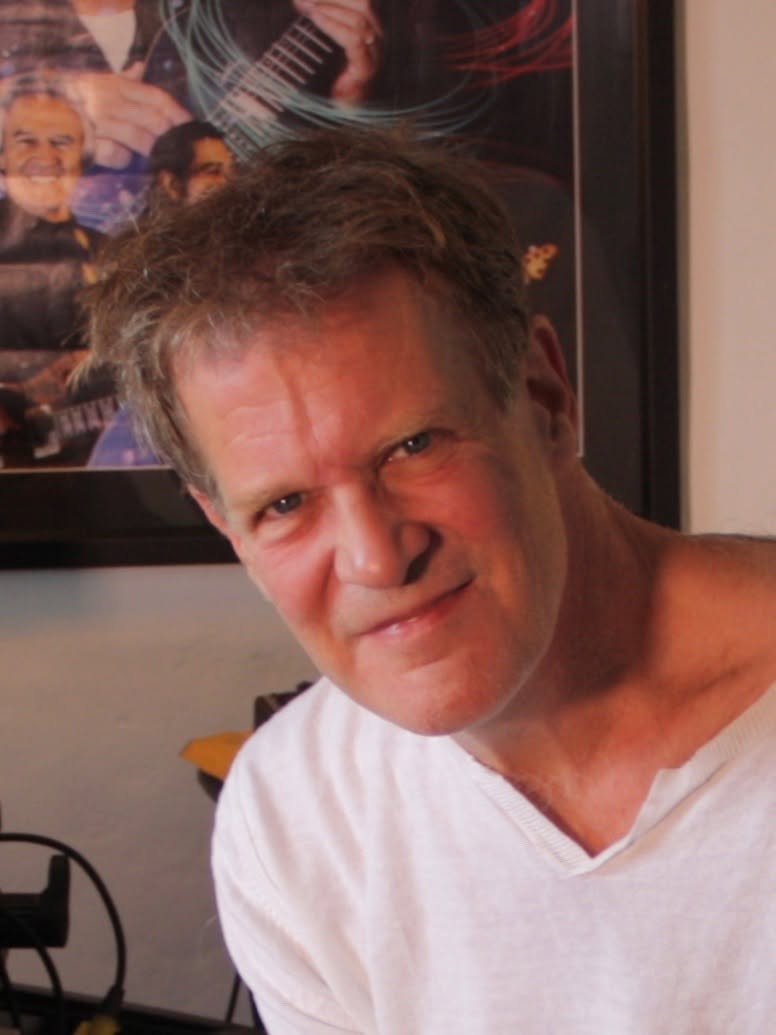
Gary Husband is one of a rare breed of musicians in that his expression is divided equally in his capacity as a drummer and a pianist and keyboardist of international repute. His classical roots, his quest and development in the improvisational, jazz and jazz/fusion areas – not to mention his tenure in the pop, rock, funk and blues circuits – are all evident inside Gary’s distinct and far-reaching musical personality. His solo album and DVD output has also reinforced his status as a critically acclaimed writer and arranger in the contemporary music world.
For close to four decades Gary has worked alongside a vast and eclectic range of celebrated musicians including John McLaughlin, Allan Holdsworth, Jeff Beck, Jack Bruce (Cream), Gary Moore (Thin Lizzy), British pop/funk band Level 42, Billy Cobham, Al Jarreau, Mike Stern (Miles Davis), John Wetton (King Crimson), Chris Squire (Yes), Andy Summers (The Police), Steve Hackett (Genesis), Robin Trower (Procol Harum), and with producers Sir George Martin (Beatles), Trevor Horn (Grace Jones & Art of Noise), Quincy Jones (Michael Jackson), Jerry Hey and James Guthrie (Pink Floyd).
Further associations and performing/recording credits include his work with Randy Brecker, Jan Hammer, Jerry Goodman, fusion/jam band Gongzilla, Germany’s NDR Bigband, Soft Machine, Maria Schneider, Christian McBride, Eddie Van Halen, Dean Brown, Bob Berg, Nguyên Lê, Joe Lovano, Charles Tolliver, Bireli Lagrène, Peter Erskine, Ron Sexsmith, drum n’ bass protagonists Lemon ‘D’ and Dillinja.
As an internationally established… Read More


